• About
  • Archive
  • Contact
The Greening of Gavin
  • Home
  • Our Green Shop
    • Little Green Workshops
  • Green Workshops
    • Cheese Making
    • Soap Making
    • Soy Candle Making
  • eBooks
    • Clay Oven eBook
    • Keep Calm and Make Cheese eBook
  • Podcast
    • TGOG Podcast
    • TGoG Podcast Archive
    • Little Green Cheese
  • Vlog
  • Cheese
  • Green Living
    • Chickens
    • Gardening
    • Soap Making
    • Recipes
    • Climate Change
    • Peak Oil
    • Solar Power
  • Resources

TGoG 102 – Can You Be Self-Sufficient in the Suburbs?

February 25, 2015 @ 21:35 By Gavin Webber Leave a Comment

[spp-player optin=”off”]

Tom+and+BarbaraCan you be self-sufficient in the suburbs? That is a big question. It may have worked for Tom and Barbara, but can it actually be done?

Let Gavin guide you through some of the barriers that may hinder true self-sufficiency in the suburban context.  Being self-sufficient is hard work.

There is a bit of something in this episode for everyone.  Very thought-provoking.

Also if you like the show and would like to help it continue, please visit my Patreon page and pledge a dollar or two for hosting and equipment costs. www.patreon.com/greeningofgavin is the place where you can help.

Become my patreon!

Will this article help someone you know? If so help them out by sharing now!

  • Click to share on Facebook (Opens in new window) Facebook
  • Click to share on X (Opens in new window) X
  • Click to share on LinkedIn (Opens in new window) LinkedIn
  • Click to share on Reddit (Opens in new window) Reddit
  • Click to share on Pinterest (Opens in new window) Pinterest
  • Click to share on Tumblr (Opens in new window) Tumblr
  • Click to print (Opens in new window) Print
  • Click to email a link to a friend (Opens in new window) Email
  • More
  • Click to share on Pocket (Opens in new window) Pocket

Filed Under: Chickens, community, compost, Electricity efficiency, Fish, food, Frugal, fruit, Gardening, GreenHome, Podcast, Rain, reuse, Simplicity, skills, Suburban Food Farm, Suburbs, Sustainable Living, TGOG Podcast, vegetables, waste, water

Renovation on a Shoestring

February 19, 2015 @ 22:15 By Gavin Webber 11 Comments

You may have listened to last weeks podcast where Kim was talking about how we were renovating the front room on the cheap, reusing as much as possible.

In fact, she didn’t buy any new furnishings except block out curtains and sheers, and managed to get those for a quarter of the price that we were quoted locally.

Anyway, the biggest saving was the reuse of some old bookshelves that we converted into a massive wall unit.  Kim had been looking online for something, but she soon realised that instead of getting something new, we could make do with the units we had and upcycle them.

But I will let Kim walk you through the reno.


Hi everyone.  Since the new double glazing was fitted and the glass brick window, we have been saving like crazy to finish off our living room.  Along the way we managed to collect hand-me-downs to decorate the room.

We painted with low VOC paint and used natural oils on the wooden window frames.

P2040079

Bunch of silk flowers that a friend was throwing out, a bit of a dust and clean and they are as good as new.

P2190023

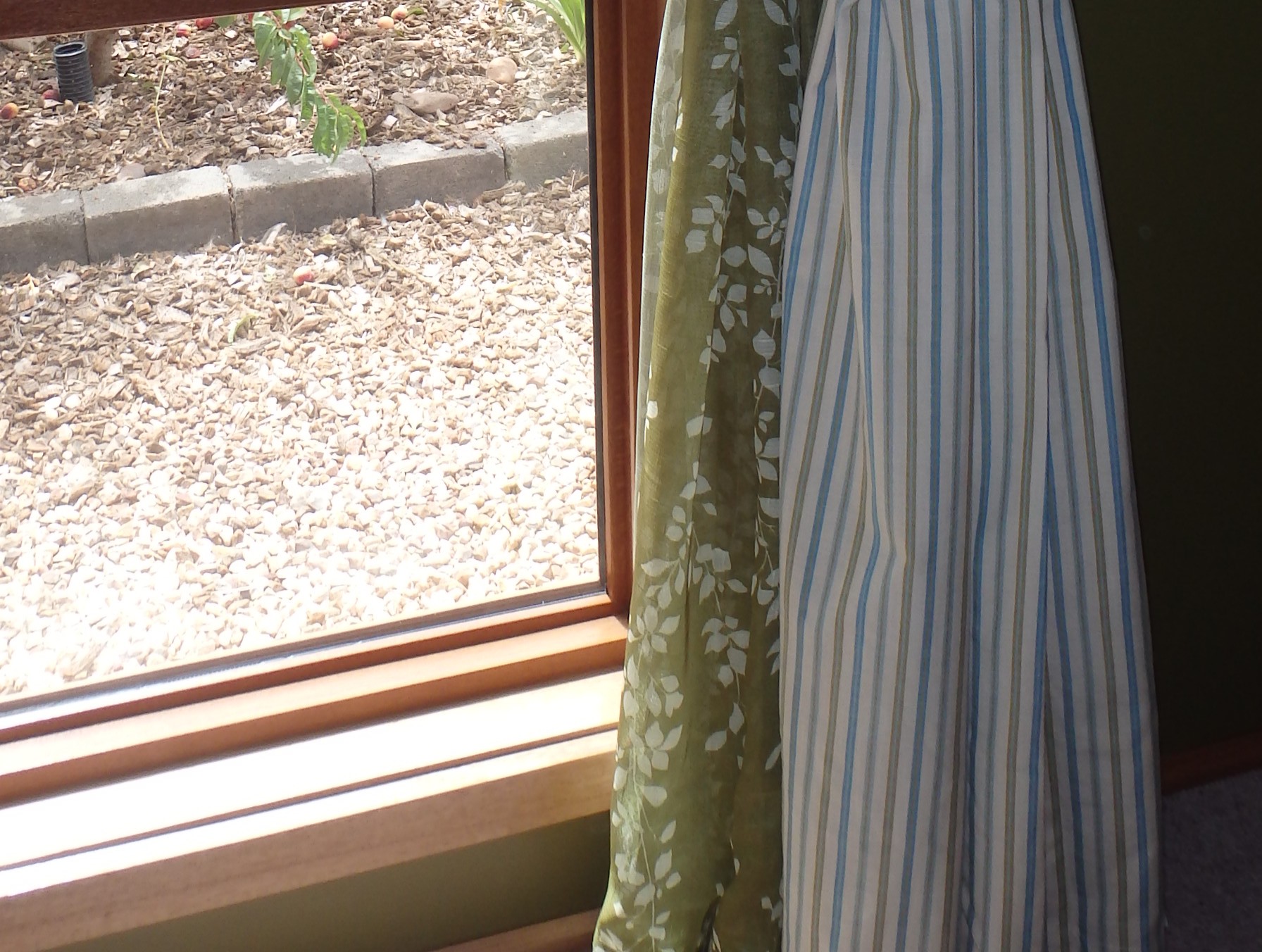
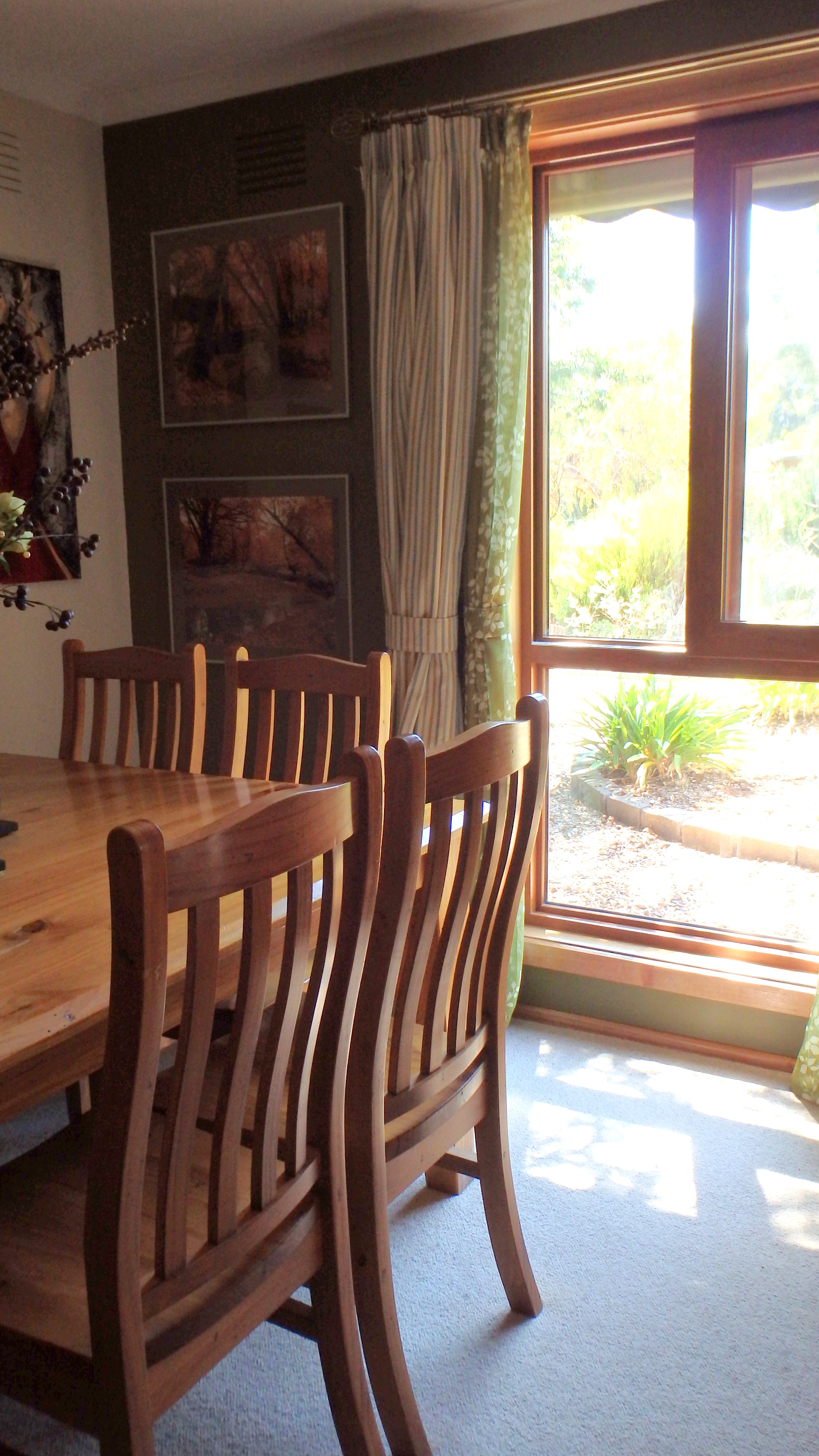
Our beautiful double glazed windows with curtains and sheers. I have not had curtains for over 18 years but my goodness with the blackout on the back of the main curtains the room stays pitch black when the sun rises in the mornings  (great insulation as well for the windows – Gav).

P2190017

Cushions are also saved from being thrown out, gifted from friends.

P2190061

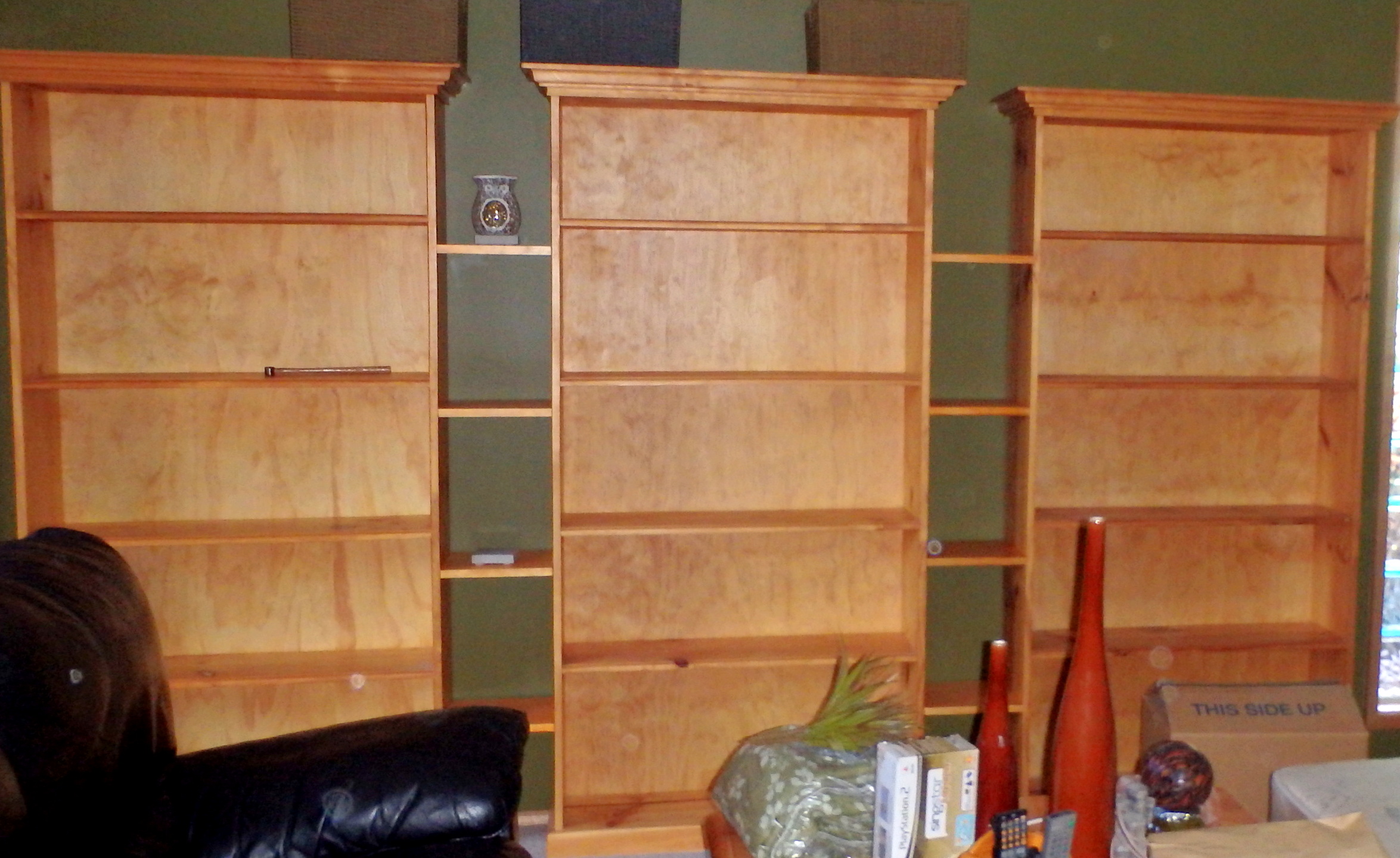
I was looking at buying a new wall unit but could not justify the cost.  The three bookcases were purchased back in ’97 so decided to give them a new look. So after giving a sketch to our carpenter handyman he joined them together for me and fixed onto wall.  Not only does this give us more insulation in the house but also additional shelving (instead of $3000 for new units, it cost us about $150 to fix the bookshelves to the wall and fit the little shelves – Gav).

P2040103

Gavin made me some shelves to fit on the tops and I have used that space too (made from scraps of ply – Gav).

P2190070

I thought it would be great to have some lighting behind the unit and decided that the cheapest option was LED push lights. They look really great and provide us with some great lighting in the evenings (we even used rechargeable AAA batteries – Gav).

P2190086


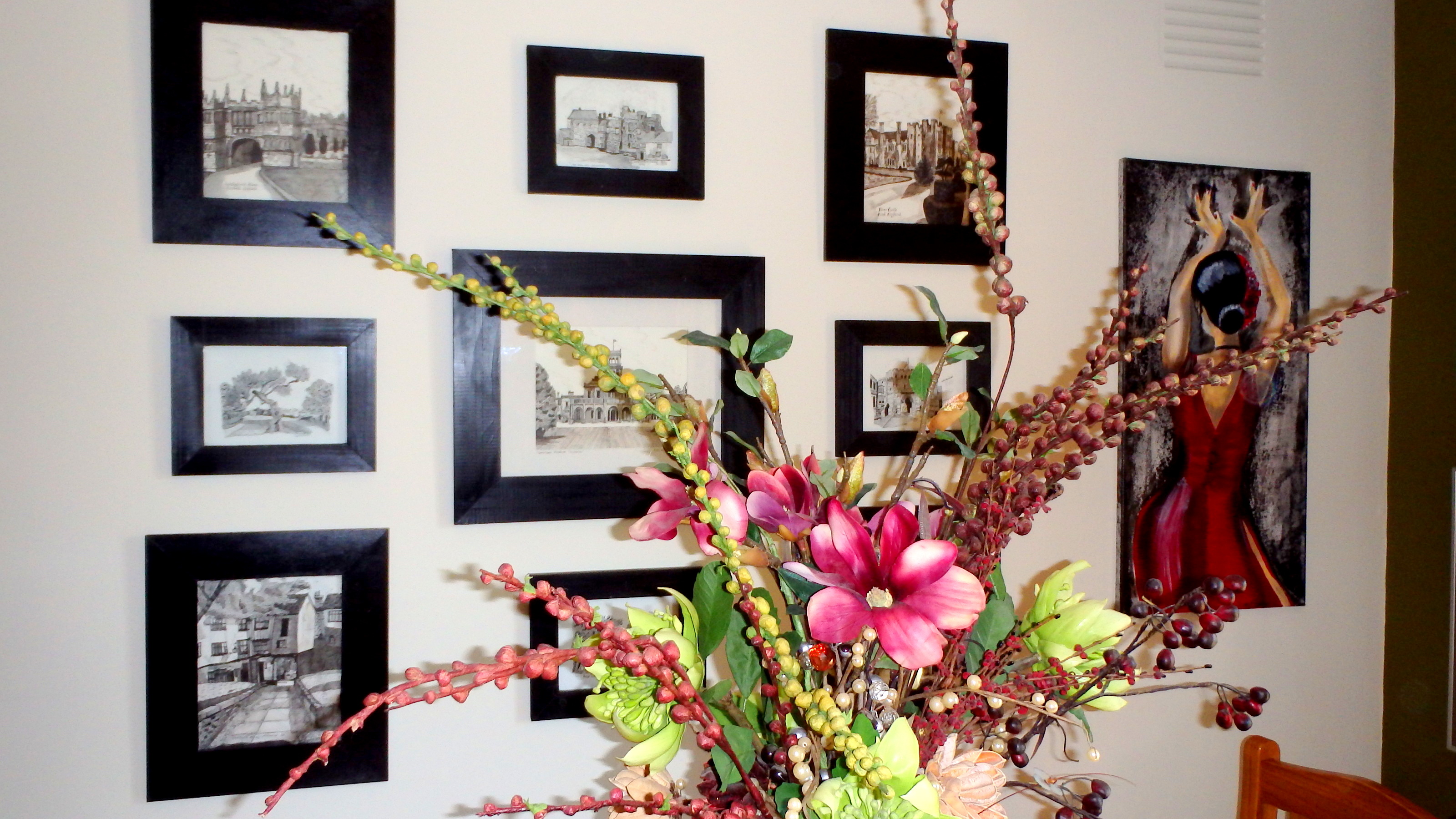
Now Kim is far too modest to tell you, but her artwork is amazing.  The wall in the photo below is all her own work.  Mainly ink drawings of historical buildings she has visited, and a beautiful spanish dancer.  She certainly has some talent.  Even the artwork cost us very little!

P2190021

So there you have it.  If you try hard enough you can renovate a room on a budget by reusing as much as possible.  Work that could have cost us many, many thousands, only cost us a few thousand.  That included a lot of plaster work due to cracked walls that had shifted over time and split.  We also had to fill in the hole left behind when we removed the gas wall furnace.  And of course the cost of the paint and natural oils for the wood.

As this is the biggest room in the house, we must have used about 6 litres of undercoat, 6 litres of ceiling white, and 10 litres of colour.  Paint is not cheap, especially when you opt for a more environmentally friendly variety.

Do you try to reuse furniture and furnishings when you renovate?  How do you keep the costs down?

Will this article help someone you know? If so help them out by sharing now!

  • Click to share on Facebook (Opens in new window) Facebook
  • Click to share on X (Opens in new window) X
  • Click to share on LinkedIn (Opens in new window) LinkedIn
  • Click to share on Reddit (Opens in new window) Reddit
  • Click to share on Pinterest (Opens in new window) Pinterest
  • Click to share on Tumblr (Opens in new window) Tumblr
  • Click to print (Opens in new window) Print
  • Click to email a link to a friend (Opens in new window) Email
  • More
  • Click to share on Pocket (Opens in new window) Pocket

Filed Under: GreenHome, reuse

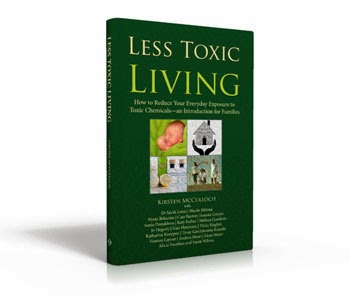
Less Toxic Living – Book Review and Giveaways

November 19, 2013 @ 21:09 By Gavin Webber 6 Comments

Something that I have been interested in for a while is how to remove toxic chemicals from our home and lifestyle.

We already have an organic suburban food farm, and eat mainly biodynamic meat a few times a week.

But one thing that we haven’t tackled was other products in our home, besides a few basic green cleaning products.

So you can imagine my delight when I was approached by Kirsten McCulloch, who blogs over at Sustainable Suburbia, to review her new book about the subject and be part of the book blog tour.  The book is titled Less Toxic Living – How To Reduce Your Everyday Exposure To Toxic Chemicals: An Introduction for Families.  Just what I needed at the right time in my journey.

The book weighs in at just over 200 pages, and is jam packed with valuable, well researched and referenced material leaving you no doubt about the authenticity of the information.  It is written as a collection of articles from 19 individual contributors, which are grouped into themes such as Your Home, Cleaning, Food & Water, Plastics and, Cosmetics & Skin Care.

You may already know some of the contributors from popular blogs and books;

Dr Sarah Lantz (Chemical Free Kids) | Nicole Bijlsma (Healthy Home, Healthy Family)|Nyree Bekarian | Cate Burton | Joanna Cozens | Sonia Donaldson | Katy Farber |Melissa Goodwin | Jo Hegerty | Kate Hennessy | Tricia Hogbin | Katharine Koeppen |Teray Garchitorena Kunishi | Vanessa Layton | Andrea Muse | Alexx Stuart | Alicia Voorhies and Sarah Wilson.

You would think that with all these writers it would make the book difficult to follow, but this is not the case. Due to the grouping, I found that the themes flowed well and complimented each other.

One of the great features of this book is that you do not have to read it cover to cover to get value.  You can skip to any section, which stand alone, and learn about your chosen toxic topic.

The only fault I found was with formating.  A few chapters only list Metric or US Imperial measurements and not both, however it does not detract from the overall book.  Also, I hope the eBook version has hyperlinks when released, as there are a lot of websites within the references that would be easier to visit if linked.

I particularly enjoyed the chapters about Food & Water and Plastics, learning quite a bit in the process.

Did you know that food additives can cause behavioural issues and learning difficulties in children?  I had often joked about red cordial, but it is much more serious than that.  It left me thinking about my own diet, albeit quite good in that regard.

The other chapter that made me really think was Five Foods That Have Sneaky Additives.  I really wanted to research this further as I found it didn’t go deep enough, but remember that this book is only an introduction.

Although only a handful of chapters long, the Plastics section really hit it home for me.  I will be actively weeding out harmful plastics around our home over the next few weeks.

I highly recommend this book for all who want to learn how to lower the toxic chemicals around your home and are looking for an all-round introduction to the subject.  I will give it 5 stars, as I really needed an introduction to this area of sustainable living.

Now I have even better news.  For a limited time, Kirsten is giving away the eBook version for FREE, with a lot of free bonus material.

You can pick up the free copy from now until 3rd December 2013 at the book website lesstoxicliving.net.  However, you will need my special access code GREENGAV to download it and the free bonuses.

Less Toxic Living is also available as a paperback at Amazon, but it will be available in this format in Australia at this link; lesstoxicliving.net/buy-it-in-print/

Let me know what you think of it in the comments if you download and read it.  I would be interested in your opinion.

Will this article help someone you know? If so help them out by sharing now!

  • Click to share on Facebook (Opens in new window) Facebook
  • Click to share on X (Opens in new window) X
  • Click to share on LinkedIn (Opens in new window) LinkedIn
  • Click to share on Reddit (Opens in new window) Reddit
  • Click to share on Pinterest (Opens in new window) Pinterest
  • Click to share on Tumblr (Opens in new window) Tumblr
  • Click to print (Opens in new window) Print
  • Click to email a link to a friend (Opens in new window) Email
  • More
  • Click to share on Pocket (Opens in new window) Pocket

Filed Under: Books, Cleaning, food, GreenHome, Sustainable Living

Next Page »

Search This Blog

Follow my work

About Gavin Webber

About Gavin Webber

An Ordinary Australian Man Who Has A Green Epiphany Whilst Watching A Documentary, Gets a Hybrid Car, Plants A Large Organic Vegetable Garden, Goes Totally Solar, Lowers Consumption, Feeds Composts Bins and Worms, Harvests Rainwater, Raises Chickens, Makes Cheese and Soap, and Eats Locally. All In The Effort To Reduce Our Family's Carbon Footprint So We Can Start Making A Difference For Our Children & Future Generations To Come.

Delve Into the Archives

Visit Our Online Simple Living Shop

Little Green Workshops

Top Posts & Pages

Hot Chilli Chutney
Black Aphids On Garlic
Tips for Growing Citrus in Pots
Strawbridge Family Inspiration
Curing Black Olives
Growing Queensland Blue Pumpkins (Winter Squash)
Broad Bean Rust
The Ant and the Grasshopper
All Good Things Come to an End
Wensleydale Cheese Recipe and Method

Recent Awards

Recent Awards

Local Green Hero

Categories

Favourite Daily Reads

Debt Free, Cashed Up, and Laughing

The Off-Grid Solar House

Greener Me

The Rogue Ginger

Little Eco Footprints

Down To Earth

Surviving the Suburbs

Little Green Cheese

Eight Acres

The Witches Kitchen

TGOG Readers On-line

Carbon Offset website

Copyright - Gavin Webber © 2025