• About
  • Archive
  • Contact
The Greening of Gavin
  • Home
  • Our Green Shop
    • Little Green Workshops
  • Green Workshops
    • Cheese Making
    • Soap Making
    • Soy Candle Making
  • eBooks
    • Clay Oven eBook
    • Keep Calm and Make Cheese eBook
  • Podcast
    • TGOG Podcast
    • TGoG Podcast Archive
    • Little Green Cheese
  • Vlog
  • Cheese
  • Green Living
    • Chickens
    • Gardening
    • Soap Making
    • Recipes
    • Climate Change
    • Peak Oil
    • Solar Power
  • Resources

Garden Renovation

June 9, 2016 @ 19:46 By Gavin Webber 3 Comments

With the slow death of the old Blood Plum tree, and the need for a new storage shed for the ever-growing green business, it was time for a garden renovation.  You know, just like a backyard blitz but slower!

Due to some issues with my hands (arthritis creeping into my thumb joints, I had to get some help to complete it all.  Mick the Handyman and his wife Anne were hired to put down a slab, erect the new shed, and cut down the plum tree and tidy things up a bit.  The condition was that they reuse all the materials from garden beds they were moving to make new beds and structures.

Chook house #1 when first built

Chook house #1 when first built

So lets start at the beginning.  This first photo is way back in 2009 when my son Adam and I had just finished the original Chook House.  This was well before Cluckingham Palace was built behind it.

As you know, Ben and I dismantled this structure in March, and the what remained was just a vacant space.
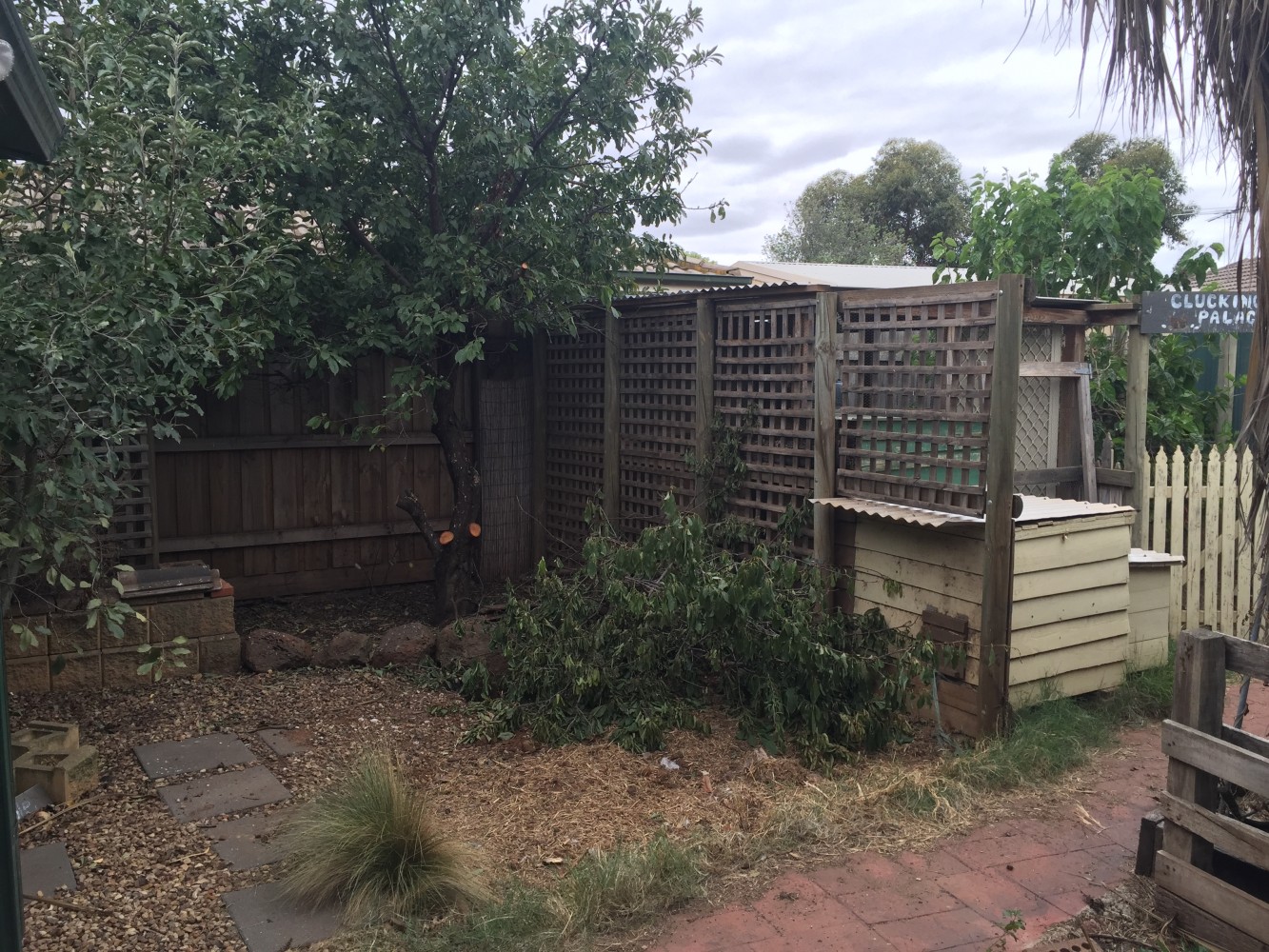
Demolished Chook house

Demolished Chook house

I had started to cut down part of the old plum tree, but my hands just hurt way too much.  I needed help to do all the things I wanted to achieve in this part of the garden.  I wanted the tree fully removed, and replaced with a nice area to sit, and a new garden bed in which to plant a couple of espaliered fruit trees.

So work began in early May 2016.

Plum tree cut down

Plum tree cut down

The area was cleared and the tree was cut down.  After this photo was taken the stump was removed as well.

Now for the shed area.

The old raised garden bed

The old raised garden bed with trellis circa 2010

This photo was taken in 2010, after a had planted in some cabbages and broccoli.  It was quite an under utilised space, so we decided that was could make better use of it by moving everything down the yard a bit.  This including reuse of the trellis and brick work in the area where the plum tree once stood.

Ground preparation for new shed.

Ground preparation for new shed.

So once all the trellis, stone and beds were removed, the ground was prepared for the new slab on which the shed would be built.  Not very green I know, but we investigated a wooden floor for the shed, but it would have rotted within a few years.  This being a stock shed for the business, I wanted it waterproof.

New garden beds

New garden beds

Anyway, the garden bed was rebuilt behind where the shed now stands.  All the soil, bricks and wood was reclaimed and reused to make these.  Thankfully, nothing went to waste, and any unused soil was placed in my front yard veggie beds.
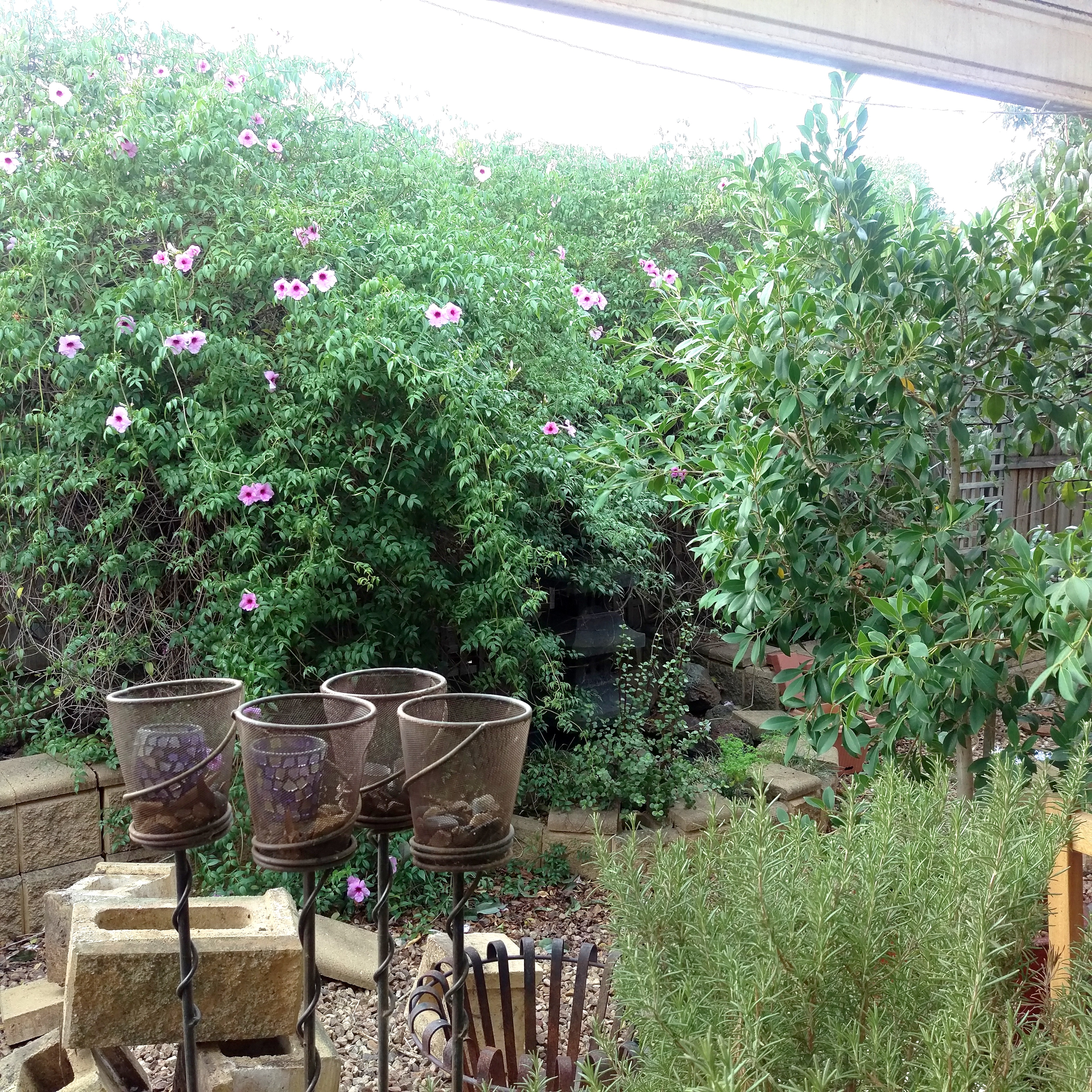
Overgrown Fountain

Overgrown Fountain.  It’s in there somewhere!

Also the jasmine had taken over the beds and we lost the fountain somewhere within it.  This needed trimming to regain a beautiful space.

After some much-needed pruning, the fountain reappeared in all its glory.
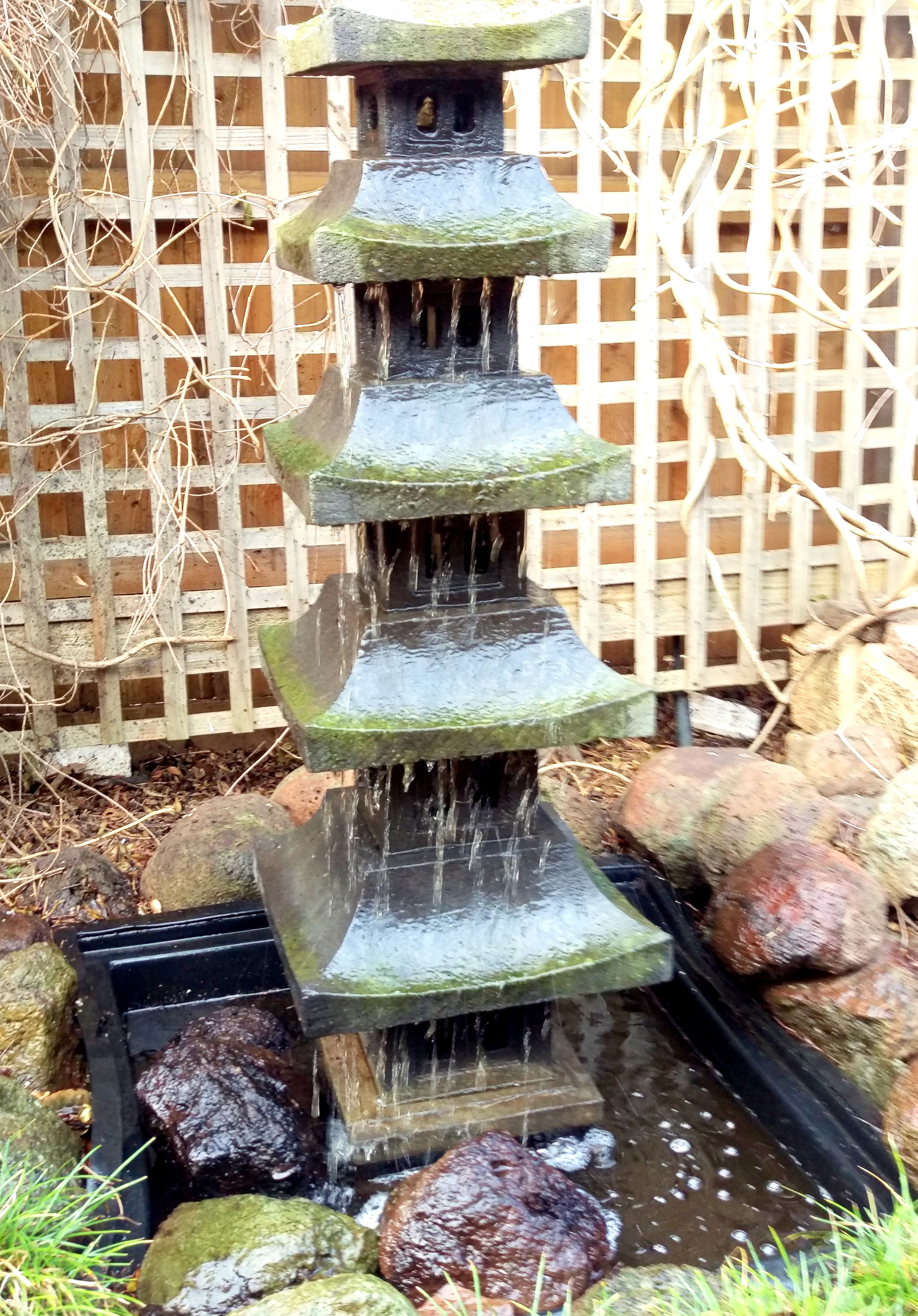
Rediscovered Fountain

Rediscovered Fountain

The pool that the fountain stood in was full of decaying leaf matter, so I had to don some long rubber gloves and remove about 5 buckets of gunk.  Once refilled the fountain worked perfectly!  We refilled it from the rainwater tank and it looked amazing.

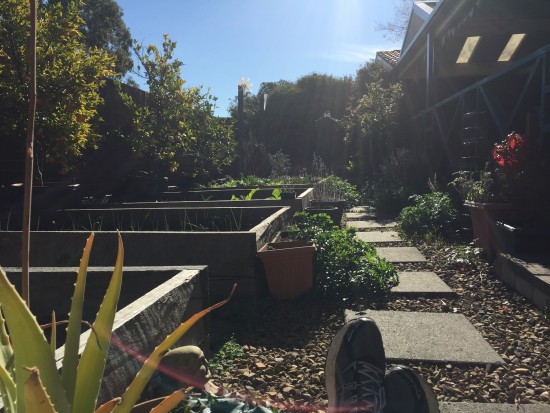
So with the new beds in place this is what it all looked like.

IMAG2802

We could see the potential, but it wasn’t quite finished.

We had some left over pavers and a pile of stone, so asked Mick to do a nice bit of landscaping.  Behind the far bench is a new garden bed built from retaining bricks that they removed from where the new shed now stands.  That’s where I’m putting one of the espalier fruit trees.  I’m putting the other one where the tarp is in the photo.
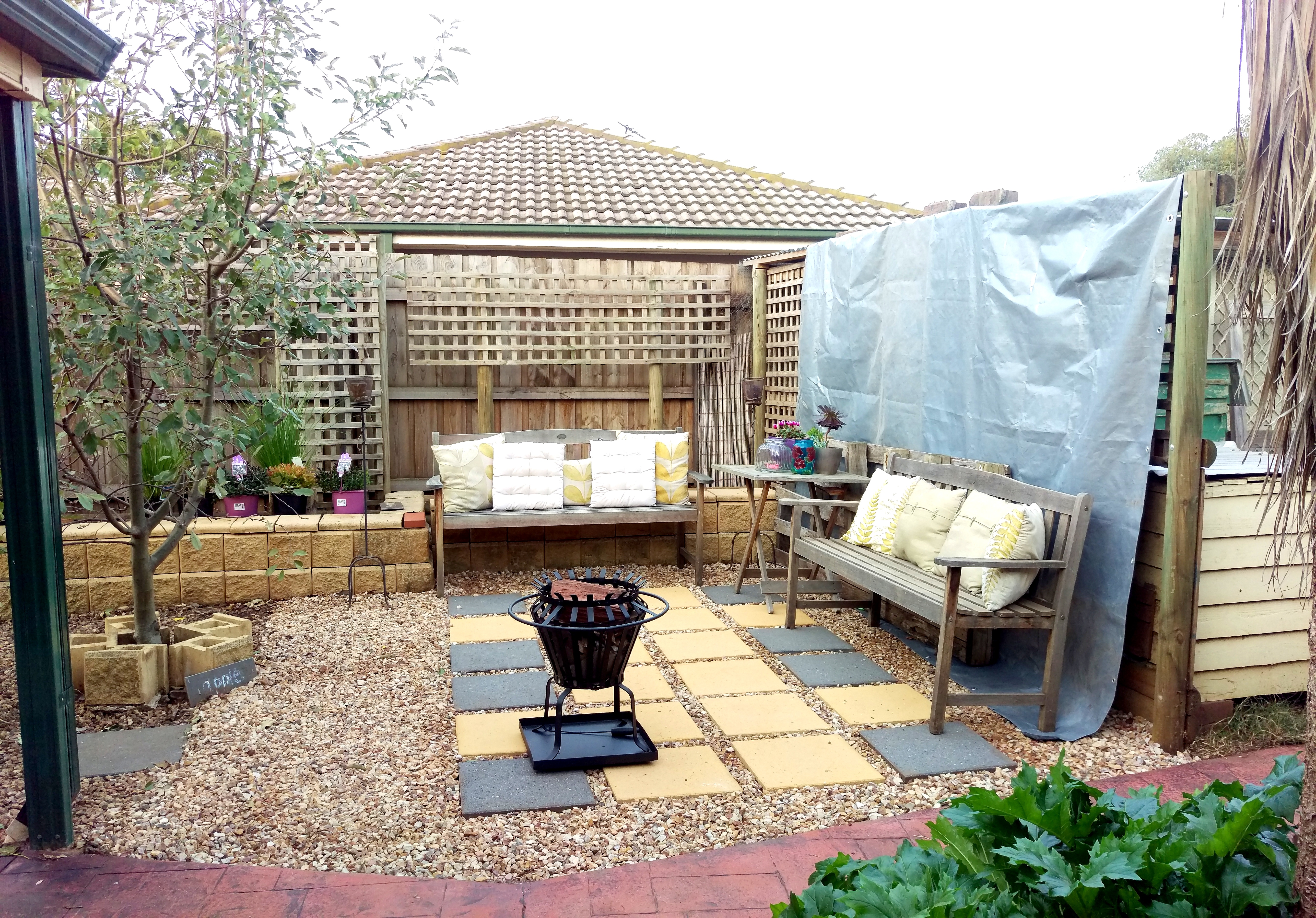
IMAG3019

Looks pretty good.  I even gave the Jonathan Apple tree a prune as well.

The big tarp was strung up there because I didn’t want to smoke out the chooks when I lit the brazier!
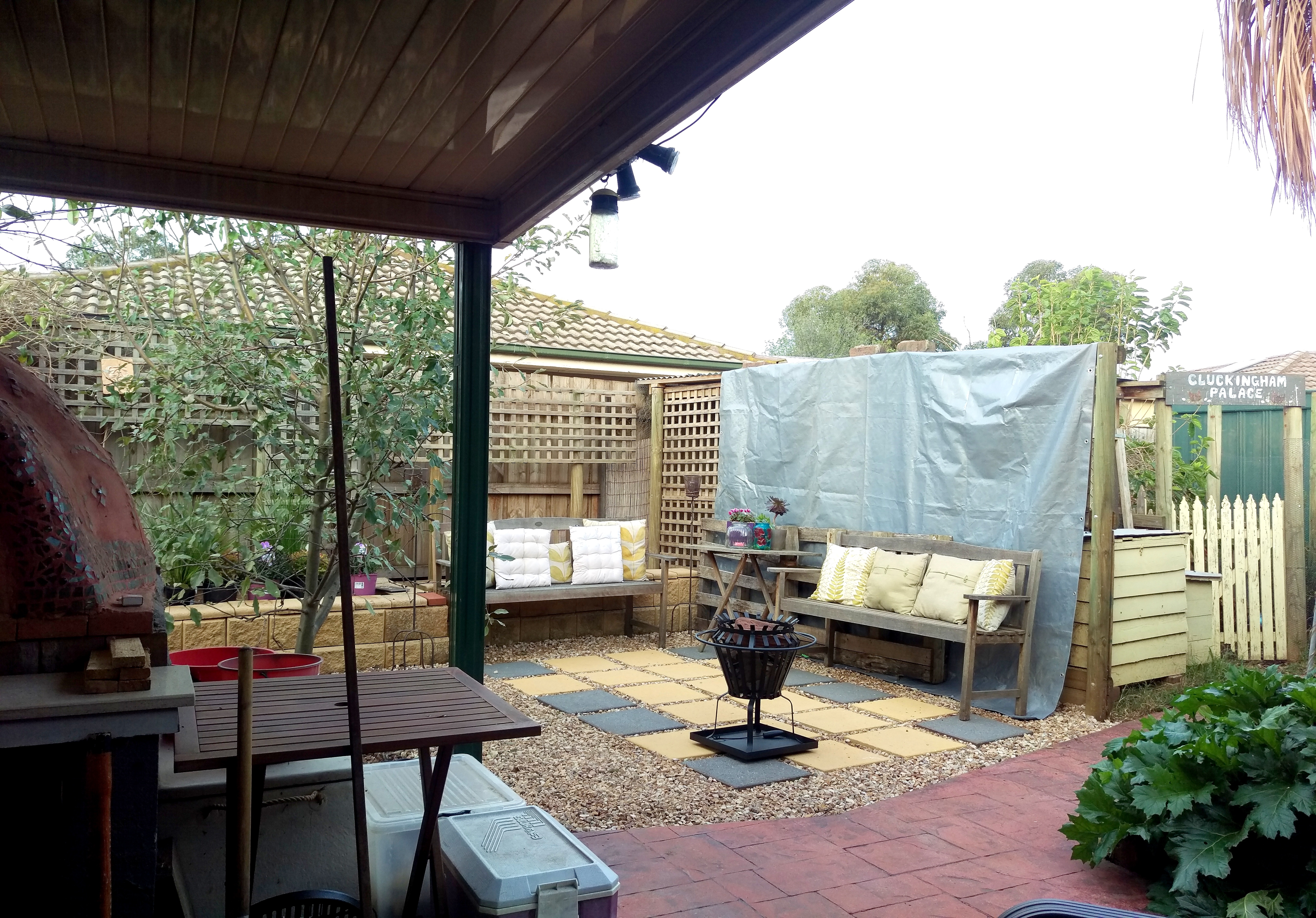
Area fully landscaped

Area fully landscaped

Here is some context, looking from the pizza oven area.  You can just see the entrance to Cluckingham Palace in the background.
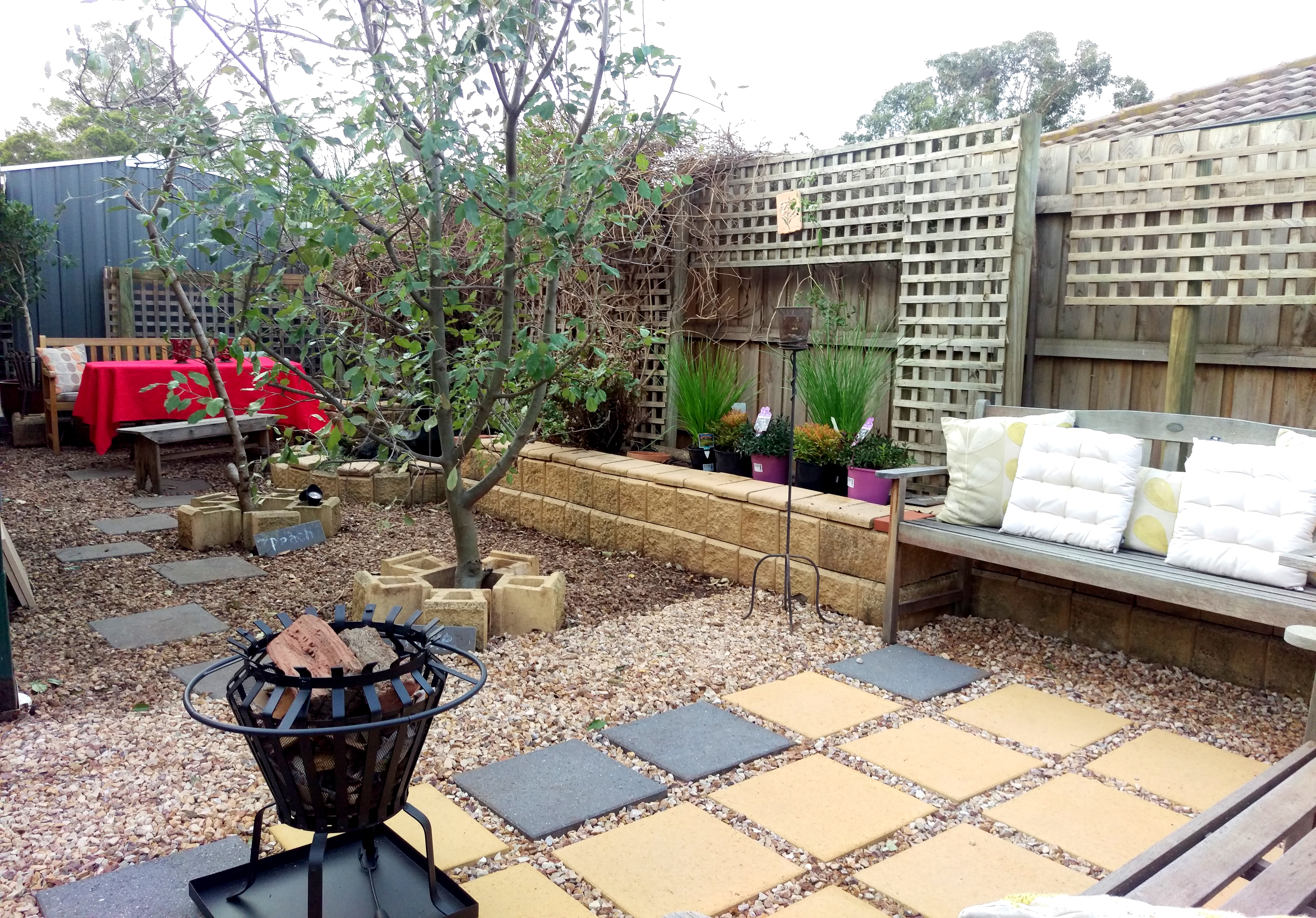
Looking towards the new shed.

Looking towards the new shed.

Looking towards the front yard, you can see the new shed and a fully landscaped garden.  We just have to throw a few plants in the new garden beds this weekend and it will look amazing.

I also had to heavily prune the ANZAC Peach tree as it was growing over the roof.  I cut of one of the two main limbs in the hope that it springs back and grows straighter this time.

Gav and a well deserved beer!

Gav and a well deserved beer!

I was so happy with the finished result, I decided to throw a birthday party for myself and have a well deserved home-brew beer that I’d been saving for the occasion.  Definitely a nice way to celebrate.

Whilst Mick and Anne did the majority of the work and were paid for it, Ben and I pulled down the chook house and Kim and I did the clean up afterwards and made it all beautiful.  As I get older and busier, I am finding that I am in the need of more hired help.  I can’t do it all like I once used to.

The only material brought in was the concrete for the slab and the shed.  All other materials were reused in the construction of the new beds and areas.  Now that’s a garden renovation!  I think it is a job well done and is now a great place to relax in the sunshine whilst watching chooky antics!

I’m looking forward to showing you the garden beds when they are planted out with native shrubs and how I am going to espalier the transplanted fruit trees.

But that’s another story!
Will this article help someone you know? If so help them out by sharing now!

  • Click to share on Facebook (Opens in new window) Facebook
  • Click to share on X (Opens in new window) X
  • Click to share on LinkedIn (Opens in new window) LinkedIn
  • Click to share on Reddit (Opens in new window) Reddit
  • Click to share on Pinterest (Opens in new window) Pinterest
  • Click to share on Tumblr (Opens in new window) Tumblr
  • Click to print (Opens in new window) Print
  • Click to email a link to a friend (Opens in new window) Email
  • More
  • Click to share on Pocket (Opens in new window) Pocket

Filed Under: Chickens, fruit, garden, Gardening, reuse

TGoG 130 – Budget Gifts

November 26, 2015 @ 21:25 By Gavin Webber Leave a Comment

[spp-player optin=”off”]

Kim came up with a brilliant theme for this episode that will get you all fired up to start making budget gifts to give during the Christmas season.  We all know that this time of year can be expensive if others expectations are high, so cut your costs by making your own personalised gifts.

We talk about some of the great homemade presents that friends have given over the years.  It was because they were homemade that we remember them many years later, unlike all the crap that we used to buy and be littered under the Christmas Tree before our sustainable living journey began.

Thoughtful, simple, yet memorable gifts, made with love.  Who would want for anything nicer?

We also mention that the show will be more regular and that we are already planning our Christmas Special.  If anyone has any duet suggestions for our song, then send them in via email, the more the merrier.

Whatever the song is, it will be fun to produce.  It will be our budget gift to you!

Will this article help someone you know? If so help them out by sharing now!

  • Click to share on Facebook (Opens in new window) Facebook
  • Click to share on X (Opens in new window) X
  • Click to share on LinkedIn (Opens in new window) LinkedIn
  • Click to share on Reddit (Opens in new window) Reddit
  • Click to share on Pinterest (Opens in new window) Pinterest
  • Click to share on Tumblr (Opens in new window) Tumblr
  • Click to print (Opens in new window) Print
  • Click to email a link to a friend (Opens in new window) Email
  • More
  • Click to share on Pocket (Opens in new window) Pocket

Filed Under: Podcast, reduce, reuse, skills, TGOG Podcast

Suburban Food Bowl – Growing Food in Raised Beds

November 17, 2015 @ 22:20 By Gavin Webber 6 Comments

Unless you are blessed with fertile soil in your neck of the woods, I have found that most Australian suburban developments are built in areas that have been stripped of precious topsoil and left barren or covered over with a thick blanket of builders rubble.

The remaining substrate may be sand or clay, each having its own issues. Sand doesn’t hold water very long and lacks essential nutrients, and clay either dries as hard as concrete or is so dense when it’s wet that tender roots find it difficult to penetrate.

So what is the suburban gardener to do? Well for those lacking space, we’ve already covered growing in tight spaces, but what about all of you who have a decent amount of open area in which to plant?

Growing food in raised beds

Growing my food in raised beds

Well the long-term solution would be to build up the soil with a mountain of organic matter in the form of compost to increase or decrease the water retention capacity of your soil, but there is an easier way to start growing quickly.

Growing Food in Raised Beds

The easiest way to get food on the table when you have poor soil is to build up your soil by growing food in raised beds. The good thing is that there are many cost-effective ways to do this, but in the end the simple fact is that you have to import good soil or compost in to get started.

Over the years, you can make your own soil using the efforts of your chickens, or uses as much garden waste as possible to turn into humus from compost and at the same time adding essential nutrients back into your growing areas.

So here are a few ideas that I have used or seen to create amazingly fertile garden beds.

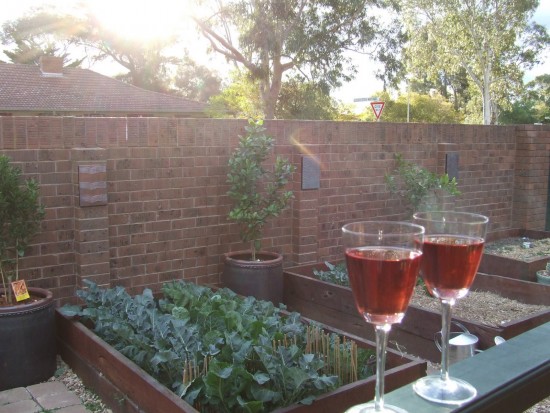
Hard Wood

The majority of raised garden beds around my home are made from reclaimed or sustainably harvested red gum hardwood. This type of building material is long-lasting and rots very slowly over time. The only drawback is that if you live in a termite prone area, then they serve as food for them and last half as long.

When building your beds, make sure that they are wide enough to reach across, and if you are prone to back issues, then build them up using reclaimed brick first to add some height. I built ours 2.4 x 1.2 x .5 metres in size. I find it a practical growing space for a couple of varieties of vegetable.

Raised garden beds

Our raised garden beds circa 2007.  Source: Kim Webber

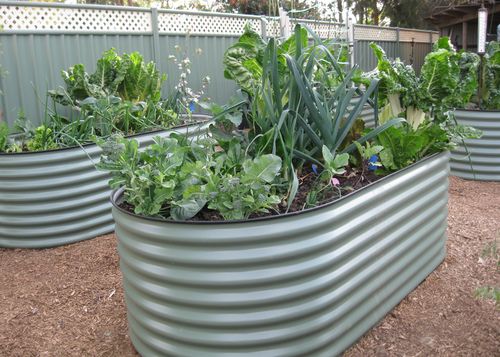
Corrugated Iron

Many of the newer raised garden beds that you can purchase are made from corrugated iron or Colorbond. Most are an elliptical shape to remove any sharp edges and stand about 80 – 100 cm tall. These are ideal for people with mobility problems and can be maintained without too much bending.

They are easy to construct and usually only require a couple of spanners and are long-lasting. As these beds are so tall, they are easy to set up as wicking beds, however if not uses as wicking beds, you may need to throw in about 30 cm (1 ft) of rubble into the bottom to save the requirement to add so much topsoil or compost.

Colorbond garden beds. Source: http://gippslandtanks.com.au/garden_beds

Colorbond garden beds. Source: http://gippslandtanks.com.au/garden_beds


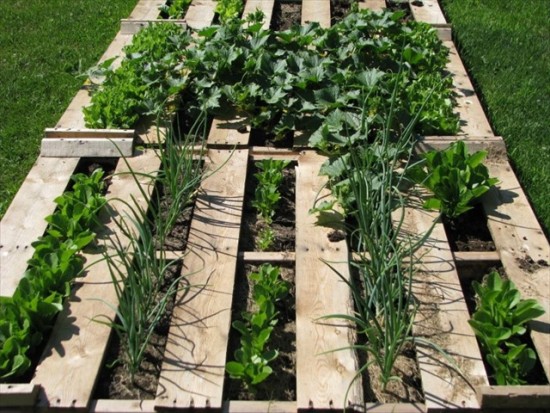
Wooden Pallets

With a little extra wood fastened around all the edges, wooden shipping pallets can be utilised as a raised garden bed. You may think that they are not tall enough, but you will be surprised to know that most vegetables only put down roots that are less than 20 cm in length. This makes a wooden pallet ideal when the spaces are filled with salad greens, tomato plants, or even sweet corn. Root vegetables are not suited for this shallow type of raised bed.

Wooden pallet vegetable garden

Wooden pallet vegetable garden. Source: Flea Market Gardening

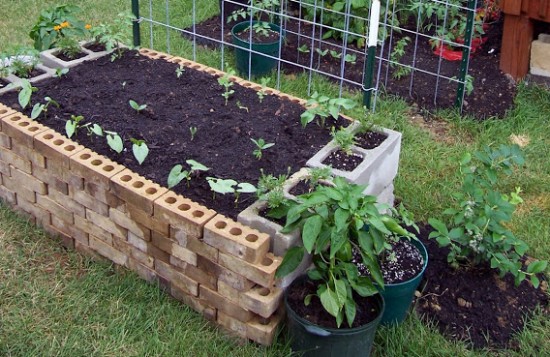
Reclaimed Brick

If you have or can get your hands on old brick, large or small, then you can put them to good use as the boundary of your garden bed. You may have to fasten them using a bit of mortar before adding the soil, however if you have large besa bricks or cinder blocks, then these, when filled with dirt, will support the soil in your raised garden beds without issue. The great thing about brick is that you can form just about any shaped bed you like to accommodate the space you have unlike wood which would need multiple cuts to achieve the same outcome.

Brick raised garden bed

Reclaimed brick raised garden bed.  Source; Creative Commons.

Large Tyres

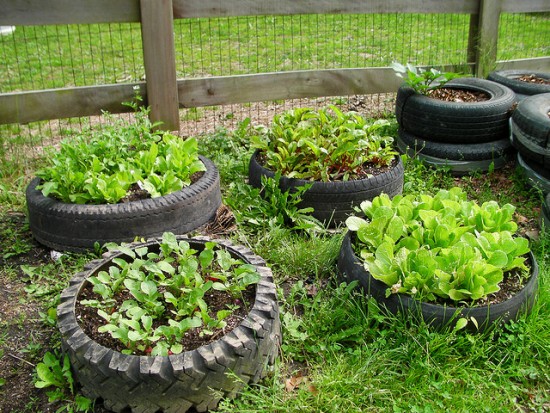
Large truck or tractor tyres made a good raised garden bed, as they hold a lot of soil. You don’t need any construction skills to quickly get this type of garden bed started.  When I have used tyres, I just cut off the rim with a jigsaw to provide more growing space.  You will need to drill a large hole first so as to insert your jigsaw blade to start off.

Most crops can be grown safely in tyres as long as the edible part of the vegetable is above the ground. This excludes potatoes as research has suggested that growing potatoes in tyres risks chemical contamination of the edible tubers.

Truck tyre raised garden beds

Truck tyre raised garden beds. Source: Flickr creative commons

Building The Soil

Once your bed is constructed with whatever material you choose, the next step is to build up the growing medium.

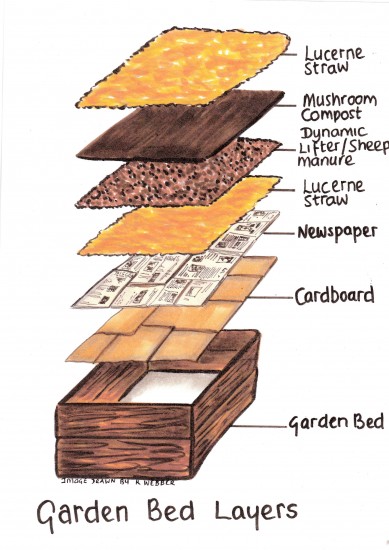
Here is how we initially built up each bed then added more home-made compost on top over the years.  I filled the beds in the following order.

  1. The first layer was a thick cover of cardboard and newspaper about 5 sheets deep. This ground cover was to kill the weeds, grass and provide food for the earthworms.
  2. Next was a 10 cm layer of either Lucerne hay or pea straw. I chose pea straw and the added bonus was a quick crop of field peas!
  3. The third layer was a 2 cm layer of Dynamic Lifter (you can use well-rotted sheep or chicken manure). For the four beds I finished off an entire 25Kg bag of very smelly Dynamic Lifter.
  4. I then covered the manure with another 5 cm layer of pea straw and then a layer 20 cm thick of mushroom compost garden mix.  It was a 50-50 mix of mushroom compost and a loam type soil that was filled with organic matter and very suitable for the purpose of growing vegetables.
  5. Lastly, I topped it off with a 5cm layer of sugar cane mulch, to help conserve water by stopping evaporation.
Growing Food in Raised Beds

Garden Bed Layers. Drawing by Kim Webber

Over time the organic matter rots down and build up the soil.  The vegetables thrive in the first couple of years, but you have to add more compost and manure to keep the nutrients flowing.

Get Building and Growing!

So there are a few ways you can grow veggies in your own suburban food bowl even if you have the poorest soil in the country!

There should be no obstacles for growing food and making your backyard a suburban food bowl.

Go on.  Get growing!

Will this article help someone you know? If so help them out by sharing now!

  • Click to share on Facebook (Opens in new window) Facebook
  • Click to share on X (Opens in new window) X
  • Click to share on LinkedIn (Opens in new window) LinkedIn
  • Click to share on Reddit (Opens in new window) Reddit
  • Click to share on Pinterest (Opens in new window) Pinterest
  • Click to share on Tumblr (Opens in new window) Tumblr
  • Click to print (Opens in new window) Print
  • Click to email a link to a friend (Opens in new window) Email
  • More
  • Click to share on Pocket (Opens in new window) Pocket

Filed Under: food, Food miles, Gardening, Locavore, reuse, Suburbs, Sustainable Living, vegetables

Next Page »

Search This Blog

Follow my work

About Gavin Webber

About Gavin Webber

An Ordinary Australian Man Who Has A Green Epiphany Whilst Watching A Documentary, Gets a Hybrid Car, Plants A Large Organic Vegetable Garden, Goes Totally Solar, Lowers Consumption, Feeds Composts Bins and Worms, Harvests Rainwater, Raises Chickens, Makes Cheese and Soap, and Eats Locally. All In The Effort To Reduce Our Family's Carbon Footprint So We Can Start Making A Difference For Our Children & Future Generations To Come.

Delve Into the Archives

Visit Our Online Simple Living Shop

Little Green Workshops

Top Posts & Pages

Strawbridge Family Inspiration
Hot Chilli Chutney
Cherry Jam
How To Remove Scaly Leg Mites
African Horned Melon
Quince Paste
Tips for Growing Citrus in Pots
The Seven Stages Of Change
Black Aphids On Garlic
Home Made Bread Rolls

Recent Awards

Recent Awards

Local Green Hero

Categories

Favourite Daily Reads

Debt Free, Cashed Up, and Laughing

The Off-Grid Solar House

Greener Me

The Rogue Ginger

Little Eco Footprints

Down To Earth

Surviving the Suburbs

Little Green Cheese

Eight Acres

The Witches Kitchen

TGOG Readers On-line

Carbon Offset website

Copyright - Gavin Webber © 2025