• About
  • Archive
  • Contact
The Greening of Gavin
  • Home
  • Our Green Shop
    • Little Green Workshops
  • Green Workshops
    • Cheese Making
    • Soap Making
    • Soy Candle Making
  • eBooks
    • Clay Oven eBook
    • Keep Calm and Make Cheese eBook
  • Podcast
    • TGOG Podcast
    • TGoG Podcast Archive
    • Little Green Cheese
  • Vlog
  • Cheese
  • Green Living
    • Chickens
    • Gardening
    • Soap Making
    • Recipes
    • Climate Change
    • Peak Oil
    • Solar Power
  • Resources

TGoG 116 – What’s Working What’s Not

July 2, 2015 @ 21:47 By Gavin Webber 3 Comments

[spp-player optin=”off”]

Kim joins me on the show this week and during this episode we delve into what is working in our sustainable lifestyle and what is not.

We cover such topics as non laying chickens and short showers on a cold morning, to going on holidays using Google Maps, loving homebrew beer, homemade cheese, and real food.

As always, we have a great time on the show and hope you will join us for a few laughs at the lighter side of sustainable living!

Amy Webber

Loving homebrew beer!


Don’t forget that our many patron support the show financially with their pledges via Patreon.  This not only keeps the show advertisement free, but keeps us on the air each week.

If you would like to support the show and pledge as little as US$1 to keep us up and running, please pop over to www.patreon.com/greeningofgavin and pledge away!

Also if you like the show, use the iTunes button and leave a rating and a review.  We love to hear what our listeners think about our show.

Until next episode, keep it green!

Will this article help someone you know? If so help them out by sharing now!

  • Click to share on Facebook (Opens in new window) Facebook
  • Click to share on X (Opens in new window) X
  • Click to share on LinkedIn (Opens in new window) LinkedIn
  • Click to share on Reddit (Opens in new window) Reddit
  • Click to share on Pinterest (Opens in new window) Pinterest
  • Click to share on Tumblr (Opens in new window) Tumblr
  • Click to print (Opens in new window) Print
  • Click to email a link to a friend (Opens in new window) Email
  • More
  • Click to share on Pocket (Opens in new window) Pocket

Filed Under: eggs, fruit, Happiness, Podcast, shower head, Sustainable Living, swimming pool, TGOG Podcast, vegetables

Environmentally Friendly Swimming Pool

September 22, 2011 @ 18:46 By Gavin Webber 1 Comment

Let me get one thing clear up front.  A normal backyard swimming pool is not very environmentally friendly.  Full stop.

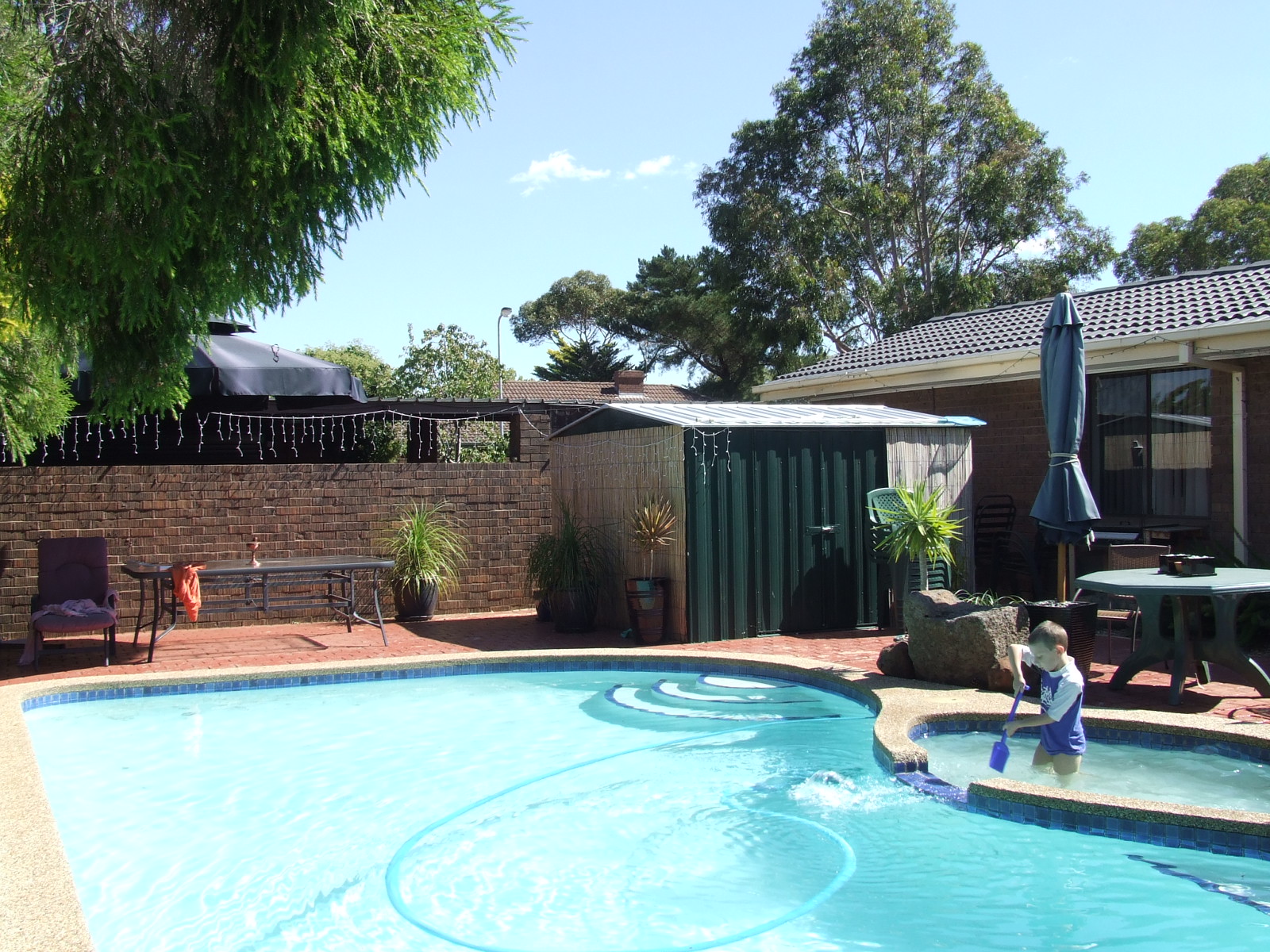
Ah, now I have that off my chest, the rest of this post is about how we try and minimise our environmental impact when maintaining our pool.  Our pool contains about 60,000 litres of water.  That is a lot of H2O.  As any body of water is subject to evaporation, how do we either prevent this from happening or when required, top it up?

To prevent evaporation, we have a pool blanket, which is made from a thick plastic material that has little bubbles all throughout it so that it floats.  Think of it as very thick bubble wrap.

We roll this out as the weather warms up and it serves two purposes.  Firstly, evaporation loss as mentioned, and secondly, it helps heat up the pool quicker as it acts like a greenhouse and insulation.  When we use the blanket the first 50cm to a metre is about 38C (100F), and the water below is still about 17C (60F).  So we jump right in and stir it all up bringing the temperature down to about 21-25C.

As we do still get a little evaporation loss, this is what I use to top it up.

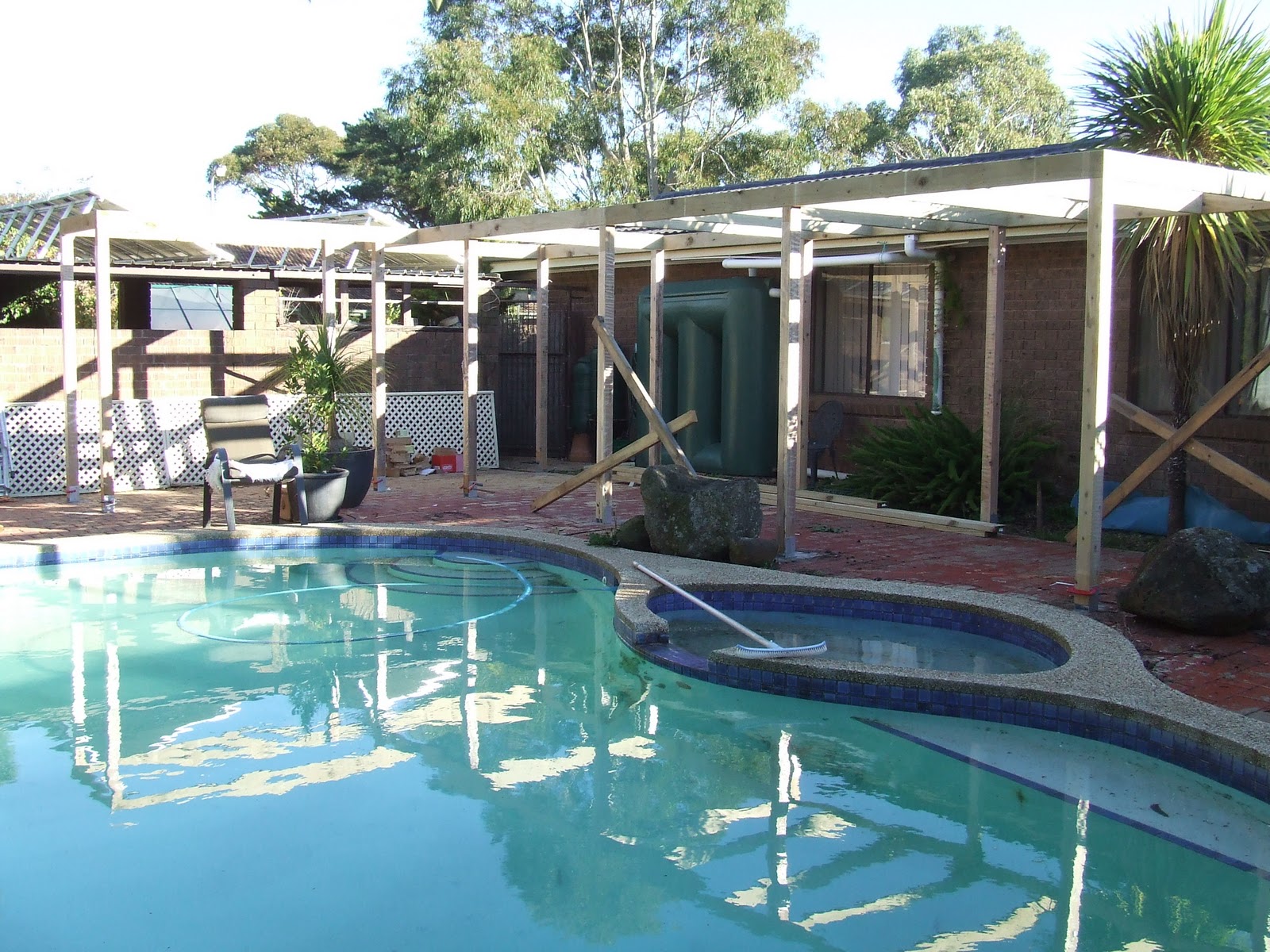
Our main rainwater tank gets dumped into the pool when we know there is a storm coming and that it will be filled back up again.  Also, if the tank does get full over a period of days, I connect the garden hose to the first flush diverter (the pipe to the right of the tank with the black hose on the end) and run it into the pool.  These two methods keep it topped up over the summer.  I have bought a second tank that will be installed when my Dad comes to visit in November, so I will have more water do divert into the pool, and to keep my veggie patch alive during those very hot days (45C) we get here sometimes.

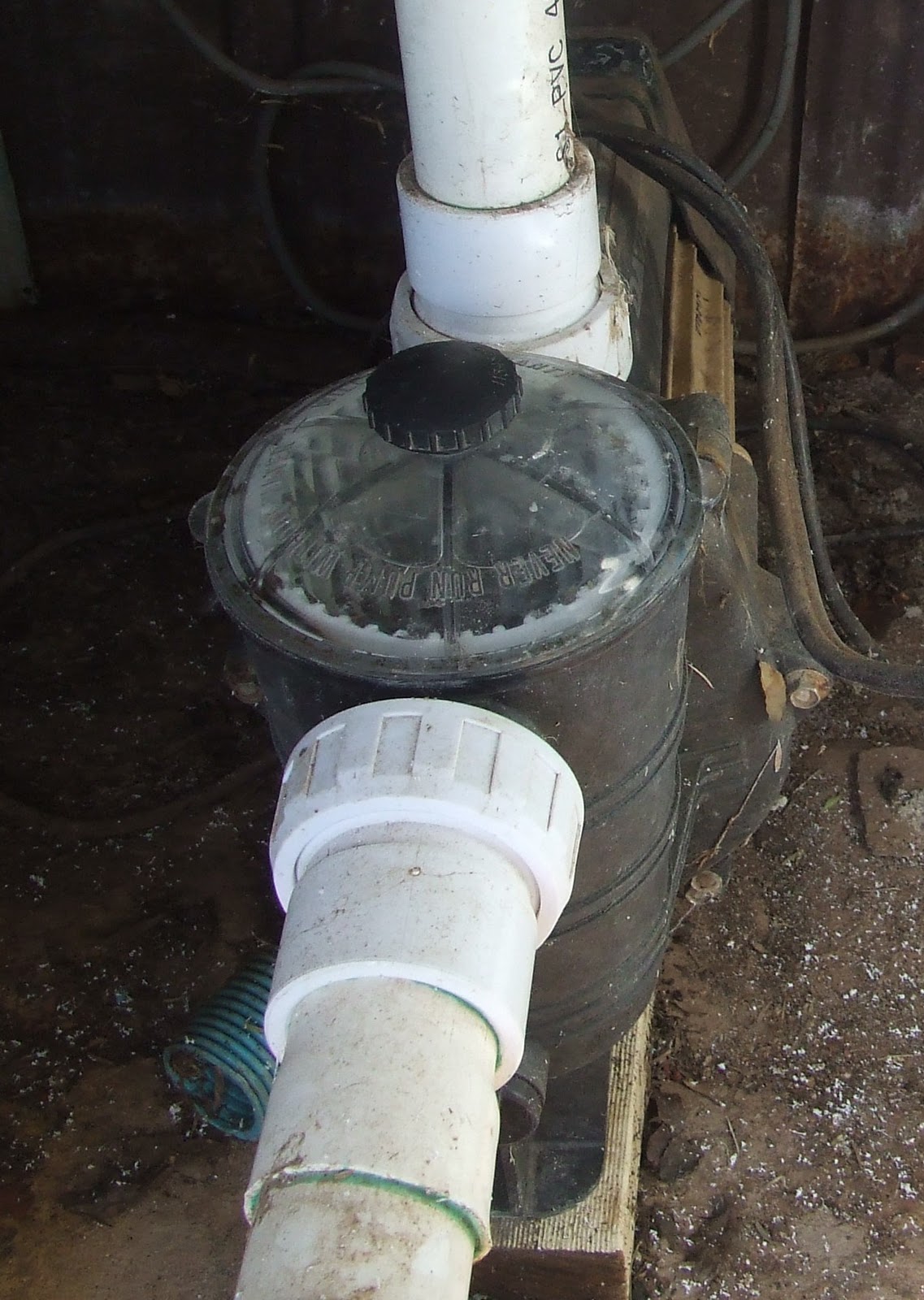
Pools are notorious energy guzzlers, and when I bought the house in the year 2000, mine was no exception.  It had a thumping big 3kW pump motor, which fortunately died after about 2 years, and I replaced it with a more efficient 1.1kW pump.  This pump is still not as efficient as I would like, so when this one pops its clogs, I will be looking for an alternative.  Either a DC brush-less pump powered by solar panel, or a more energy efficient AC pump motor.  It shouldn’t be too long as I can hear the bearings going in this pump already.

When the pump is running, the device called a “Creepy Crawly” makes its way around the pool and cleans/sucks all of the silt off of the bottom.  This water then gets filtered by a media filter then returned back into the pool all nice and clean.  However, we had another device in the middle of all this.  We have a salt water chlorinator that has a cell that splits the two molecules within the salt (Sodium & Choride).  The sodium sticks to the cell plates, and the chloride, now chlorine is returned to the pool to keep the bacteria levels down, without the addition of copious amounts of dry or liquid chlorine.   This is a great environmental feature, as all we have to add to the pool is salt in big 20kg bags each year.

So we have covered water and chemicals.  What about the media filter?  Well the sand filter we had up until about a month ago needed to be backwashed, (which is just a fancy term for cleaning and dumping about a thousand litres of water in 5 minutes down the drain) about twice a week.  This used to piss me off to no end at the thought of having to dump that water down the drain just to clean the silt out of the filter.

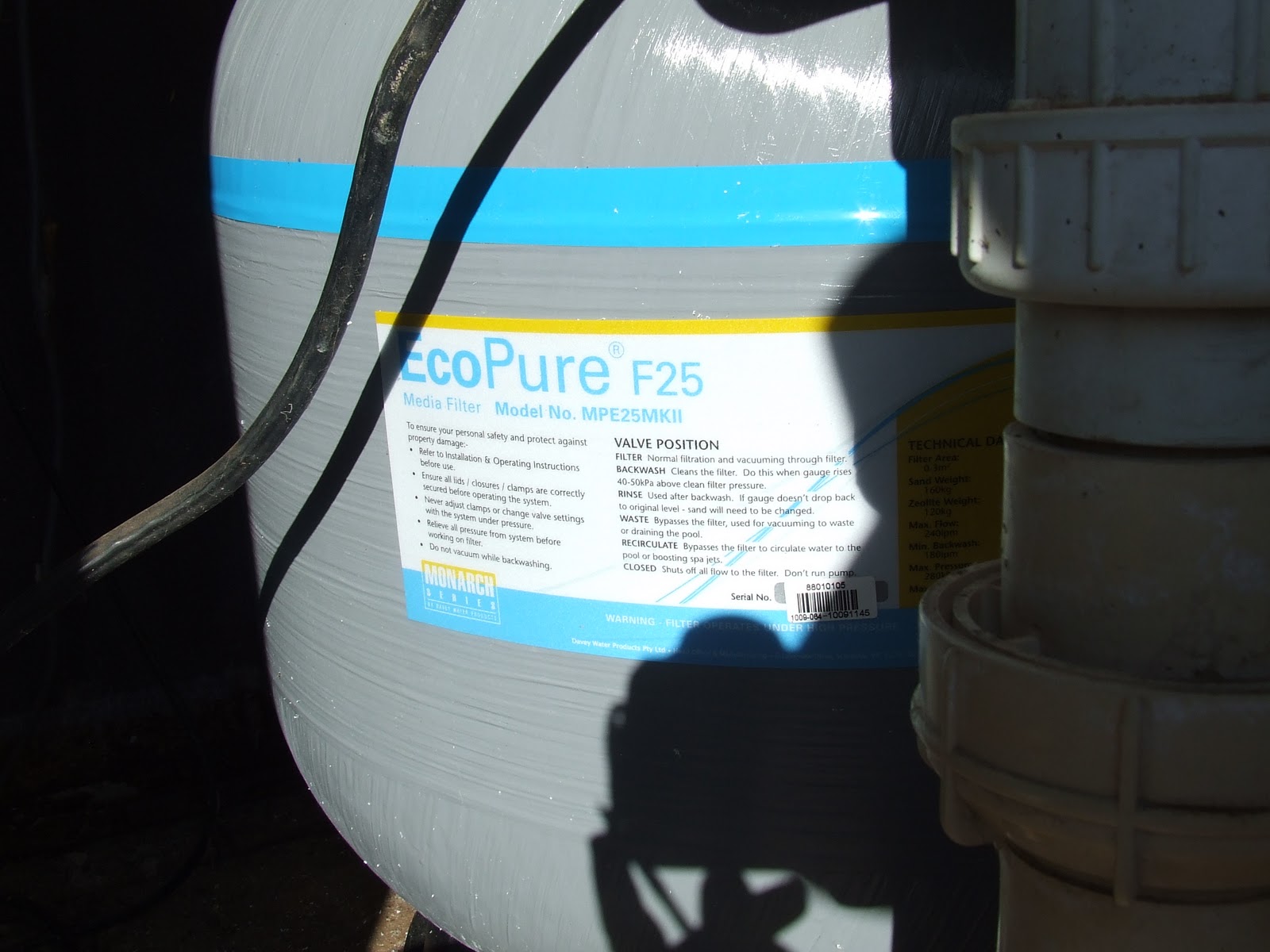
Like I mentioned before, we replaced the old sand filter with a much more efficient device.  Enter the new media filter the EcoPure F25.  I am not sure which part of it is ‘eco’ but I do know that it does not need hardly any backwashing every month.

It does not contain sand, but is filled with a medium called Zelbrite, which is basically crushed zeolitic volcanic rock in a granular form.  It collects more silt because is attracted to the Zelbrite and therefore requires less backwashes and less water wastage.  In the one and a half months I have had this new filter, I have backwashed it once, and it took 30 seconds to clear instead of the normal weekly clean and 5 minute flush!  I am so pleased, and it all cost only $100 more than a normal filter and filter medium.

As for running the system, one pool guy told me that I needed to run it for at least 8 hours in summer and 4 hours in winter to make the chlorine and filter the water.  If I took his advice then I would use at least 9 kWh of electricity in the summer just on the pool.  Well, not one to follow the pack, we filter for 2 hours a day in summer, and I clean the pool manually on a Saturday morning during warm weather which only takes another hour.  So from a recommended 63 kWh a week to just 15 kWh using my method.  The chlorinator makes less chlorine due to less pumping time, so I combated this by using a simple floating chlorinator that I put a few large chlorine tablets in once a week, to keep the levels up in summer.  In winter, I don’t add it all.

All in all, I believe that the methods that I use save water, electricity and chemical additives, which can only be a good thing for the planet, and all those who swim in the cement pond!

Will this article help someone you know? If so help them out by sharing now!

  • Click to share on Facebook (Opens in new window) Facebook
  • Click to share on X (Opens in new window) X
  • Click to share on LinkedIn (Opens in new window) LinkedIn
  • Click to share on Reddit (Opens in new window) Reddit
  • Click to share on Pinterest (Opens in new window) Pinterest
  • Click to share on Tumblr (Opens in new window) Tumblr
  • Click to print (Opens in new window) Print
  • Click to email a link to a friend (Opens in new window) Email
  • More
  • Click to share on Pocket (Opens in new window) Pocket

Filed Under: Cleaning, Electricity efficiency, swimming pool, water

All Hands On Deck!

September 21, 2011 @ 21:31 By Gavin Webber 8 Comments

I have been keeping this project close to my chest as I wanted to wait until it was completed before sharing it with everyone.

Long time readers will know that I have a swimming pool in the backyard.  I don’t write about it much, because it takes up so much room where I could be growing food and up until now it has frustrated me.  Yes folks I have even thought about converting it into a fish farm, however there is another problem with that idea.  You see, Kim has Multiple Sclerosis and one of her main symptoms in summer is fatigue.  The disease stops her body from regulating its temperature, so we find that by having a quick dip in the pool (more like all afternoon, mermaid style) when the outside temperature rises about about 30C, it recharges her batteries, and she can function again.  So we are leaving the pool how it is.

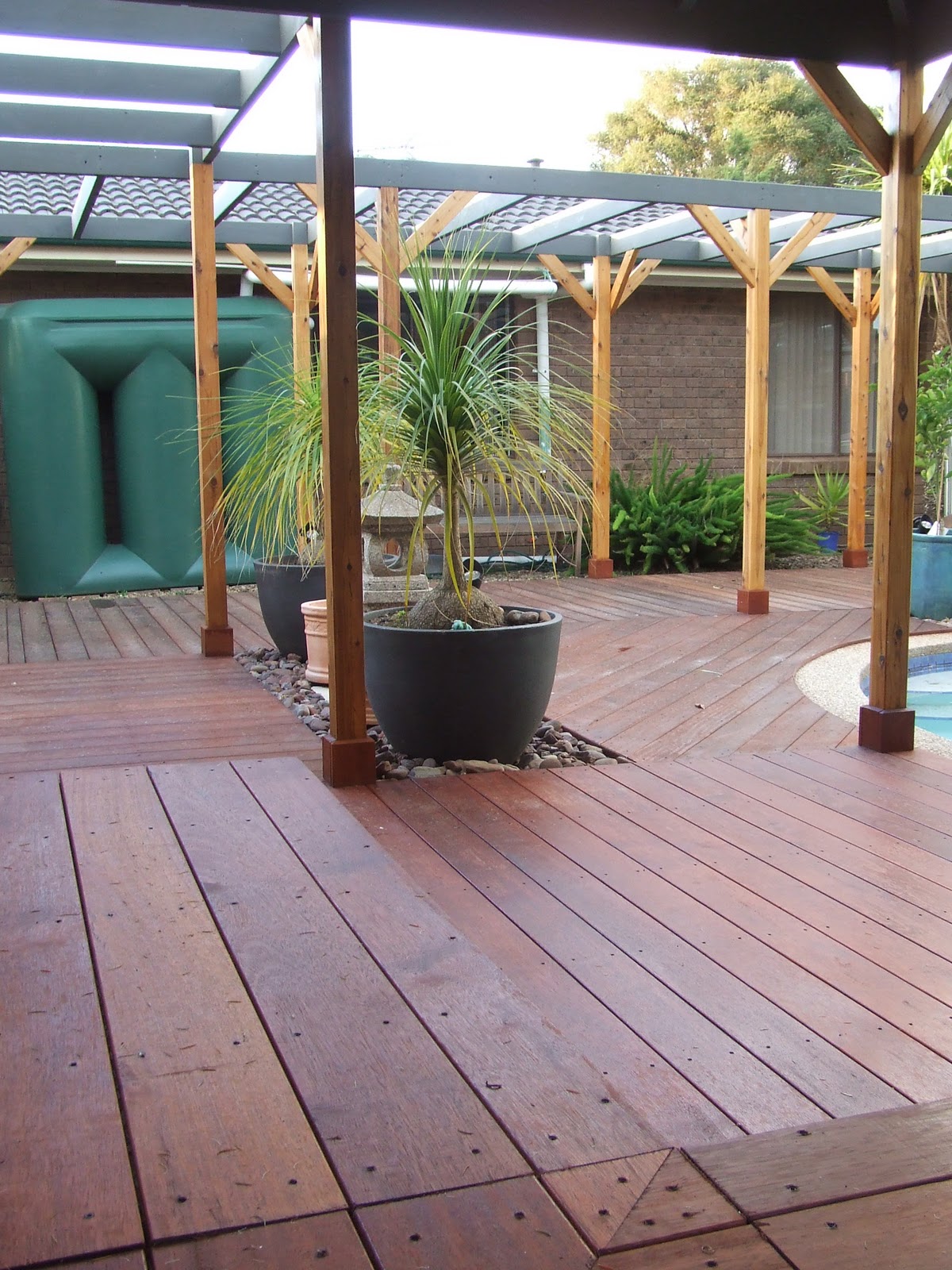
We do have a four citrus trees, a bay tree, and green tea bush all in pots, however I wanted more.  I wanted some grapes!  So once we checked how much money we had put aside for the project over the last year, Kim and I compromised, I decided upon a grape arbour, and Kim a gazebo on the proviso that it was all made from sustainably harvested wood and finished off with low VOC paint and natural oils.  We hired our builder friend to do the main work, and Kim and I did the painting, oiling and landscaping.

We figured that as wood was a renewable resource it was fine as long as we made wise choices.  We chose the following timbers using the Good Wood site as our guide; Treated Radiata Pine, Cypress, Cedar, and eco-Merbau.  The first three types of wood are normally harvested from plantation forests in Australia, and not from old growth forests, however Merbau is usually illegally harvested throughout Indonesia and Malaysia and sold in Australia as decking timber.  Our builder Ray managed to track down some FSC certified Merbau which cost a little extra, but I was happy to pay the price.   It certainly beats using Steel and Aluminium which have a much higher carbon footprint.

So on to the pictures.  Here is a before shot of what the area looked like 11 years ago.  It was run down, loaded with concrete which we chose to leave in place, and needed a boost.

Taken when we bought the house in 2000
We painted the concrete and put in a shed in 2006
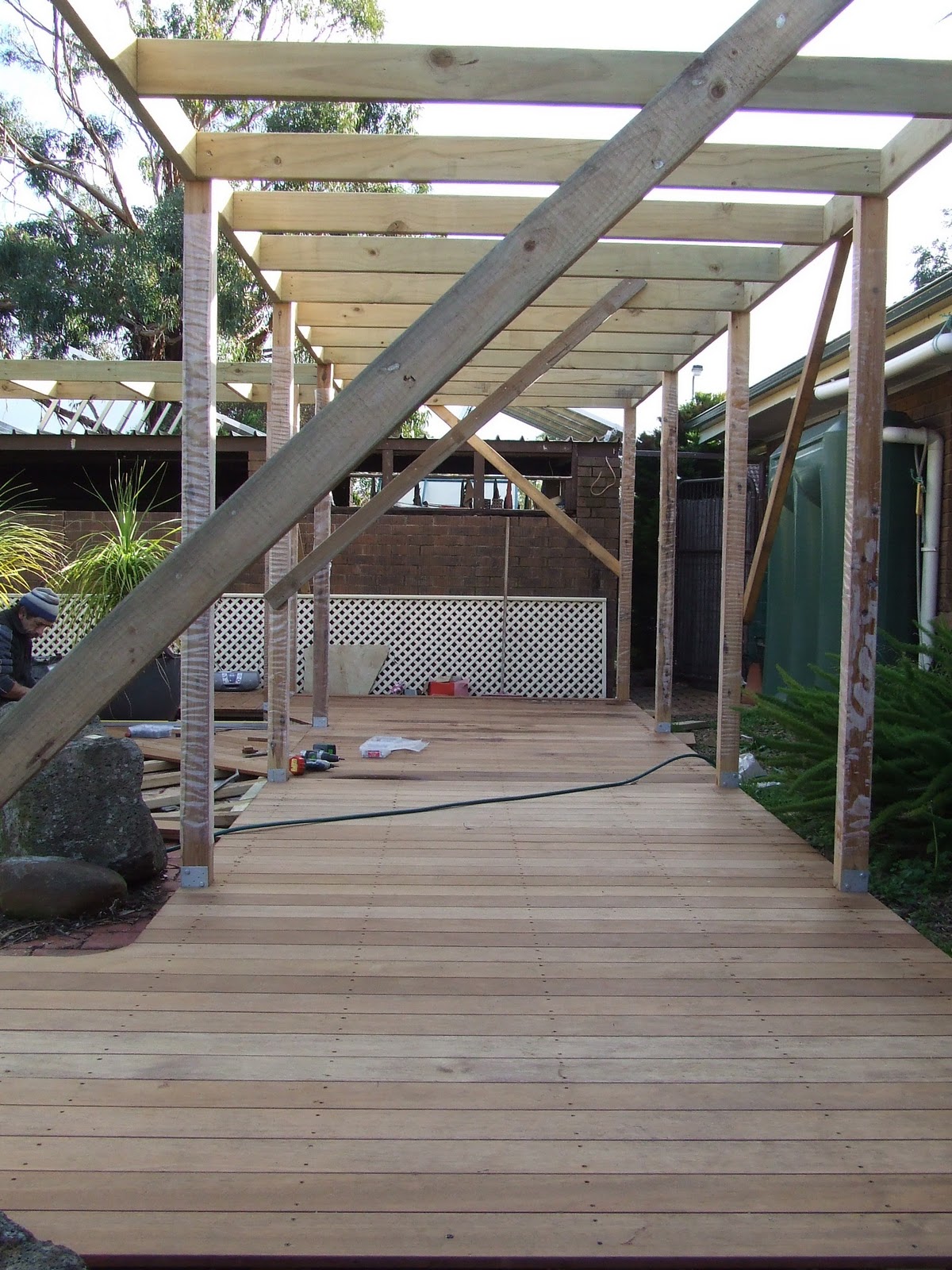
July 2011, construction had begun.  We removed the shed late last year (ebay).

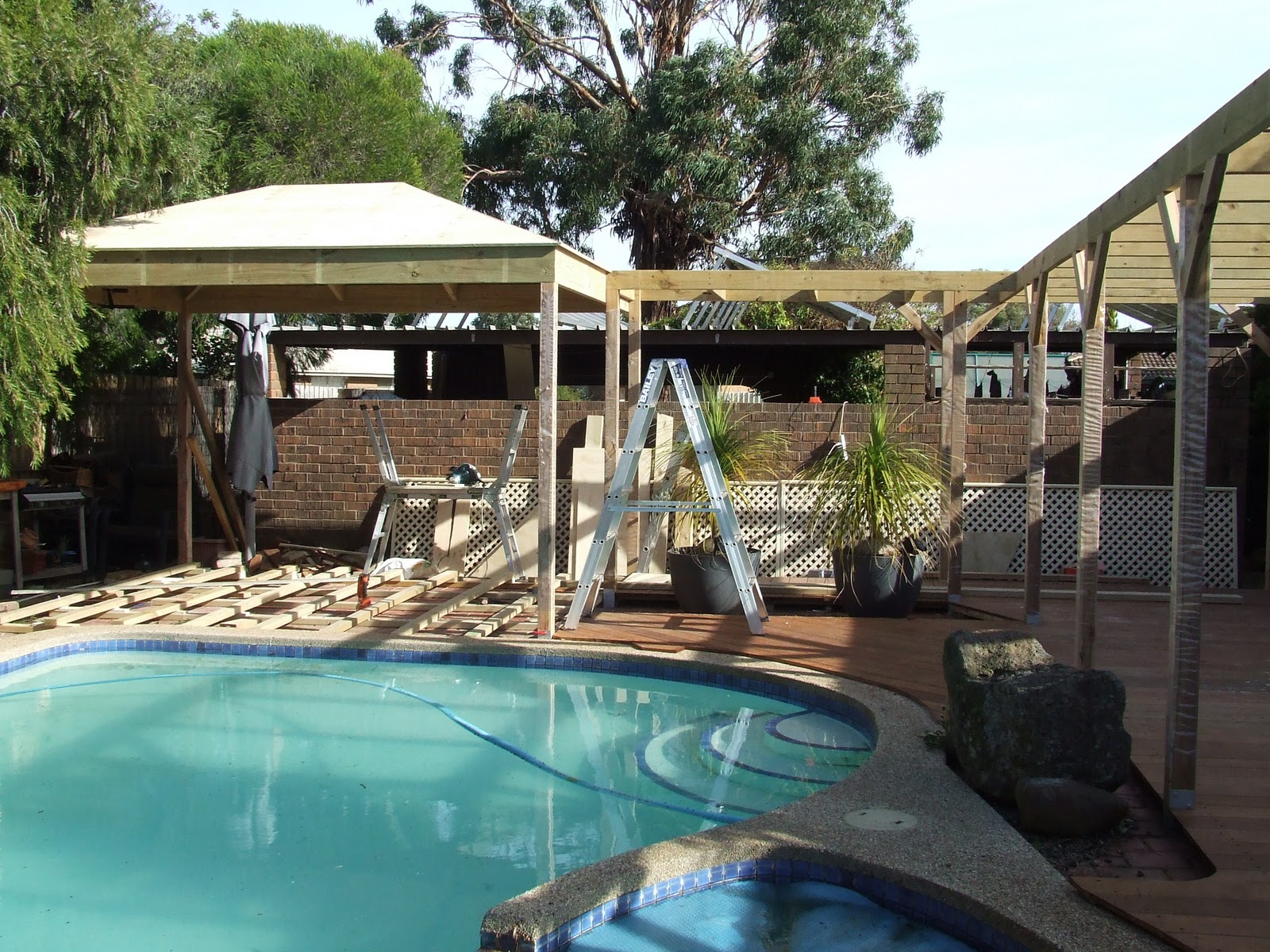
View from the opposite corner.

The deck is taking shape

The gazebo begins.

The roof goes on

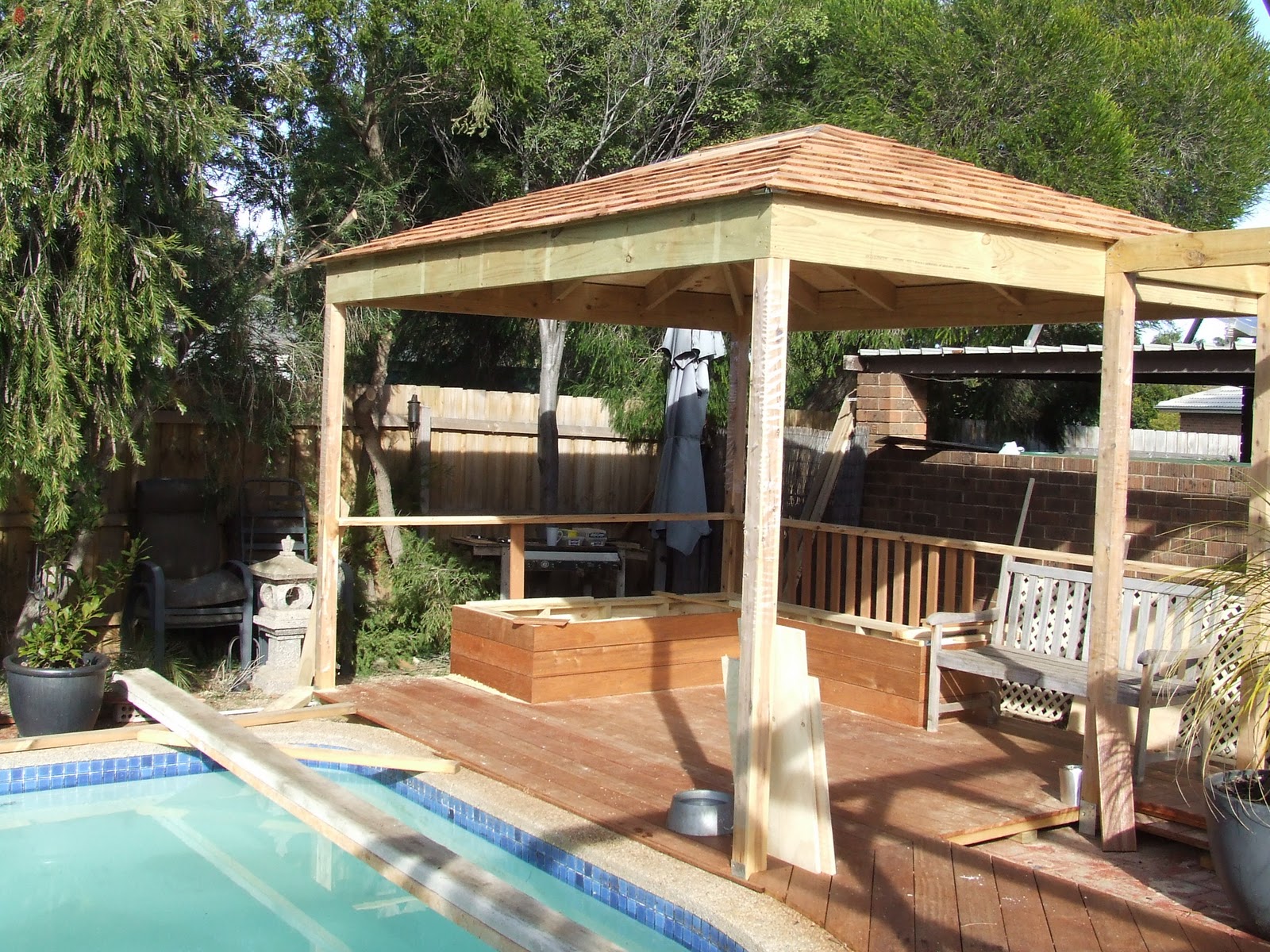
The cedar shingles are on and the seating is nearly finished.

We painted the treated pine that was exposed at the top with a low VOC external paint (woodland grey)

Started landscaping.  I moved the two orange trees which look nice.

So far so good.  You will note that the cypress supports are covered in plastic.  This is to stop the wood from drying out and splitting which it has a tenancy to do.  You have to oil or paint this wood to prevent it from splitting in the rain.

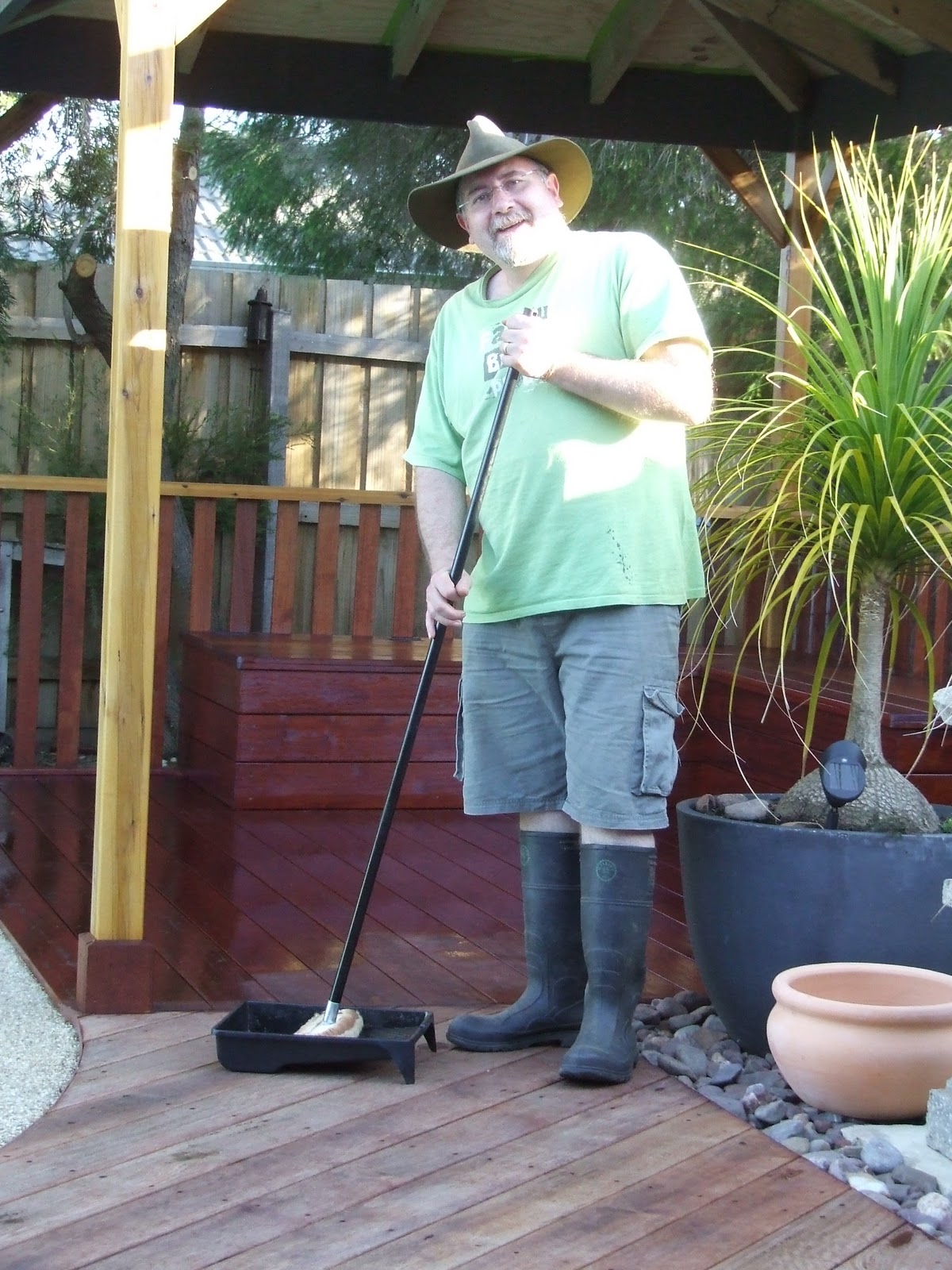
Then it was on to the final touch, oiling the deck.  I used a natural oil which was Tung oil mixed with wood turpentine.  No petrochemical toxins for me!

Strike the pose.  Nice gum boots Gav!
Note the little solar spotlight in the pot on the right hand side.

Diligently oiling the gazebo

All finished.  Then it rained and made the deck dirty!

Starting to landscape.

Sitting on the build in benches.

The benches are really big boxes with lids.  Great for storage.

 Once the two coats of oil had been applied and I was happy with the result, my eye turned to lighting.  Not wanting to deviate from our solar ethos, we purchased some solar powered LED white fairy lights.  You may have already noticed that I have solar led spot lights in most of the pot around the deck.  These work really well.  Solar lighting certainly has come leaps and bounds since the technology was first released.

Small, but effective solar panel.
This unit contains two AA size Ni-MH batteries, that can be replaced.

Meet the Mum and Dad, little fellow.  Welcome to your new digs.

Lights all strung up.

You will notice that the lights are strung up on lengths of wire across the top.  This wire is going to be used to trail the grape vines once they grow up the main support posts.  Give it a few years, and it will be cool in summer and let the sunlight through in winter.  All I will have to contend with are grape leaves in the pool, and a few birds nibbling on the grapes.  I should be able to get netting to put over it when they eventually grow.

I have purchased three varieties of grape vines, Sultana which is a white seedless variety, Crimson Seedless, and two Merlot vines.  Merlot loves clay based soil, so it should thrive in our soil conditions.  We will eventually have enough for wine, I hope.  When the time comes, I will have to look for a wine making course.

Me thinks that it is time for a pool party!

Tomorrow, I will write about how we maintain the pool as sustainably as possible, with minimal chemical inputs and no mains water.

Will this article help someone you know? If so help them out by sharing now!

  • Click to share on Facebook (Opens in new window) Facebook
  • Click to share on X (Opens in new window) X
  • Click to share on LinkedIn (Opens in new window) LinkedIn
  • Click to share on Reddit (Opens in new window) Reddit
  • Click to share on Pinterest (Opens in new window) Pinterest
  • Click to share on Tumblr (Opens in new window) Tumblr
  • Click to print (Opens in new window) Print
  • Click to email a link to a friend (Opens in new window) Email
  • More
  • Click to share on Pocket (Opens in new window) Pocket

Filed Under: Lighting, swimming pool

Next Page »

Search This Blog

Follow my work

About Gavin Webber

About Gavin Webber

An Ordinary Australian Man Who Has A Green Epiphany Whilst Watching A Documentary, Gets a Hybrid Car, Plants A Large Organic Vegetable Garden, Goes Totally Solar, Lowers Consumption, Feeds Composts Bins and Worms, Harvests Rainwater, Raises Chickens, Makes Cheese and Soap, and Eats Locally. All In The Effort To Reduce Our Family's Carbon Footprint So We Can Start Making A Difference For Our Children & Future Generations To Come.

Delve Into the Archives

Visit Our Online Simple Living Shop

Little Green Workshops

Top Posts & Pages

Strawbridge Family Inspiration
Hot Chilli Chutney
Cherry Jam
African Horned Melon
How To Remove Scaly Leg Mites
Home Made Bread Rolls
Tips for Growing Citrus in Pots
Quince Paste
Black Aphids On Garlic
It's Not Easy Being Green TV series

Recent Awards

Recent Awards

Local Green Hero

Categories

Favourite Daily Reads

Debt Free, Cashed Up, and Laughing

The Off-Grid Solar House

Greener Me

The Rogue Ginger

Little Eco Footprints

Down To Earth

Surviving the Suburbs

Little Green Cheese

Eight Acres

The Witches Kitchen

TGOG Readers On-line

Carbon Offset website

Copyright - Gavin Webber © 2025