• About
  • Archive
  • Contact
The Greening of Gavin
  • Home
  • Our Green Shop
    • Little Green Workshops
  • Green Workshops
    • Cheese Making
    • Soap Making
    • Soy Candle Making
  • eBooks
    • Clay Oven eBook
    • Keep Calm and Make Cheese eBook
  • Podcast
    • TGOG Podcast
    • TGoG Podcast Archive
    • Little Green Cheese
  • Vlog
  • Cheese
  • Green Living
    • Chickens
    • Gardening
    • Soap Making
    • Recipes
    • Climate Change
    • Peak Oil
    • Solar Power
  • Resources

Electro-Gadget Madness

January 13, 2015 @ 19:51 By Gavin Webber 6 Comments

Electro-Gadget Madness

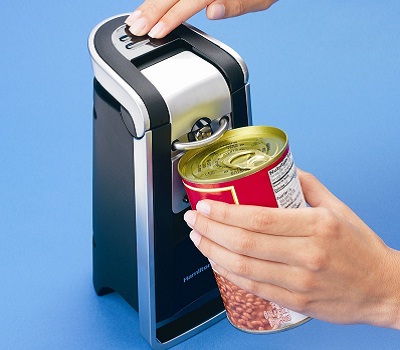
Electric can opener – Note the can. It is a ring pull. Oh the irony!

Here’s an observation.  Today it seems that for almost every task in the home there is now an electric-powered solution, whether it be a can opener, carving knife or an egg cracker (I kid you not).

These appliances may not all the be most energy-intensive products, but when you add all the energy consumption up and the materials need to manufacture and distribute them, you have to decide whether they are really worth it.

Wouldn’t traditional hand-operated devices be far more practical especially when they cost nothing to run, are cheaper to buy, and less prone to breaking?

We always choose hand-operated over electro-gadgets, but I don’t think this is the norm.  Mind you, I have even seen hand-operated gadgets that are simply a waste of space as well as being made from non-recyclable plastic.  Crazy stuff.

What is the strangest electro-gadget madness that you have seen that has a viable hand-operated alternative?  Let me know via comment and start a bit of a community thread happening.  This should be entertaining because I am sure there are lots of crazy things out there.
Will this article help someone you know? If so help them out by sharing now!

  • Click to share on Facebook (Opens in new window) Facebook
  • Click to share on X (Opens in new window) X
  • Click to share on LinkedIn (Opens in new window) LinkedIn
  • Click to share on Reddit (Opens in new window) Reddit
  • Click to share on Pinterest (Opens in new window) Pinterest
  • Click to share on Tumblr (Opens in new window) Tumblr
  • Click to print (Opens in new window) Print
  • Click to email a link to a friend (Opens in new window) Email
  • More
  • Click to share on Pocket (Opens in new window) Pocket

Filed Under: consumerism, Electricity efficiency, Nuts

Making Basil Pesto – Ben Style

March 12, 2014 @ 17:30 By Gavin Webber 10 Comments

We love fresh produce from our suburban food farm, especially this family favourite; Basil Pesto!

As one of our goals was to teach Ben (our teenage son) to cook meals, we thought it would be a good idea if Ben had a go at making it this time around.

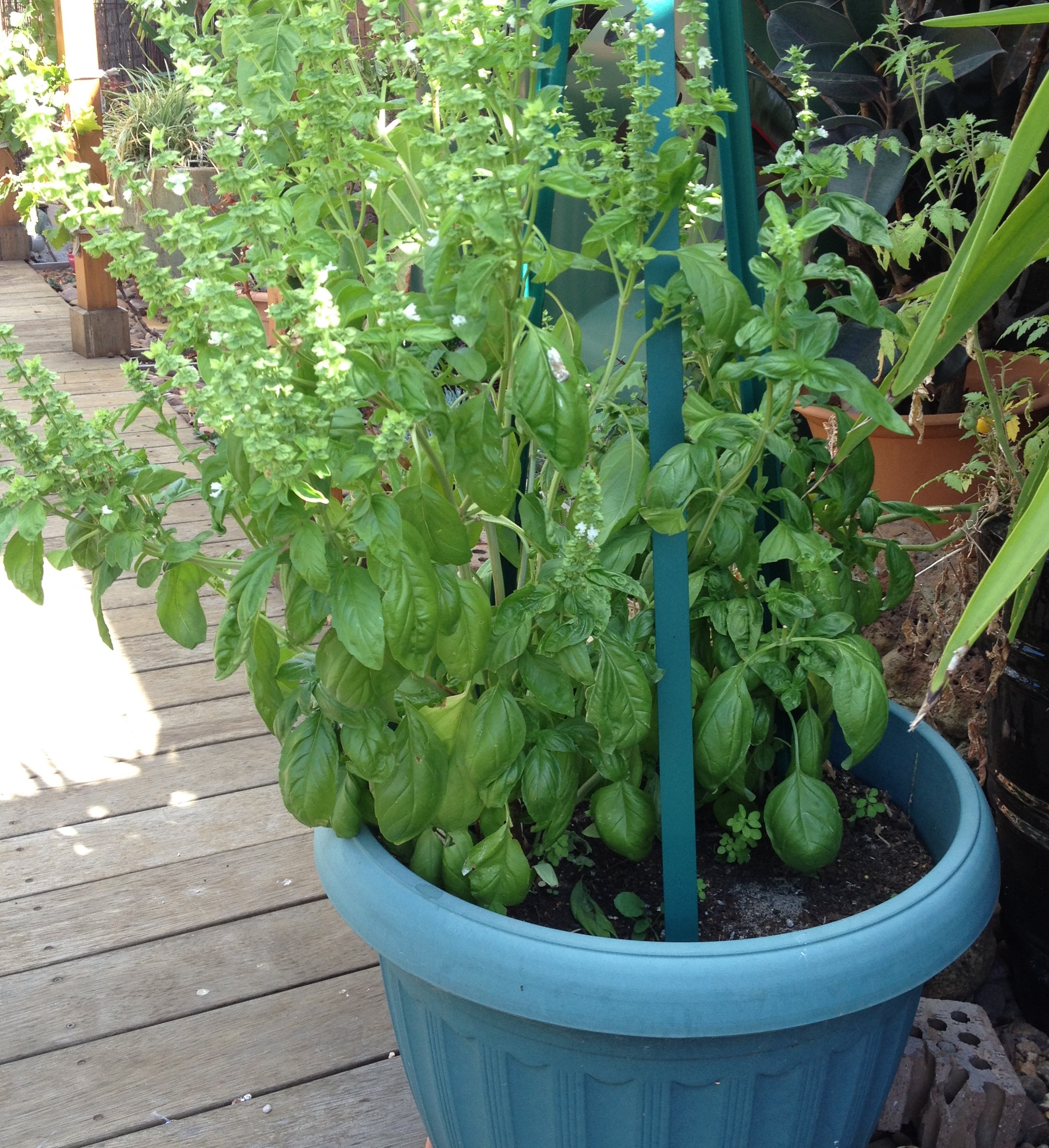
Basil growing in a pot

Basil growing in a pot

As I am the main gardener around here, I planted this fine specimen in early spring last year.  All I do is scatter last years seeds on the surface of the soil, and lightly spread a 2 mm layer of potting mix on top.  Basil seeds take ages to germinate, so you just have to be a bit patient, but grow they will.  I will be collecting these seeds again this year.  Wait for them to dry out and pull off the stalk and store in a brown paper bag or sealed glass jar until spring.

Enough about growing, on with the basil pesto!

Ben washing basil leaves

Ben washing basil leaves

Even though we practice organic principles, nevertheless, we always wash our produce.  You never know what bird might have dropped on it over the growing season.  You can see here that Ben is rinsing off the leaves.  As he is a newbie, I will let him off for not putting the plug in the sink to save water!

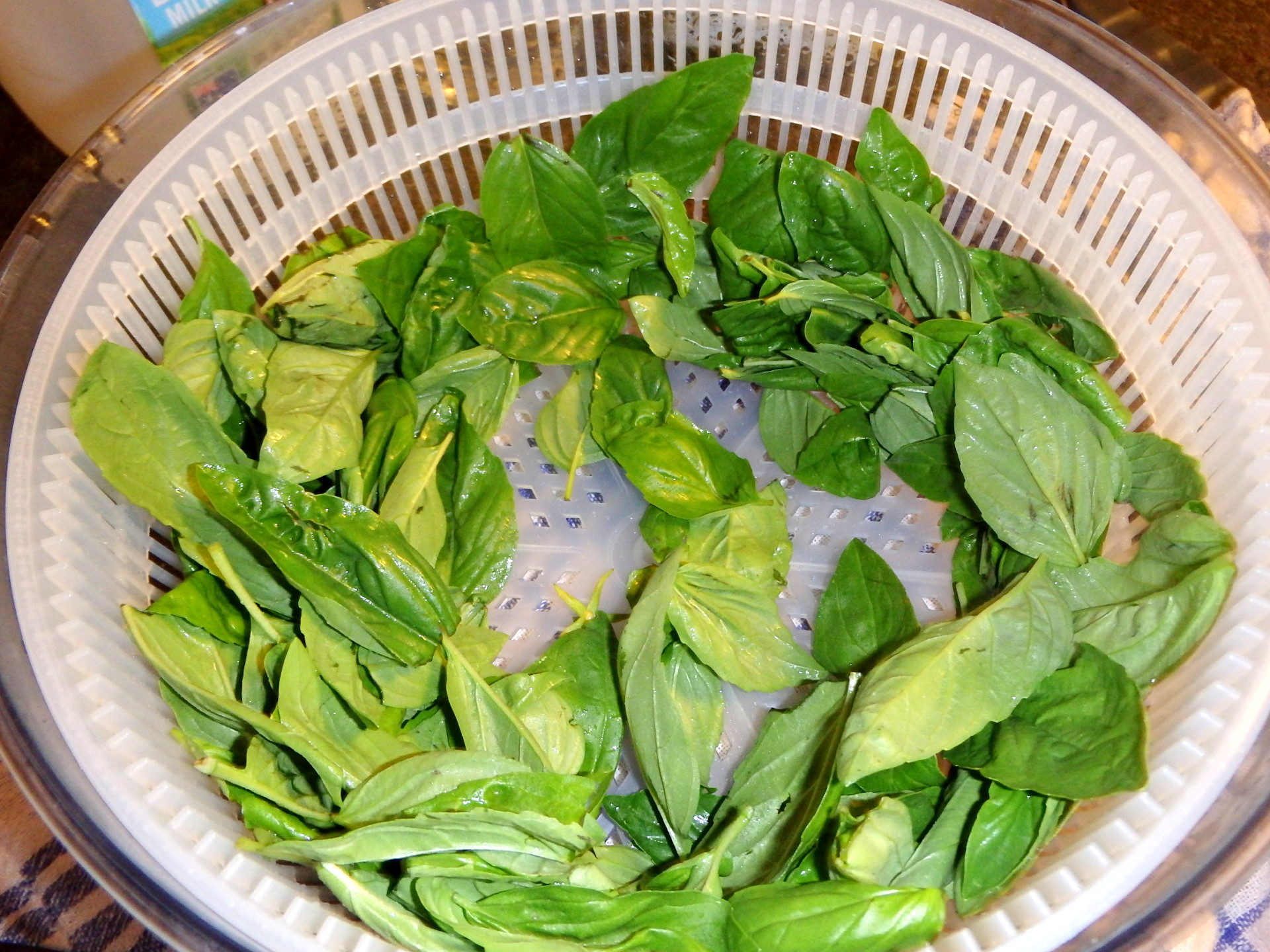
Basil leaves after spinning

Basil leaves after spinning

Once the leave are all clean and spun dry, Ben moved over to the food processor.

Adding basil leaves to food processor

Adding basil leaves to food processor

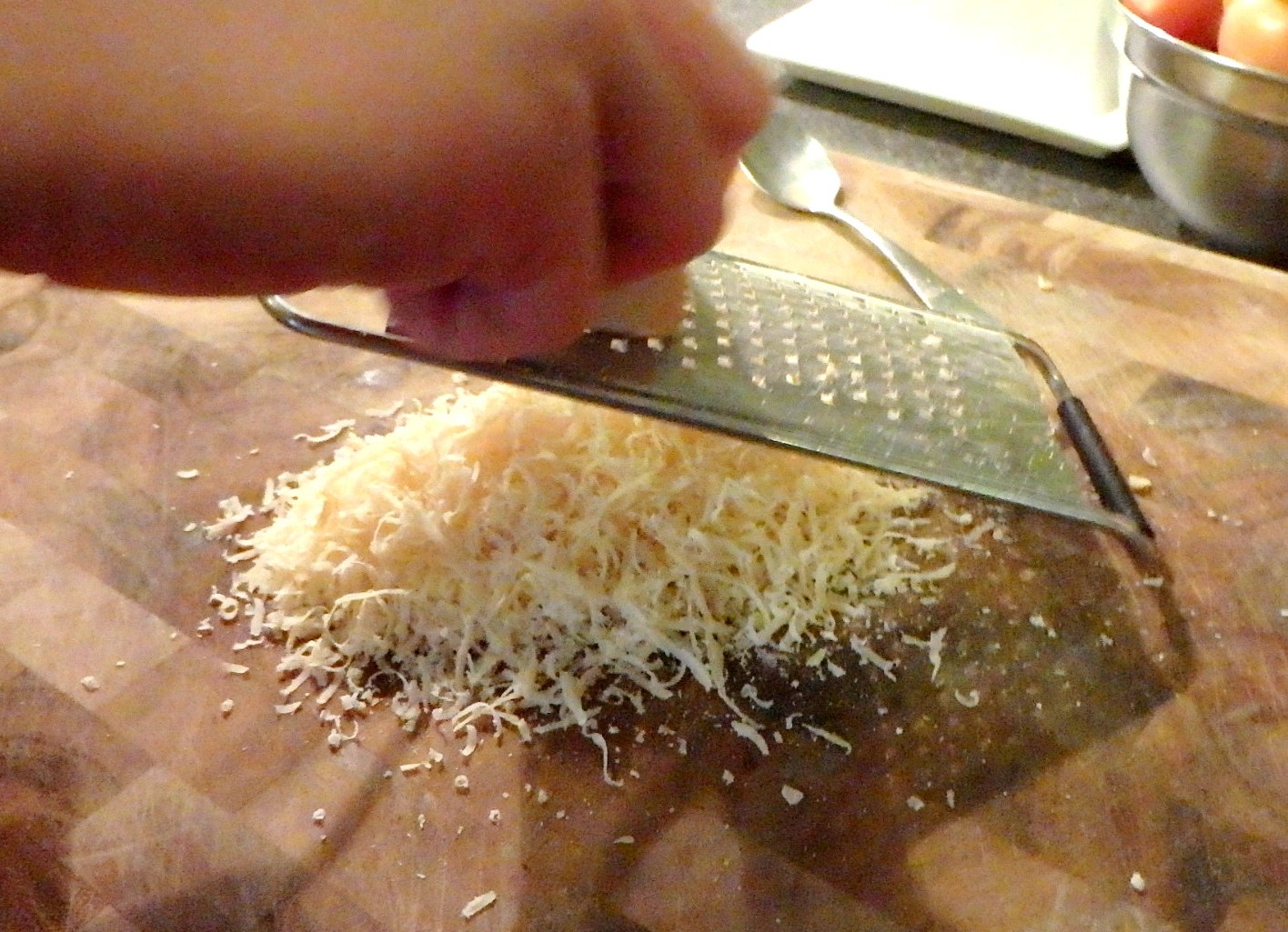
Once he managed to get all the leaves into the bowl with a chopping blade in place, he moved on to the cheese!  About two years ago, I made some deliciously sharp Romano cheese which was perfect for this Basil pesto.  I still had a little bit left that he could use.

Grating the Romano cheese

Grating the Romano cheese

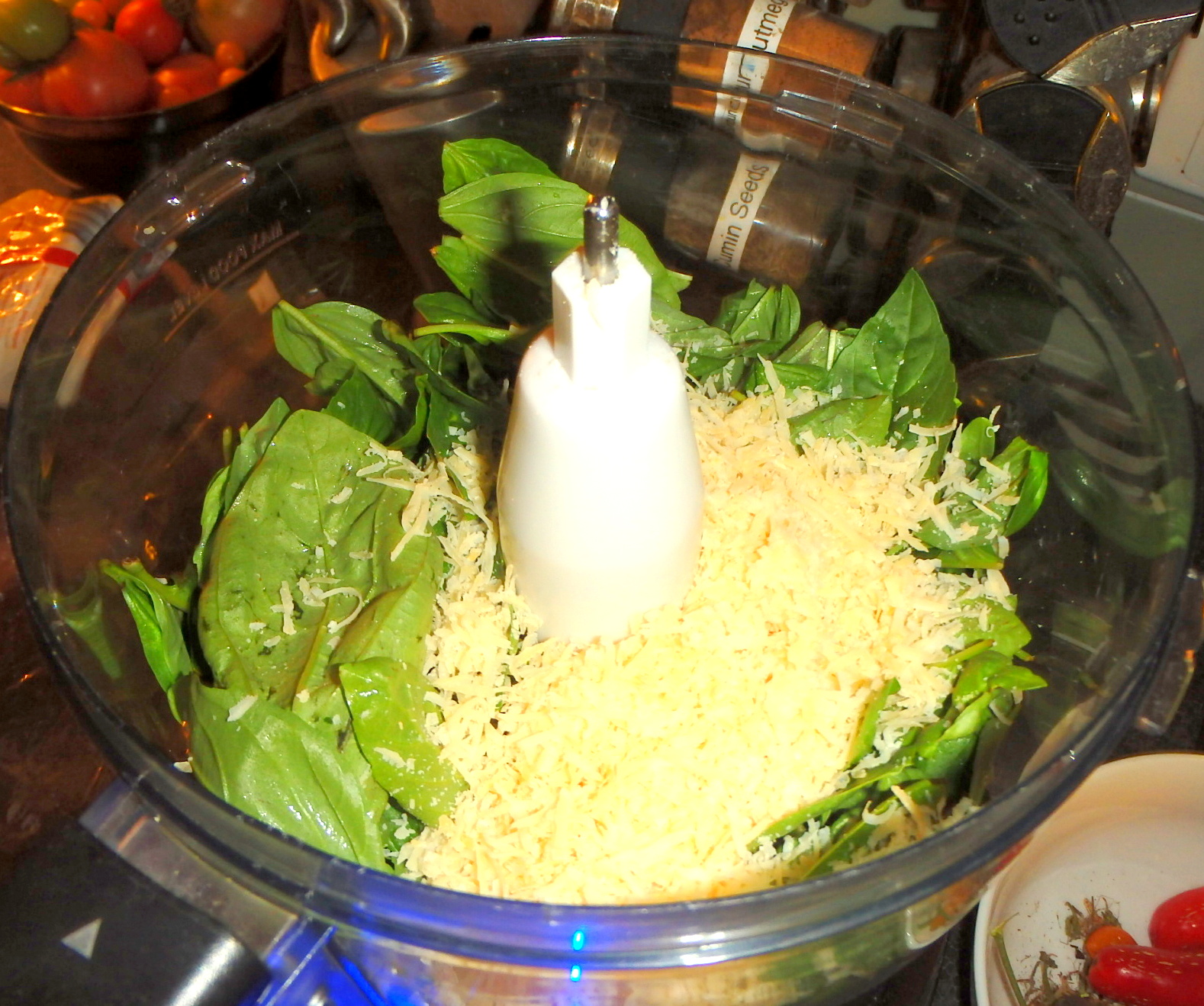
He did a great job, and didn’t catch his knuckles.  The aroma of the cheese was mouth-watering, to say the least.  Into the food processor bowl it goes.

Romano cheese added to food processor

Romano cheese added to food processor

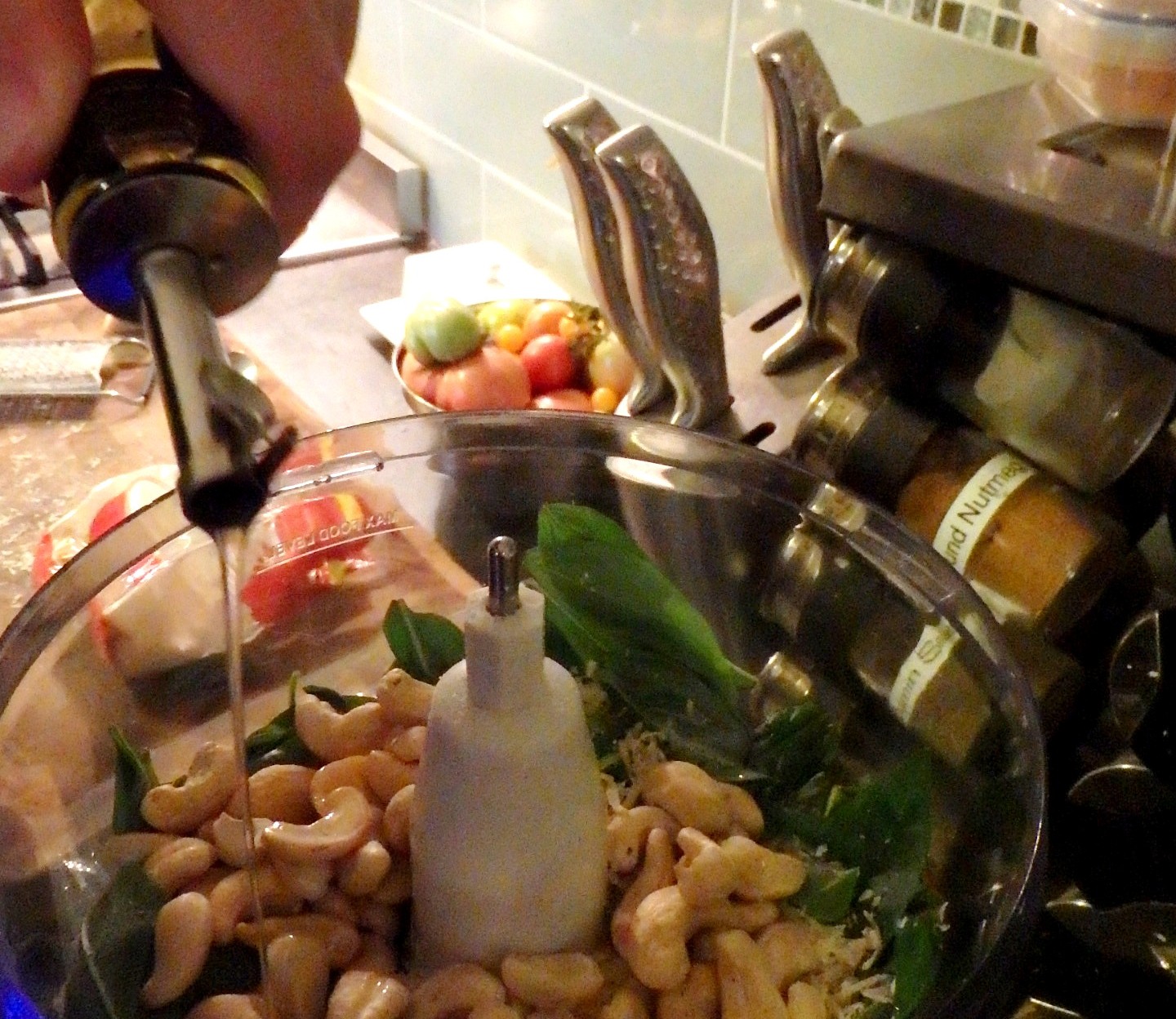
If you processed this now, it would be very dry, and not form a paste.  To smooth things out you need two classic ingredients.  Cashew nuts and Olive oil.  About a cup of nuts and half a cup of olive oil.

Now I realise that cashews are grown in the tropics, and not very local, however I have read that you can substitute macadamia nuts if you are looking for that Aussie twist.  The olive oil is from a local producer and tastes heavenly.

Adding cashew nuts and olive oil to make pesto

Adding cashew nuts and olive oil

Ben then ground in some sea salt and black pepper for flavour and then pulsed the lot until it turned into a paste.  He then tasted it, then put a bit on a cracker for me to taste.  It was a bit dry so he added more olive oil, which did the trick.  I normally add a couple of fat, home-grown garlic cloves, but Ben left these out for his recipe.

Basil Pesto ingredients blended to a paste

Basil Pesto ingredients blended to a paste

So Ben, what did it taste like?

Thumbs up by Ben the budding chef

A big thumbs up!  Kim put it into containers, froze half and put some into the fridge until dinner time.

I cooked up some fettuccine and Ben stirred in his special Basil pesto.  He told me that it was delicious.

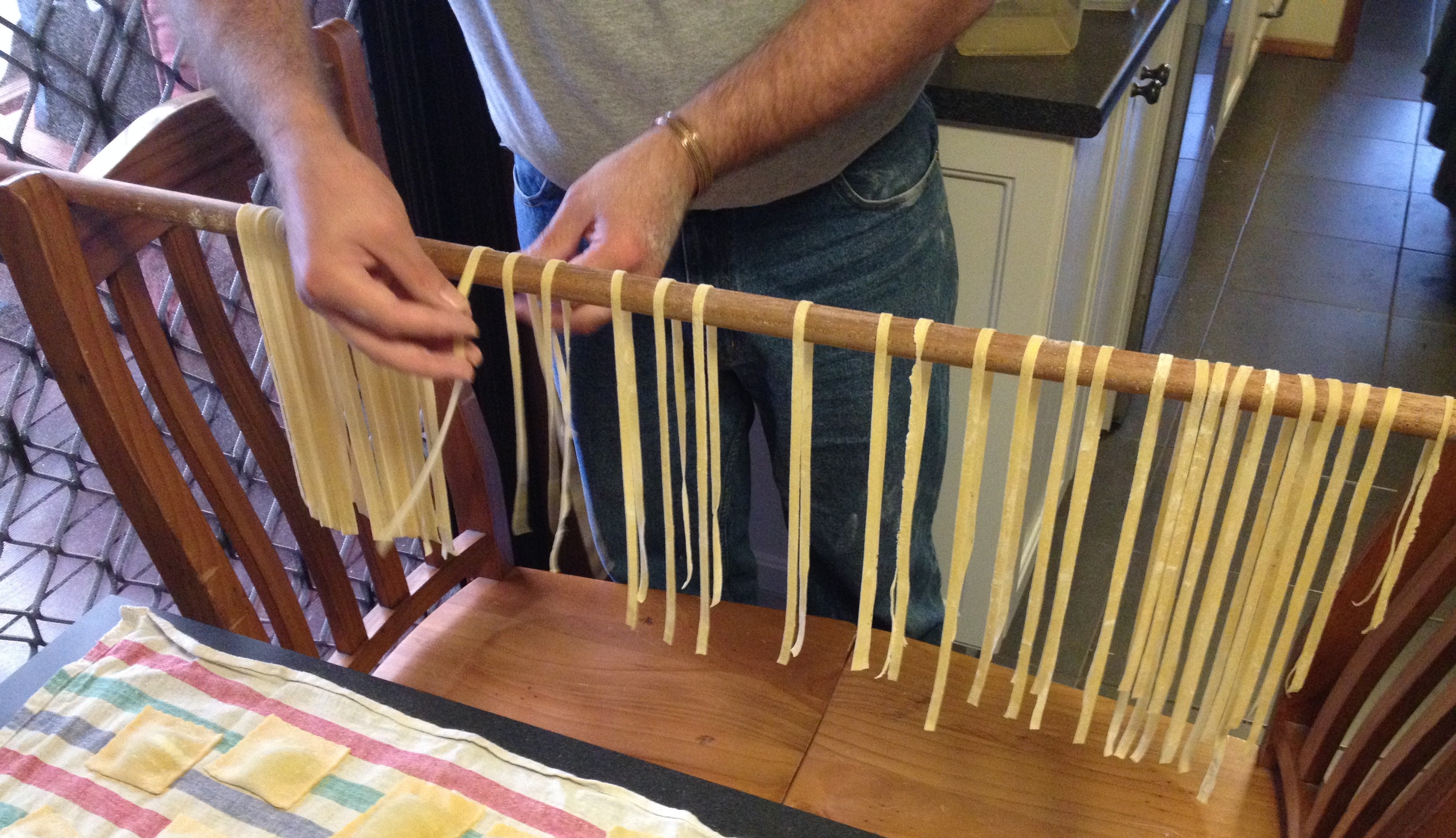
Separating the Fettuccine strands

So there you go.  If my fourteen year old son can make it, you certainly can!  All you have to do is grow some basil.

Do you have any variations on Ben’s recipe?  He would love to learn more so he can give it a try next time.  There are still plenty of leaves on the basil bushes.

Will this article help someone you know? If so help them out by sharing now!

  • Click to share on Facebook (Opens in new window) Facebook
  • Click to share on X (Opens in new window) X
  • Click to share on LinkedIn (Opens in new window) LinkedIn
  • Click to share on Reddit (Opens in new window) Reddit
  • Click to share on Pinterest (Opens in new window) Pinterest
  • Click to share on Tumblr (Opens in new window) Tumblr
  • Click to print (Opens in new window) Print
  • Click to email a link to a friend (Opens in new window) Email
  • More
  • Click to share on Pocket (Opens in new window) Pocket

Filed Under: Cooking, Nuts, recipes

Roasted Chestnuts

May 9, 2012 @ 21:49 By Gavin Webber 15 Comments

I discovered roasted chestnuts when courting my wife Kim in the UK, in 1995.  We had just visited the British Museum and spied a chestnut vendor, of which in the colder months there are hundreds all around the city of London.  Having never tried them before, we bought a bag and found that they were just simply delicious, even though we ended up with charcoal all over our hands.

Back in Australia, these tasty morsels are a self serve option, and I rarely see a street vendor selling them.  So when Kim’s friend gave us a bag I jumped at the chance to roast some up.

Now remembering the black, sooty fingers on my last encounter, I decided to scour the net in search of an easy, clean method of roasting chestnuts in our kitchen oven.  I found one, and this is how I went about it.

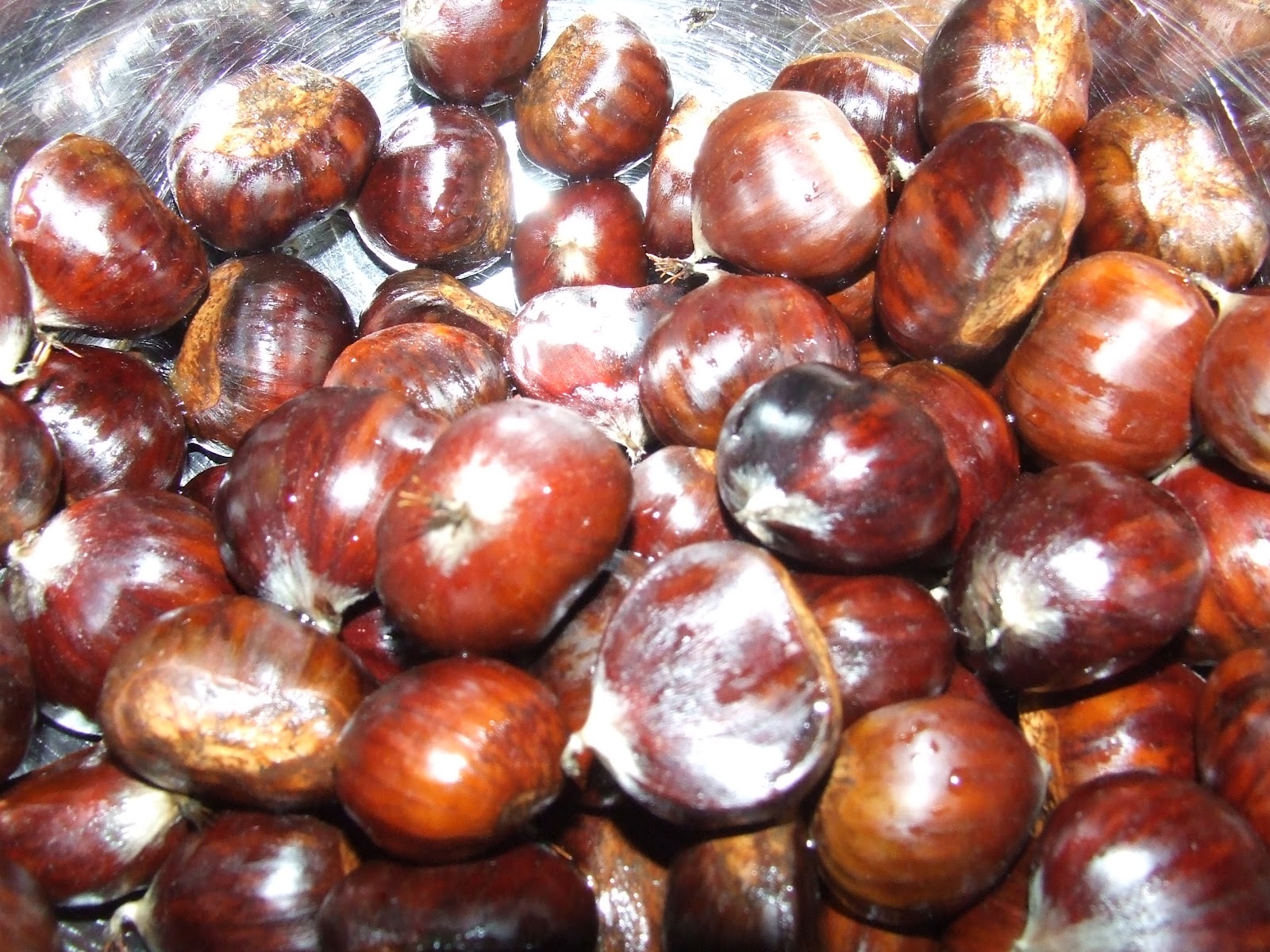
Firstly I washed the chestnuts in cold water to remove any mould or dirt.  Then turn your oven on and preheat to 220C or 425F.

Then with a sharp bread knife score the shell of the curved side until you just touch the nut.  It is pretty easy and you can tell when you are through.  I have heard some people use a cross, but I think this was much safer.

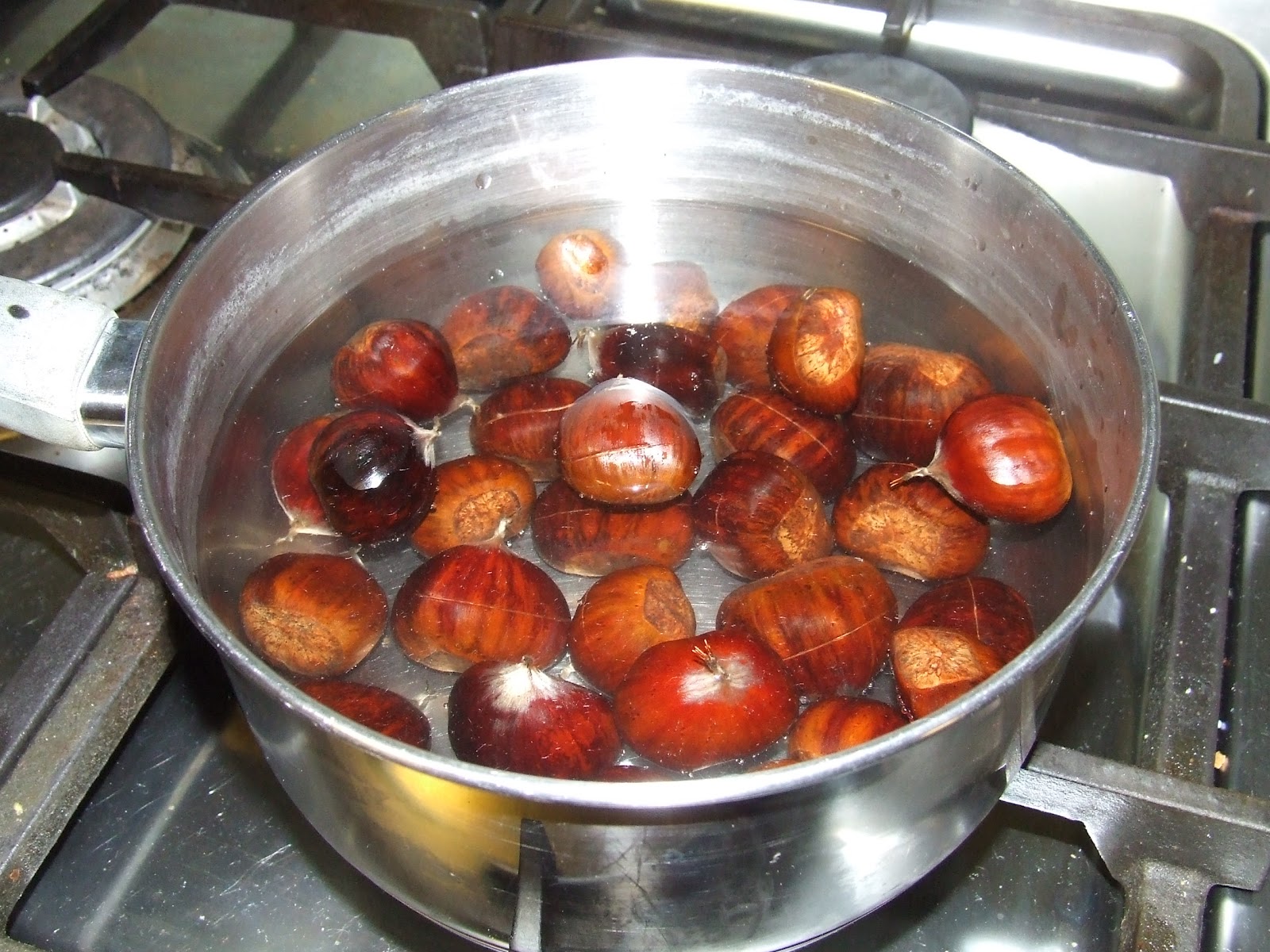
Put them in a pan and just cover with water, and bring to the simmer.

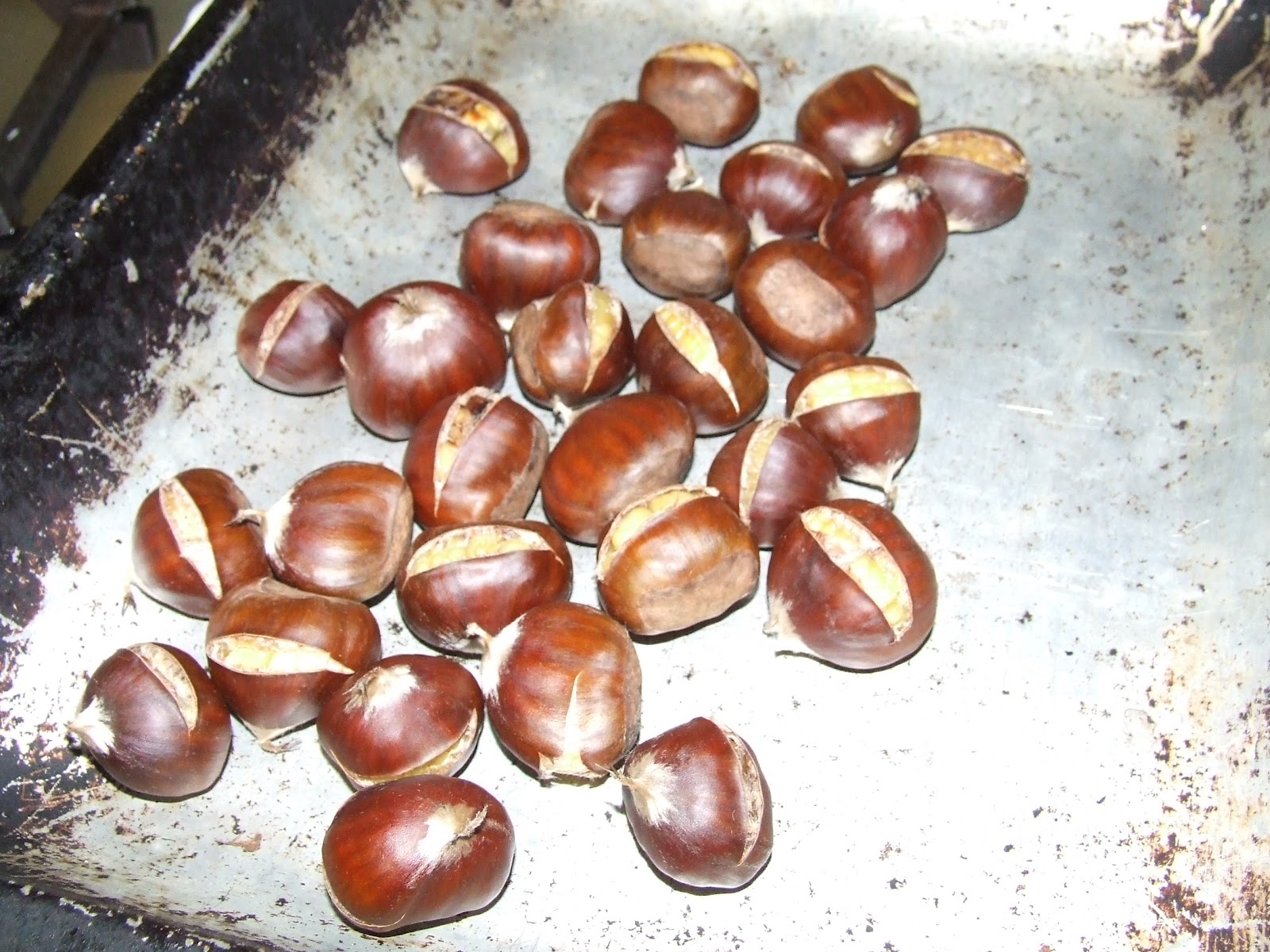
Once simmered, take them out and put into a roasting tray.  The chestnuts have split open a little wider.

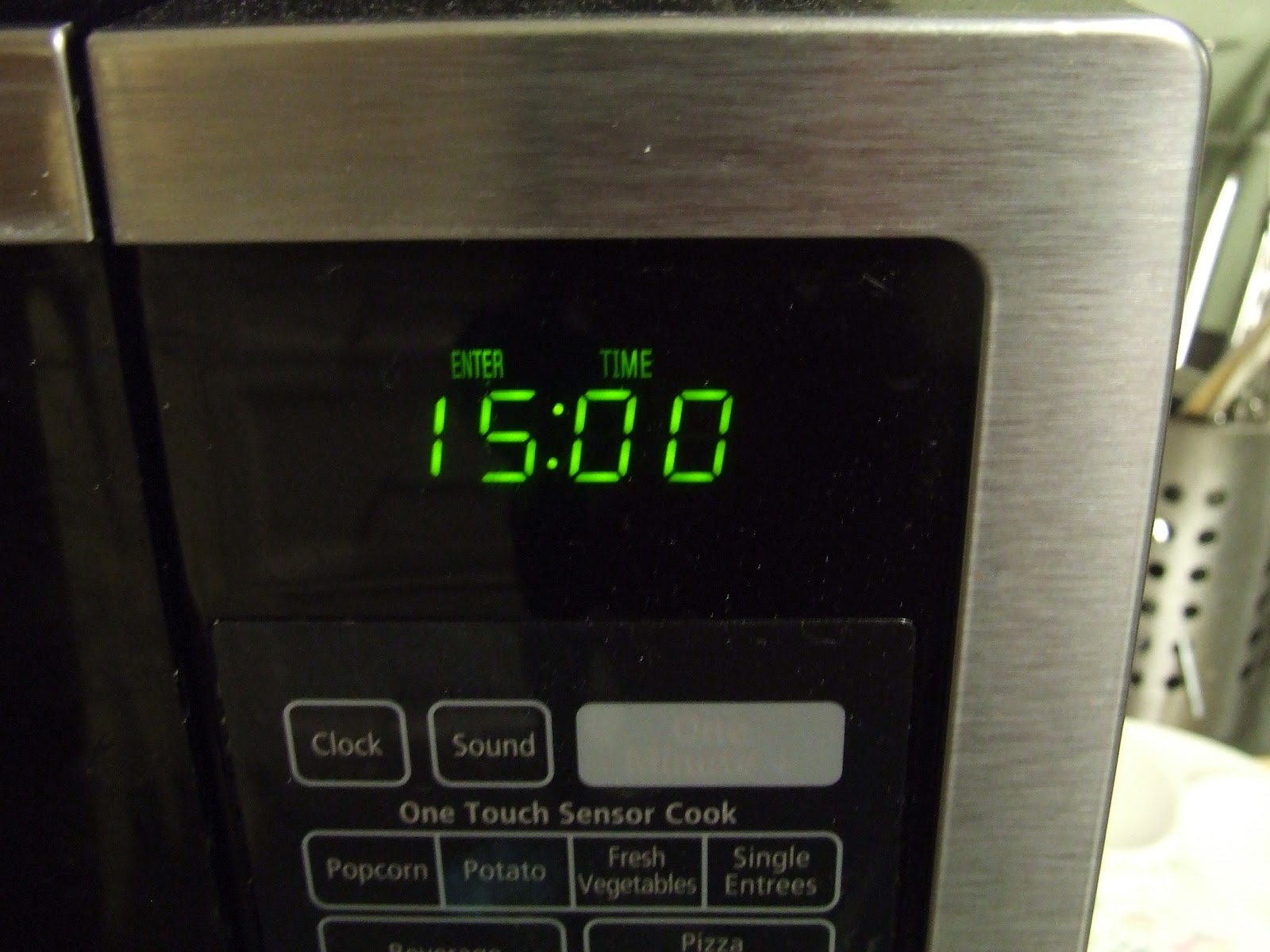
Set 15 minutes up on the timer. and pop into the preheated oven.

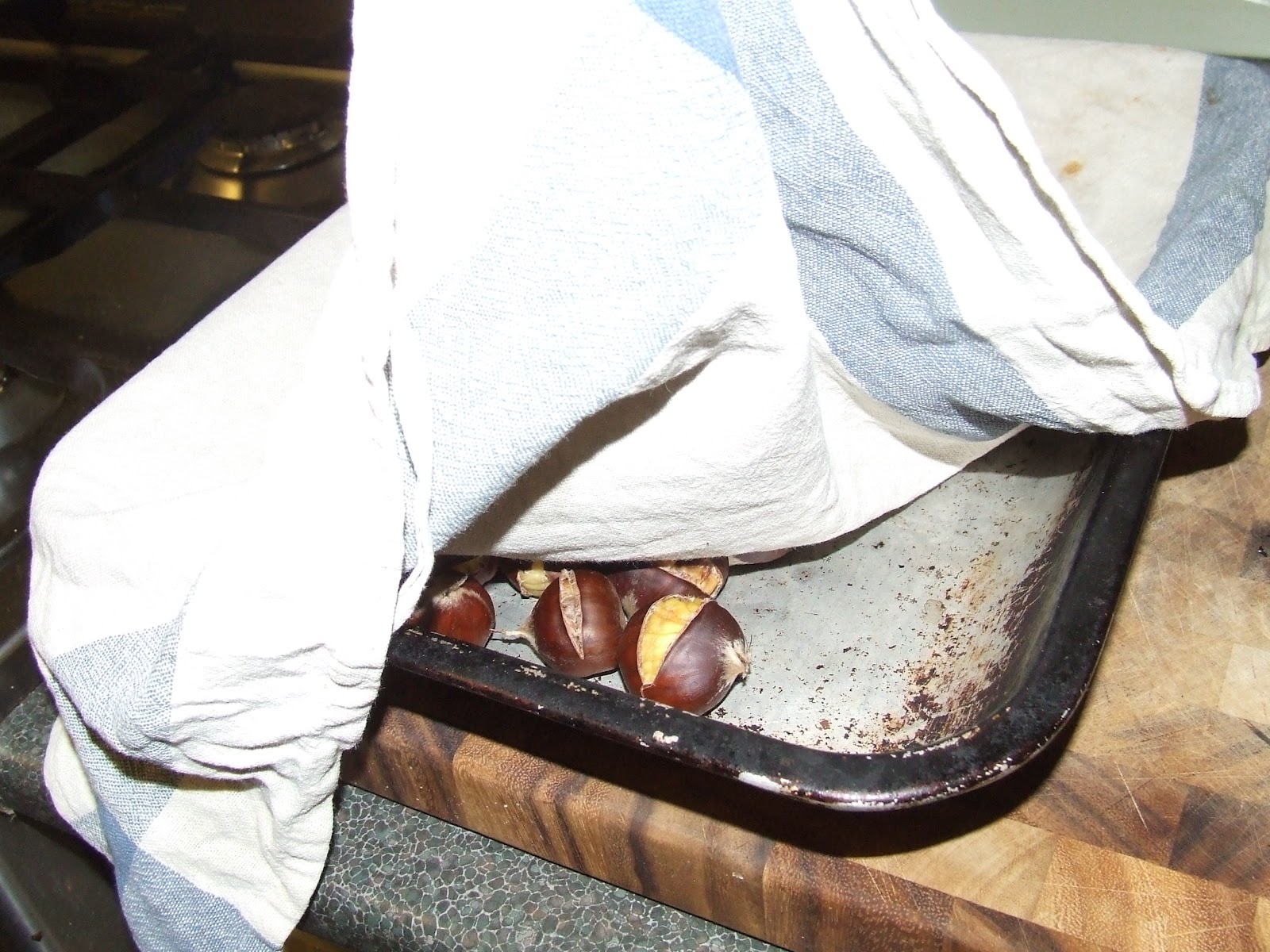
Once roasted, then cover with a clean tea towel and rest for another 5 minutes.  This helps to steam them a little which helps removed the shell cleanly.

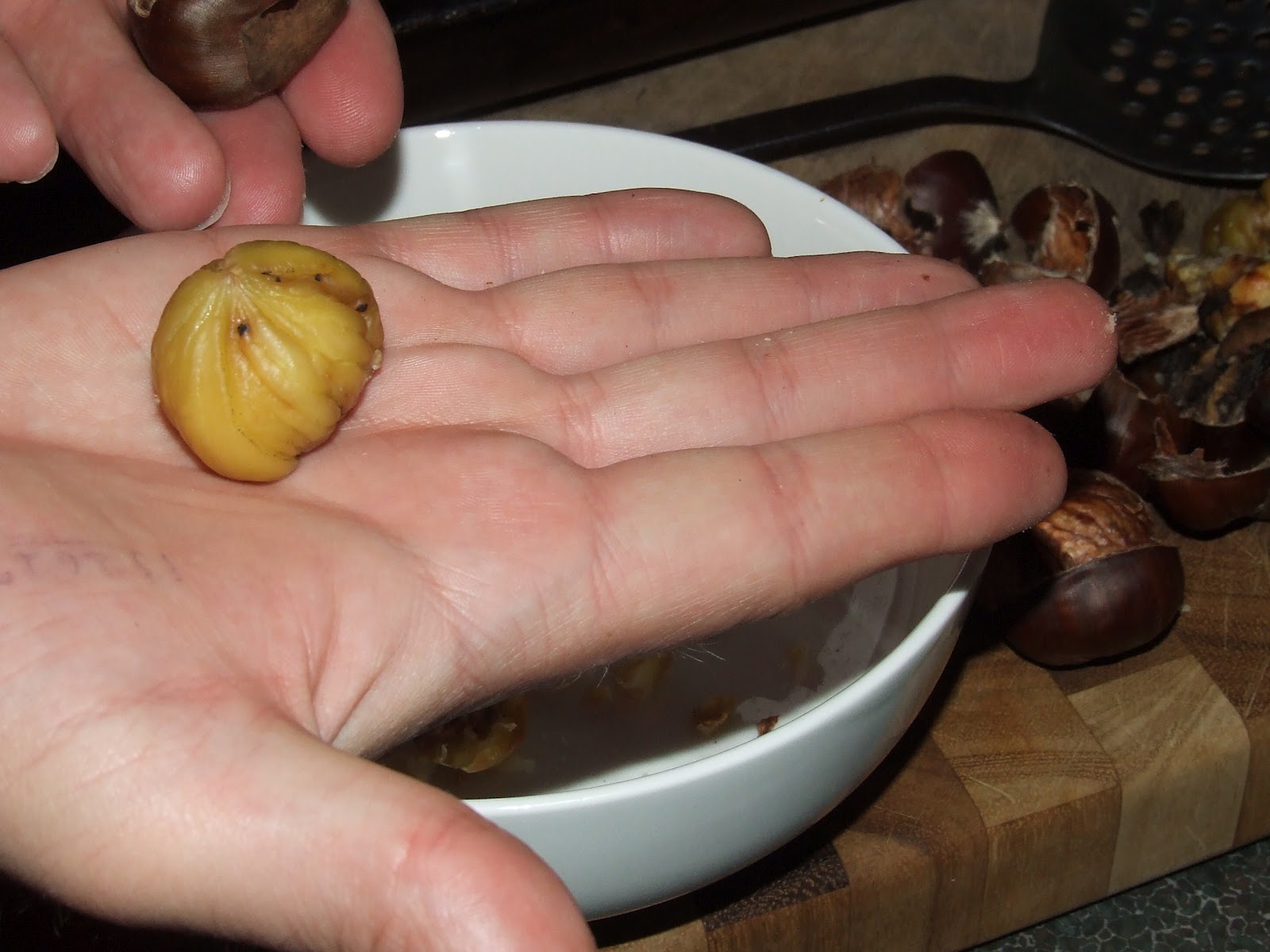
Remove the cover and start peeling.  Any chestnuts that are black on the inside discard as they are rotten and taste foul (I know, I ate one thinking that it was just over cooked).

Only the creamy coloured ones are good for eating, however I don’t think it would hurt the chooks any if I gave the black ones to them.

The chestnuts peel so easily with this method, and look no black, sooty hands.

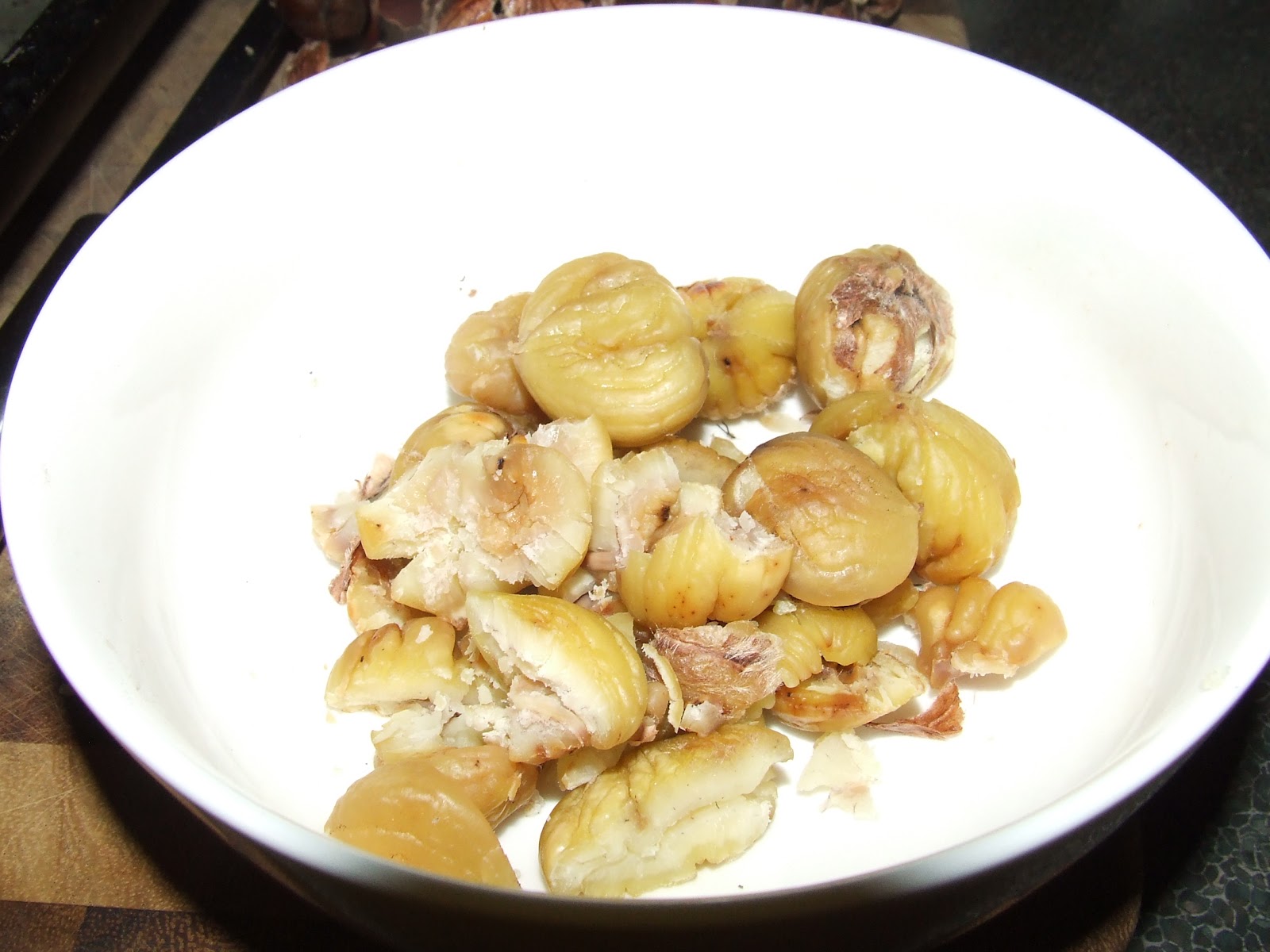
Here are a few that I peeled for myself and Ben.  Kim had already scoffed her share by then!  So delicious and so simple to cook.  It took me about 30 minutes from start to finish, not including the eating which happened in only two minutes.

Luckily I kept some more aside for tomorrow night!  Yum.  So if you have a chestnut tree in your neighbourhood, scrump a few bag fulls, and roast them up.  They are so nice on a cold evening.

I wish I could find a tree close by.  The owners would be my next best friend.

Will this article help someone you know? If so help them out by sharing now!

  • Click to share on Facebook (Opens in new window) Facebook
  • Click to share on X (Opens in new window) X
  • Click to share on LinkedIn (Opens in new window) LinkedIn
  • Click to share on Reddit (Opens in new window) Reddit
  • Click to share on Pinterest (Opens in new window) Pinterest
  • Click to share on Tumblr (Opens in new window) Tumblr
  • Click to print (Opens in new window) Print
  • Click to email a link to a friend (Opens in new window) Email
  • More
  • Click to share on Pocket (Opens in new window) Pocket

Filed Under: Nuts, recipes

Search This Blog

Follow my work

About Gavin Webber

About Gavin Webber

An Ordinary Australian Man Who Has A Green Epiphany Whilst Watching A Documentary, Gets a Hybrid Car, Plants A Large Organic Vegetable Garden, Goes Totally Solar, Lowers Consumption, Feeds Composts Bins and Worms, Harvests Rainwater, Raises Chickens, Makes Cheese and Soap, and Eats Locally. All In The Effort To Reduce Our Family's Carbon Footprint So We Can Start Making A Difference For Our Children & Future Generations To Come.

Delve Into the Archives

Visit Our Online Simple Living Shop

Little Green Workshops

Top Posts & Pages

Hot Chilli Chutney
Free Loganberry Plants
Strawbridge Family Inspiration
Low Pressure Drip Irrigation Part 1
How To Regrow Spring Onions
Home Made Camembert
Wensleydale Cheese Recipe and Method
How To Remove Scaly Leg Mites
It's Not Easy Being Green TV series
All Good Things Come to an End

Recent Awards

Recent Awards

Local Green Hero

Categories

Favourite Daily Reads

Debt Free, Cashed Up, and Laughing

The Off-Grid Solar House

Greener Me

The Rogue Ginger

Little Eco Footprints

Down To Earth

Surviving the Suburbs

Little Green Cheese

Eight Acres

The Witches Kitchen

TGOG Readers On-line

Carbon Offset website

Copyright - Gavin Webber © 2026