
• About
  • Archive
  • Contact
The Greening of Gavin
  • Home
  • Our Green Shop
    • Little Green Workshops
  • Green Workshops
    • Cheese Making
    • Soap Making
    • Soy Candle Making
  • eBooks
    • Clay Oven eBook
    • Keep Calm and Make Cheese eBook
  • Podcast
    • TGOG Podcast
    • TGoG Podcast Archive
    • Little Green Cheese
  • Vlog
  • Cheese
  • Green Living
    • Chickens
    • Gardening
    • Soap Making
    • Recipes
    • Climate Change
    • Peak Oil
    • Solar Power
  • Resources

Suburban Food Bowl – Barriers to Success

October 29, 2015 @ 19:41 By Gavin Webber 7 Comments

In part two of the Suburban Food Bowl series we are going to discuss some of the barriers to starting growing your own food where you live, or if pressed for space, growing some very basic veggies in small places.

Barriers to Success

The perceived barriers to success, both physical and mental, that come to mind stem from the discussions and questions I’ve had whilst talking about growing my own food here at home.

But before I go into detail about a few of them, I just want to say that many of the barriers to growing food at home may be just in your mind.  It could be as simple as prioritising what is important in your lifestyle and making it happen. I don’t mean to sound preachy, but most of the time this self-doubt is the only reason people do not take the first step on a very rewarding journey. With that off my chest, let’s get on with it.

Time to execute

Time is always going to be a problem in our busy lives, however how much of that time is wasted doing non-productive things. For example, think about how many hours on weekends that you may spend watching TV. It’s a very passive activity with little to show for it.

Calvin and hobbes TV

By even diverting a small fraction of viewing time into more fruitful endeavours will allow you to start growing your own.

Space Considerations

Space is another factor that needs to be considered. For most urban and suburban dwellers, there is always a little space that is being underutilised around the yard, especially swathes of lawn that serves no purpose other than aesthetics.

In my humble opinion, lawns are not only a time waster (you have to maintain it), it is a valuable space where you could be growing something you and your family can eat to better sustain you.

Do a quick survey around your yard to think about all the places that you could convert to food production. Look at vertical spaces as well as horizontal. The addition of a small garden bed with a climbing frame may be ideal for snow peas in the winter, or climbing beans in the summer.

Using tight spaces for gardening.

A very tight space near the chook house that I grow all manner of things horizontally and vertically.

Lack of Water?

In our increasingly arid climate, water is going to be another barrier to growing your own food. However, how many suburban homes make good use of grey water? Grey water has been the difference between growing strong healthy fruit trees and pumpkins and not having the water resources to grow these at all.
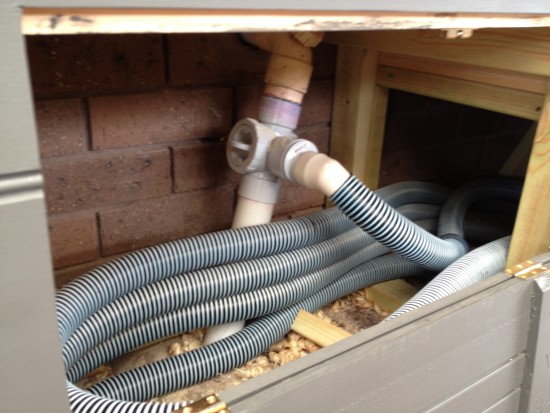
Grey water diversion

Greywater diversion helps me grow fruit and veg.

How many homes have rainwater tanks?  These days slimline tanks of around 2300-2500 litres can be easily positioned in those out-of-the-way places, usually under the eaves of your home, and not take up valuable growing space. I have two such rainwater tanks on concrete in my carport area that was going to waste. That gives me an additional 4600 litres of water to use on my summer heirloom tomatoes!
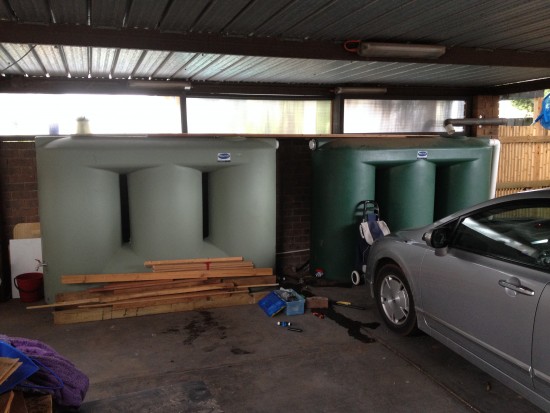
Slimline Rainwater Tanks

Slimline Rainwater Tanks

Have a think about some of the ways you could utilise grey water for food crops, or look at places you could plumb in an inexpensive slimline tank or two.

No Good Soil In Your Yard?

Good fertile soil is always an issue in newer suburban developments. This is because the developer and builders scrape off the first thirty centimetres of topsoil when building suburban homes. Either that or when digging the foundation for the home they pile on a layer of excess clay from the hole dug for it on top of the topsoil which can be disastrous for the eager gardener.

This layer has to be removed or because this soil layer is so poor and very thick, raised garden beds must be built and fertile soil and compost brought in to compensate. To check what sort of soil you have around your yard, there is a very simple test that can be performed with a glass jar, water, and some of your soil. Check out the infographic below for a very simple test, and this post from fix.com titled Sifting Through The Soil for the basic science behind it.
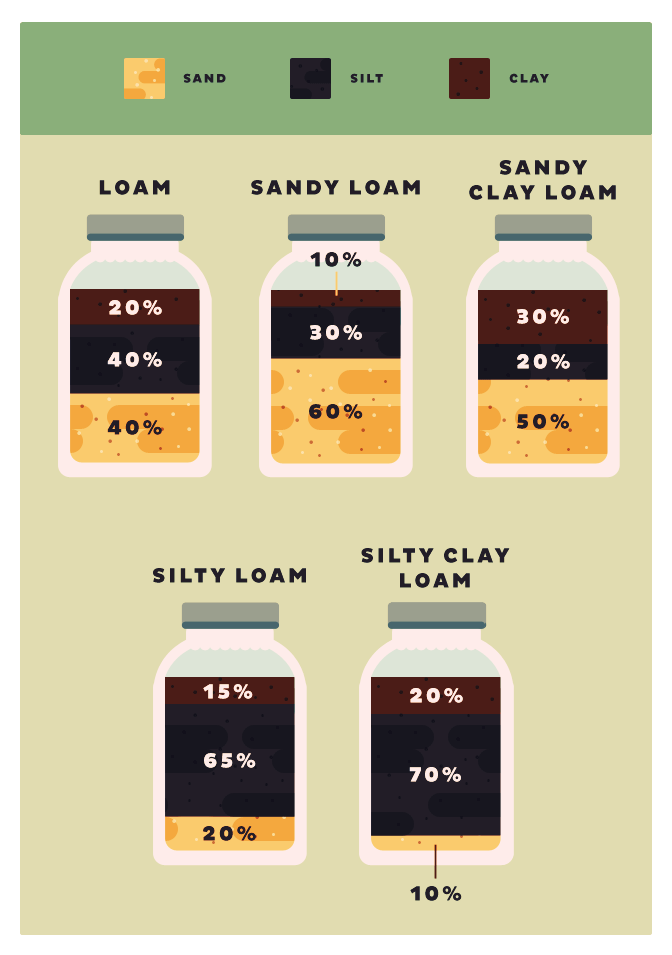
Sifting Through the Soil - Analyze Your Soil
Source: Fix.com
You may have to build up the existing soil with home-made compost or buy some in to get started quickly.  We will cover raised garden beds in part four of the series.

Skint or Flat Broke?

Money, or the perceived lack of it is another barrier towards growing food. Garden beds can be upward of a few hundred dollars each to construct and fill with good soil, and some clay or glazed pots are way out of most people’s price range. However a good working food garden can be built from the simplest of materials. Upcycling is the frugal gardeners friend.

Any container that can hold soil and allow a few drainage holes to be punched through the bottom make amazing pots for growing herbs in. Larger vessels like broken laundry baskets can be converted into the most productive mushroom farm. Olive oil tins can have the top removed with a can opener and grow dwarf beans or even garlic.  Even milk cartons can be used to grow tomatoes.

All it takes is your imagination and embrace upcycling. You will be amazed what you can recover from your own waste stream.  I’ve made two wicking beds purely from recovered building materials and wooden shipping pallets and they grow the most amazing salad greens.  The fertile soil was gathered from the chicken run and worm farm for free!
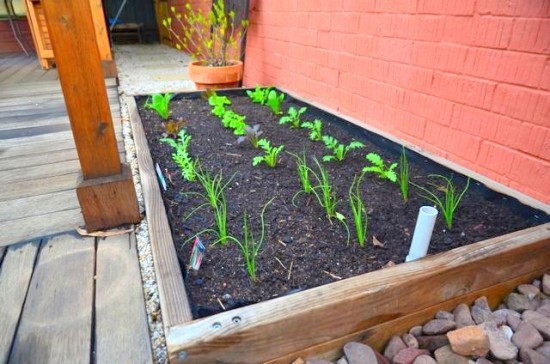
Growing salad greens in a wicking bed

Wicking bed made of reclaimed wood and soil.

It’s In Your Mind

So as I said before, if you believe you can grow some of your own food, and in the process convert your suburban wasteland into a suburban food bowl, then you will most likely be successful in your endeavour.  Don’t let anyone tell you otherwise.  You can do it.

I even consider growing your own herbs as success because they are so easy to grow and so expensive to buy.  Start small and expand as you gain small wins.  So to help you along, part three of this series is going to cover in-depth how to grow food in containers, citing some of the examples I have uses or witnessed on my food growing journey.

Now I am sure there are many other barriers to success that I haven’t covered, so sound off in the comments and I will try to answer them to the best of my ability.  It should make for interesting reading.

Will this article help someone you know? If so help them out by sharing now!

  • Click to share on Facebook (Opens in new window) Facebook
  • Click to share on X (Opens in new window) X
  • Click to share on LinkedIn (Opens in new window) LinkedIn
  • Click to share on Reddit (Opens in new window) Reddit
  • Click to share on Pinterest (Opens in new window) Pinterest
  • Click to share on Tumblr (Opens in new window) Tumblr
  • Click to print (Opens in new window) Print
  • Click to email a link to a friend (Opens in new window) Email
  • More
  • Click to share on Pocket (Opens in new window) Pocket

Filed Under: food, Gardening, Green Psychology, No Dig Garden, reuse, Suburbs, Sustainable Living, vegetables, water

TGoG 121 – Influencing Your Partner with Amy Webber

August 5, 2015 @ 10:00 By Gavin Webber 2 Comments

[spp-player optin=”off”]

What can you do if your partner is resistant to your green lifestyle?  How do you convince them that it is in their best interest financially and good for the environment.

Well today we explore the topic of influencing your partner with my special guest Amy Webber.

We dive into various ways we have both managed to influence others who share our homes, to help them lead a more sustainable lifestyle.

Amy Webber

Amy Webber and her Dad


Don’t forget that this podcast is supported financially by you, the listener.  This not only keeps the show (and blog) advertisement free, but keeps us on the air each week.

If you would like to support the show and pledge as little as US$1 to keep us up and running, please pop over to www.patreon.com/greeningofgavin/ and pledge away!

Also if you like the show, use the iTunes button and leave a rating and a review.  We love to hear what our listeners think about our show.

Until next episode, keep it green!

[spp-optin]

Will this article help someone you know? If so help them out by sharing now!

  • Click to share on Facebook (Opens in new window) Facebook
  • Click to share on X (Opens in new window) X
  • Click to share on LinkedIn (Opens in new window) LinkedIn
  • Click to share on Reddit (Opens in new window) Reddit
  • Click to share on Pinterest (Opens in new window) Pinterest
  • Click to share on Tumblr (Opens in new window) Tumblr
  • Click to print (Opens in new window) Print
  • Click to email a link to a friend (Opens in new window) Email
  • More
  • Click to share on Pocket (Opens in new window) Pocket

Filed Under: Green Psychology, Podcast, Sustainable Living, TGOG Podcast

Taking The Time To Relax

July 27, 2015 @ 22:10 By Gavin Webber 6 Comments

Living a more sustainable lifestyle is sometimes quite hectic, so it really pays to take a step back regularly and relax.

Not relaxing using the couch potato method in front of the idiot box, but quality relaxation performing a hobby or task that changes your thinking from the day-to-day humdrum and lets your mind drift so that the tenseness and stress just drips away.

relaxing-frog

It’s not easy being green, but at least you can have fun doing it!

Call me unusual but I find that the simple tasks like weeding, woodwork, or mucking out the chook house are quite relaxing.  They are not too mentally challenging of physical in nature, and you can get lost in the task.  I find them peaceful, and calming.  All that is needed afterwards is a nice warm shower, a homebrew beer, and a homemade meal to finish off the day.

So here’s my question to you.

What do you do to relax when pursuing a simpler life?  Remembering that TV doesn’t count, so what meaningful hobby or activity de-stresses you?

Will this article help someone you know? If so help them out by sharing now!

  • Click to share on Facebook (Opens in new window) Facebook
  • Click to share on X (Opens in new window) X
  • Click to share on LinkedIn (Opens in new window) LinkedIn
  • Click to share on Reddit (Opens in new window) Reddit
  • Click to share on Pinterest (Opens in new window) Pinterest
  • Click to share on Tumblr (Opens in new window) Tumblr
  • Click to print (Opens in new window) Print
  • Click to email a link to a friend (Opens in new window) Email
  • More
  • Click to share on Pocket (Opens in new window) Pocket

Filed Under: Green Psychology

Next Page »

Search This Blog

Follow my work

About Gavin Webber

About Gavin Webber

An Ordinary Australian Man Who Has A Green Epiphany Whilst Watching A Documentary, Gets a Hybrid Car, Plants A Large Organic Vegetable Garden, Goes Totally Solar, Lowers Consumption, Feeds Composts Bins and Worms, Harvests Rainwater, Raises Chickens, Makes Cheese and Soap, and Eats Locally. All In The Effort To Reduce Our Family's Carbon Footprint So We Can Start Making A Difference For Our Children & Future Generations To Come.

Delve Into the Archives

Visit Our Online Simple Living Shop

Little Green Workshops

Top Posts & Pages

Hot Chilli Chutney
Free Loganberry Plants
Strawbridge Family Inspiration
Low Pressure Drip Irrigation Part 1
How To Regrow Spring Onions
Home Made Camembert
Wensleydale Cheese Recipe and Method
How To Remove Scaly Leg Mites
It's Not Easy Being Green TV series
Our Soap Recipe

Recent Awards

Recent Awards

Local Green Hero

Categories

Favourite Daily Reads

Debt Free, Cashed Up, and Laughing

The Off-Grid Solar House

Greener Me

The Rogue Ginger

Little Eco Footprints

Down To Earth

Surviving the Suburbs

Little Green Cheese

Eight Acres

The Witches Kitchen

TGOG Readers On-line

Carbon Offset website

Copyright - Gavin Webber © 2026