
• About
  • Archive
  • Contact
The Greening of Gavin
  • Home
  • Our Green Shop
    • Little Green Workshops
  • Green Workshops
    • Cheese Making
    • Soap Making
    • Soy Candle Making
  • eBooks
    • Clay Oven eBook
    • Keep Calm and Make Cheese eBook
  • Podcast
    • TGOG Podcast
    • TGoG Podcast Archive
    • Little Green Cheese
  • Vlog
  • Cheese
  • Green Living
    • Chickens
    • Gardening
    • Soap Making
    • Recipes
    • Climate Change
    • Peak Oil
    • Solar Power
  • Resources

TGoG 117 – Getting Out of Debt

July 9, 2015 @ 18:58 By Gavin Webber 5 Comments

[spp-player optin=”off”]

I’ve often said that Debt equals Slavery in another form.  Given the current economic climate, I think that this episode is well-timed.   The stock market is trembling, Greece is on the ropes, and we have been warned of a housing bubble here in Australia.  It is now a good time to act.

Getting out of debt is not as hard as it may seem.  All it takes is a plan (aka budget) and the determination and mindset to carry it out.
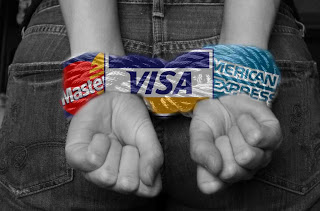
Getting out of debt

Now getting out of debt won’t happen overnight or in a few months.  It may take a few years or even a decade depending on how deep down the rabbit hole of consumerism you’ve travelled.

But from my own personal experience, it is definitely worth pursuing.

The freedom at the end of the last payment of each debt is amazing.

Caveat: I still have just under two years to pay off a 30 year mortgage, but have no other debt.  The mortgage was taken out in 2000, and I drew down on it many times until it ballooned in size until we woke up and got serious about getting out of debt.

We have paid off over $23,000 in credit card debt, as well as a personal loan of $22,000 since October 2006.  We just have the mortgage to go and Kim and I are very proud of what we have achieved so far.  It just took a budget that we referred back to and updated regularly, and determination to pump any spare funds we had into paying down our debt.  It reduces the interest owed due to compounding.  Trust me, it works well.

Also, I am not a financial adviser.  Please take my experience and tips as food for thought whilst you travel on your own debt reduction journey.  A journey that does have a happy ending if you work at it!

smiley_thumb

If you have any other debt reduction tips, please feel free to leave a comment.  The more the merrier!

Will this article help someone you know? If so help them out by sharing now!

  • Click to share on Facebook (Opens in new window) Facebook
  • Click to share on X (Opens in new window) X
  • Click to share on LinkedIn (Opens in new window) LinkedIn
  • Click to share on Reddit (Opens in new window) Reddit
  • Click to share on Pinterest (Opens in new window) Pinterest
  • Click to share on Tumblr (Opens in new window) Tumblr
  • Click to print (Opens in new window) Print
  • Click to email a link to a friend (Opens in new window) Email
  • More
  • Click to share on Pocket (Opens in new window) Pocket

Filed Under: Debt, Downshift, Happiness, Podcast, TGOG Podcast

6 Warning Signs that Your Debt May Be Out of Control

March 23, 2015 @ 16:05 By Gavin Webber 11 Comments

5 warning signs that your debt is out of controlEveryone runs up a little credit card debt, right? A personal loan or two?

I reckon that’s what many people tell themselves to justify carrying heavy debt, however the simple fact is that out-of-control spending and poor credit card management are serious problems that are not sustainable and have to be tackled head-on.  It’s not limited to credit cards, but that’s what I will mainly focus on within this post.

A recent study by Barclays uncovered some shocking statistics.  They found that,

“Australian households are the most indebted in the world, according to research by Barclays, which warns that the country would be vulnerable in the event of another global financial shock.  When it comes to household debt – which includes mortgages, credit cards, overdrafts and personal loans – Australia leads the global field, with credit continuing to pile up while the rest of the developed world is paying it down.”

The signs are all around us that this can’t continue for very much longer.  Local shop fronts empty for much longer than usual, people using food banks more frequently, continued rampant spending at all times of the year and not just Christmas, and people just living for the moment and not thinking what the future may bring.

I blame this partly on our consumer culture and a Veruca Salt mentality, so therefore individuals should be educated to be more aware of the traps and pitfalls to avoid when it comes to their personal finances.

So, with that in mind I have looked back at our experiences so that I could document the 6 warning signs that your debt may be out of control, and what you may be able to do to get back in check.  Not all of these things have happened to us, but we have close friends that we’ve helped who nearly went all the way, so to speak.

Just so you know, I am not a financial planner, nor able to give specific financial advice.  The list below is just common sense ways to get your spending back in control.

1.  You Pay for Everything with Credit Cards

You used cash when buying groceries, filling up the car, or to pick up a quick takeaway, but now you whip out the credit card for virtually all your regular daily purchases. If this sounds familiar, you are probably either in trouble or on the verge of it. While plastic is easy to use, the credit card balances you are building will come back to haunt you.  If you are already carrying a large balance on your card, your new purchases will likely just hike up the amount of interest you’ll be charged each month.  Paying off the minimal amount will not get you out of debt anytime soon.

Keep that in mind when you’re making your next purchase.  It may help change your habits. And if you’re relying on credit because you just don’t have the cash, it’s time to take a realistic look at your budget and consider taking necessary changes.

2.  You’re Adding New Accounts

What happens if you can’t pay your credit card or other bills?   Some people may try to solve this problem by opening up new credit card accounts and using balance transfers to zero interest cards, or take cash advances to make required payments on their existing debt.  They might also add a new account if their old cards have reached their credit limits.

This may solve the immediate problem, but it also digs you deeper into debt. If you’re in this position, it’s a sure sign that you need to get a handle on your debt and alter your spending habits as soon as possible.

3.  Your Debt’s Just Getting Bigger

Here’s a sad fact: Even if you don’t keep spending and stop right now, your outstanding credit card balances may keep growing if you make only the minimum payment each month. That’s because the interest rate you owe on your outstanding debt is lumped in with your balance and grows. You then have to pay interest not only on your past purchases but also on that added interest.

Once again, it is time to get real and write down your income and outgoings in a budget plan that will help you to get your head above water and start paying down the debts.

4.  You’re Missing Payments Each Month

Missed payments help no-one, and the added stigma increases your unhappiness and affects your capability to think straight.  If you get to this stage all is not lost.  Ask for help from your creditors, whether it be your bank, building society, or energy/phone company.  Remember that it’s always a good idea to contact your creditors as soon as you can when find that you can’t make a payment and ask about temporary reduced payment plans, or other options.  This step could help you prevent a bad credit rating or cancelled account, or even the threat of court action.

5.  You Avoid Paying Your Bills

You have a stack of unpaid bills that just keeps growing. You screen phone calls or hide behind the lounge chair so you don’t have to talk to angry and persistent bill collectors.

If you’re in this situation, you won’t be able to sidestep the problem forever.  You need to get a realistic sense of where you stand financially and begin contacting creditors, cutting you spending or taking other necessary steps (filing for bankruptcy) to get your financial life back on track.

6.  Address the Root Cause

Spending more than you earn is the root cause and the path to misery.  It is as simple as that.  I once learnt this basic financial rule from a wise author the following quote;

“Annual income twenty pounds, annual expenditure nineteen six, result happiness. Annual income twenty pounds, annual expenditure twenty pound ought and six, result misery.”― Charles Dickens, David Copperfield

We’ve been there, we know.  At one stage our credit card debt was over $23,000 at 18% interest. We just couldn’t get ahead in life. We were chasing the almighty dollar, thinking that the more material things I owned, the happier I would be.  It doesn’t work that way.  In hindsight we were very, very sad.

What saved us was setting a budget and we began to live within our means.  It was one of the reasons we chose to adopt a more sustainable lifestyle.  We know we couldn’t save the planet, if we couldn’t save ourselves from debt first.

Drafting a Budget

Setting a budget (yes I know it’s a dirty word for some) is the only way you will know if you incoming earnings and spending match or preferably you have a little bit left over that you can begin to pay down your debts.  Once your creditors have been contacted, most will allow you to start a payment plan that will go a long way to getting back in control.  You may have to seek financial advice to roll all your debts into one single low-interest loan so that you can spread the payments.

You can find a very simple and easy to use budget calculator over on the ASIC MoneySmart website.  This site is a wealth of information which you can learn so much about personal finance matters.  It is my go-to site if I need learn anything moneywise.  Best of all, it’s free.

Shake the Consumer Tag

If you use it, it will help you to discover where the unplanned spending is occurring.  Once you figure that out, it is as simple as reducing your spending or begin selling off unnecessary stuff to pay down those burdening debts.

Note; I haven’t used the label of consumer during this entire post until now.  I believe that because we were not born with this label, it shouldn’t be used.  We are just ordinary people trying to find our way in the scheme of things.  This label is one given to society as a whole by the media.  I detest it.

So friends, what do you say?  Have you ever paid off large amounts of debt and got back on track?  How did you do it?

Will this article help someone you know? If so help them out by sharing now!

  • Click to share on Facebook (Opens in new window) Facebook
  • Click to share on X (Opens in new window) X
  • Click to share on LinkedIn (Opens in new window) LinkedIn
  • Click to share on Reddit (Opens in new window) Reddit
  • Click to share on Pinterest (Opens in new window) Pinterest
  • Click to share on Tumblr (Opens in new window) Tumblr
  • Click to print (Opens in new window) Print
  • Click to email a link to a friend (Opens in new window) Email
  • More
  • Click to share on Pocket (Opens in new window) Pocket

Filed Under: Affluenza, Debt, Denial, Education, Frugal, Happiness, Health

Cash vs Card

August 7, 2014 @ 08:40 By Gavin Webber 20 Comments

Cash vs CardI have been thinking a lot about the different mechanisms that fuel our consumer culture.  Our current modus operandi is unsustainable.

So lets talk about our burgeoning credit card debt and the psychological effect when paying cash vs card.

It’s not something people normally want to deal with so it is time to bring it out in the open.

Credit Card Debt

How did it get our consumer culture become so prevalent?

Why is credit card debt now approaching A$50 billion in Australia?

Before we answer those two questions, lets break down that debt figure into smaller numbers to make it easier to digest.

Based on a population of 23 million that is A$2,173 for every man, woman, and child; I dare say that quite a few of those don’t have credit cards to begin with.

Our Predicament

Case in point, before Kim and I started our green journey we are ashamed to admit that we were around A$22,000 in debt on credit cards.  If we paid the minimum payment of $200 a month, it would have taken us 9.2 years to clear it.  And that is without adding any more to the balance.

We paid it off month by month, add more than the minimum payment, and then throwing more on it as the savings from our new lifestyle began to manifest.

It took us a couple of years, but we did it.  We paid it off.  We got rid of all high interest cards, consolidated into one and lowered the cards limit down to $6000 (in case of emergencies).

So we were prone to live beyond our means, and the Reserve Bank of Australia stats indicate that Australians are in debt, what makes people spend so much on cards?

Cash vs Card

Well, some recent research has found whilst there is a pain mechanism associated with handing over cash for a purchase, there is no similar psychological trigger or reaction when paying by credit card.

Studies conducted by George Loewenstein and his colleagues and published in 1998 and 2001 looking at whether people experienced pleasure or pain when shopping.

“One of the many interesting findings was that paying in cash elicited greater psychological pain than other modes of payment, including the use of cards or delayed payment methods.

The suggested reason for this was the ‘de-coupling’ of the actual purchase and the pain of paying for it. In other words, handing over cash to a shop assistant couples a loss of available money with a purchase.

By paying with a credit card, consumers created a buffer zone between the purchase of the product and the loss of their money (both psychologically and temporally). ” – source.

Have a listen to this snippet of audio that recently aired on the Radio National show Talking Shop.  It is a conversation between Kirsten Drysdale from ABC TV’s The Checkout and Dr Paul Harrison.

Certainly food for thought.

I have also noticed this effect since we started taking credit cards as payment for products during our workshops.  People who have cash only buy the essentials, but those that pay by credit go all out!  Not that I am complaining about sales at our sustainable living workshops, it is just an observation to back up the research.

Take Control

Let me put it to you straight.  If you pay cash, you are prone to spend less on novelty items or what I call wants.  Inversely, if you go shopping on credit, then you will be likely to spend more on stuff you just don’t need.

My advice to you all is if you are one to decouple the purchase from the pain, then do the opposite to what the credit card commercials advice; “please leave home without it!”  Cash is king for a reason, and will help to keep your spending under control.  I shudder when I have to hand over a fist full of $100 notes!

If you are after some more tips on how Kim and I budget, have a listen to TGoG podcast episode 64, which we recorded a couple of months back.  It is titled “How We Budget and Tips to Save Money“.  It is one of the most popular episodes that we have published.

So who is ready to get their cash flow under control? Or who has already taken big steps to reducing their debt, which has helped them live a more comfortable lifestyle?

Confession time peeps!

Will this article help someone you know? If so help them out by sharing now!

  • Click to share on Facebook (Opens in new window) Facebook
  • Click to share on X (Opens in new window) X
  • Click to share on LinkedIn (Opens in new window) LinkedIn
  • Click to share on Reddit (Opens in new window) Reddit
  • Click to share on Pinterest (Opens in new window) Pinterest
  • Click to share on Tumblr (Opens in new window) Tumblr
  • Click to print (Opens in new window) Print
  • Click to email a link to a friend (Opens in new window) Email
  • More
  • Click to share on Pocket (Opens in new window) Pocket

Filed Under: Affluenza, consumerism, Debt, Education, Sustainable Living

Next Page »

Search This Blog

Follow my work

About Gavin Webber

About Gavin Webber

An Ordinary Australian Man Who Has A Green Epiphany Whilst Watching A Documentary, Gets a Hybrid Car, Plants A Large Organic Vegetable Garden, Goes Totally Solar, Lowers Consumption, Feeds Composts Bins and Worms, Harvests Rainwater, Raises Chickens, Makes Cheese and Soap, and Eats Locally. All In The Effort To Reduce Our Family's Carbon Footprint So We Can Start Making A Difference For Our Children & Future Generations To Come.

Delve Into the Archives

Visit Our Online Simple Living Shop

Little Green Workshops

Top Posts & Pages

Hot Chilli Chutney
Curing Black Olives
Strawbridge Family Inspiration
Homemade Pickled Onions
Black Aphids On Garlic
The Ant and the Grasshopper
How To Remove Scaly Leg Mites
Tips for Growing Citrus in Pots
Selling Your Own Soap in Australia
Fancy Soap Bars

Recent Awards

Recent Awards

Local Green Hero

Categories

Favourite Daily Reads

Debt Free, Cashed Up, and Laughing

The Off-Grid Solar House

Greener Me

The Rogue Ginger

Little Eco Footprints

Down To Earth

Surviving the Suburbs

Little Green Cheese

Eight Acres

The Witches Kitchen

TGOG Readers On-line

Carbon Offset website

Copyright - Gavin Webber © 2025