• About
  • Archive
  • Contact
The Greening of Gavin
  • Home
  • Our Green Shop
    • Little Green Workshops
  • Green Workshops
    • Cheese Making
    • Soap Making
    • Soy Candle Making
  • eBooks
    • Clay Oven eBook
    • Keep Calm and Make Cheese eBook
  • Podcast
    • TGOG Podcast
    • TGoG Podcast Archive
    • Little Green Cheese
  • Vlog
  • Cheese
  • Green Living
    • Chickens
    • Gardening
    • Soap Making
    • Recipes
    • Climate Change
    • Peak Oil
    • Solar Power
  • Resources

Kate the Vegetable Vagabond on TV

May 3, 2013 @ 23:04 By Gavin Webber 3 Comments

My lovely friend Kate, who I interviewed in this podcast titled “Episode 13 – Interview with Kate“, is going to be on Gardening Australia on Saturday night, May 4th at 6.30pm on ABC1!

Look out for her spot with Tino Carevale.  If you miss it you will be able to watch it on ABC iView the next day.

Kate is one of the most passionate seed savers I know and has a great philosophy about food gardening.  It will be well worth your time to watch the show.

For more info, visit Kate’s blog – Vegetable Vagabond
Will this article help someone you know? If so help them out by sharing now!

  • Click to share on Facebook (Opens in new window) Facebook
  • Click to share on X (Opens in new window) X
  • Click to share on LinkedIn (Opens in new window) LinkedIn
  • Click to share on Reddit (Opens in new window) Reddit
  • Click to share on Pinterest (Opens in new window) Pinterest
  • Click to share on Tumblr (Opens in new window) Tumblr
  • Click to print (Opens in new window) Print
  • Click to email a link to a friend (Opens in new window) Email
  • More
  • Click to share on Pocket (Opens in new window) Pocket

Filed Under: Gardening, Seed saving, vegetables

Saving Vegetable Seeds

October 4, 2010 @ 11:05 By Gavin Webber 4 Comments

Wouldn’t it be really cool if you didn’t have to buy vegetable seeds ever again?  Well, you can, with a little bit of knowledge and practice.  Seed saving for the crop next season is fun and very cheap, and the beauty of it is that you can begin to adapt plant varieties to become conditioned to your climate.

I have tried seed saving with mixed success, so in this post I will try and explain how I have achieved at least a few successes and what I have learned along the way.  So far I have managed to save quite a few types of vegetables using a few different methods.

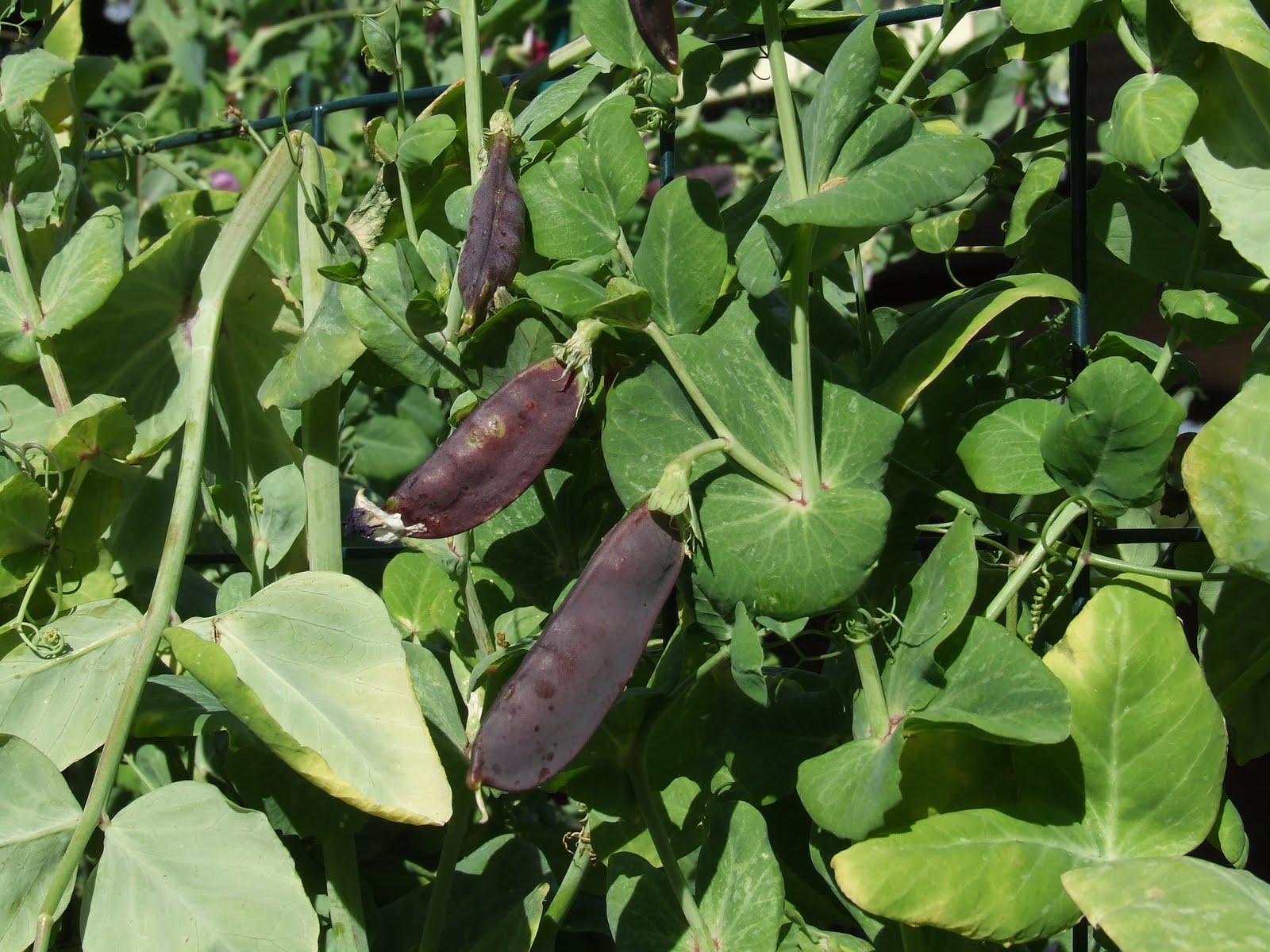
The first type of seed that I tried to save was purple podded peas.  It was simple enough to decide which plant was the largest and had the biggest pods. So after I harvested the other plants, I left this one to dry out so that I could collect the seeds.  If you are expecting lots of rain, it is probably best if you pull the plant when it is just going dry and hang it upside down out of the weather.  Once the pods were dry, I took out the seeds and stored them in an airtight glass jar.  I have been successfully growing purple podded peas using this method for 3 years now.  Looking back, it is hard to believe that I only bought a $2.50 packet of 25 seeds in the first place and besides the seeds I have saved, we have had many pea feasts as well!  This drying on the bush method is also good for all types of beans, and I have collected Daikon radish seeds in this manner as well.

For smaller, more delicate seeds, I have let the desired plant flower and set seed.  Just before it begins to dry out, I put a brown paper bag over the seed head and tied it off with a rubber band.  When the seed heads dry the seeds fall into the bag, and all you have to do is label and store them in a dry, cool place for next seasons planting.  I have used this method with lettuce, silverbeet, rainbow chard, onions, leeks, radishes, carrots, parsnips, parsley, dill, and basil.  All of these types of plants usually self pollinate so you will not have too many problems with cross pollination.   These vegetables will usually stay ‘true to type’, that is, this generation of the plant you harvested seed from will be mostly the same as you will get in the next generation.

Another method of saving seed are by tuber.  For example potatoes, sweet potato, Jerusalem artichoke and yacon to name a few.  You harvest the best looking tubers and store them in a hessian bag in a dark, dry place for sowing in the next season.

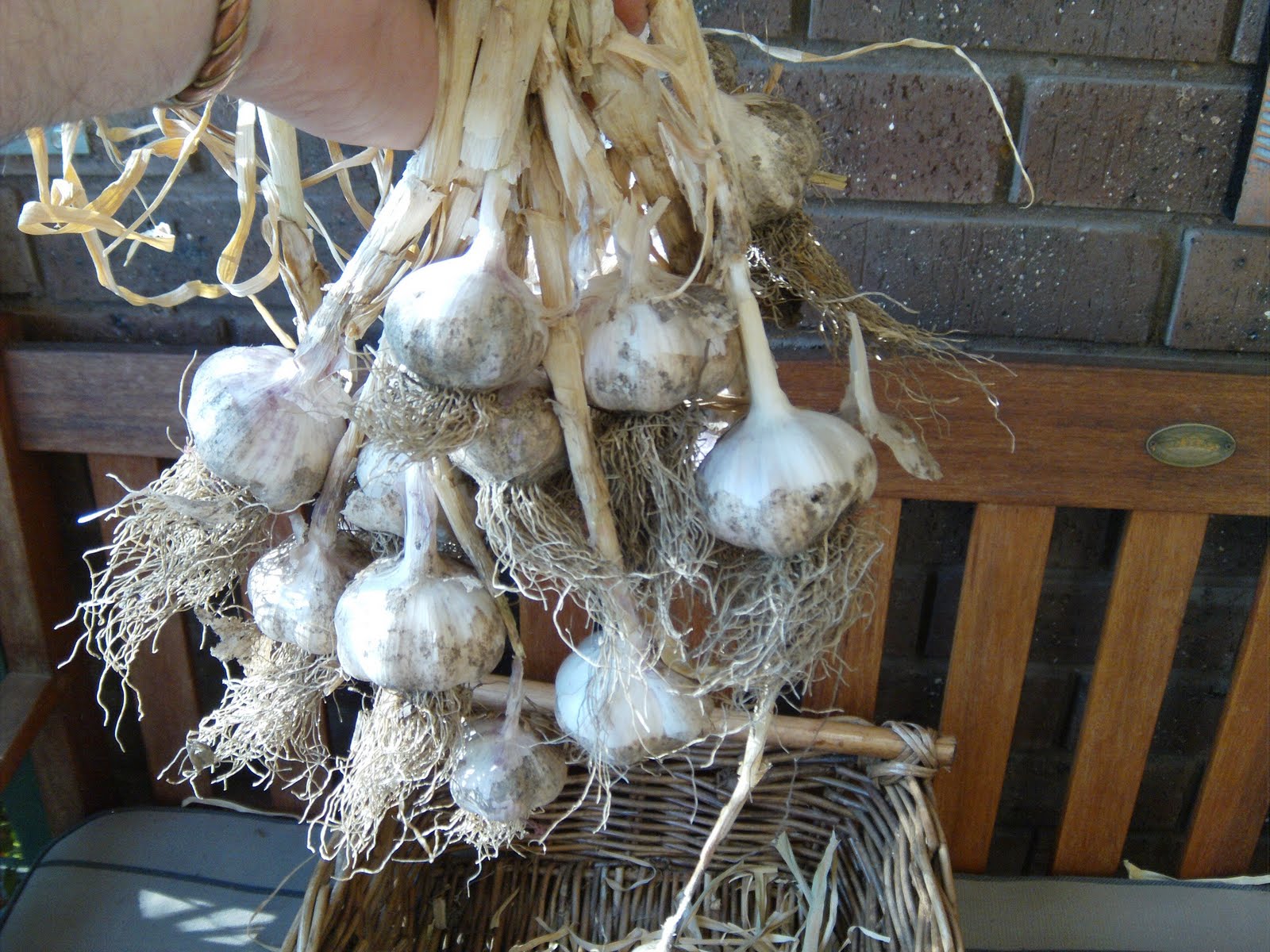
Garlic is another of my favourites and easy to save for planting in the next season.  Keep a few bulbs from your crop (the larger the better), and when it is time to plant garlic in your part of the world, simply pull apart the bulb and plant single large cloves, pointy end upwards about 20cm appart.  A new bulb will grow around the clove and you will never be without garlic ever again!  Use the smaller inner cloves for cooking as you will end up with very tiny bulbs of garlic at the end of the season.

Sometimes you don’t even need seeds to grow another plant.  You can take a cutting and stick it into some moist seed raising mix or some loamy soil and most of the time it will strike roots and continue to grow a clone of the parent plant.  I have successfully propagated tomatoes, all types of mint, eggplants (aubergine), and capsicum (bell peppers) using this method.  You can buy root hormone powder to enhance your success rate, however I find that most cuttings usually strike roots and I have about a 80-90% success rate.

Sweet corn or maize is another easy vegetable to save seeds from.  Let the cob dry out on the plant and then remove the outer husk and then with a twisting motion with your hands around the cob, the seeds usually just fall off.  I make sure that I have a large bowl or tea towel underneath to catch the kernels when I husk corn cobs.  I then store them in a glass jar in a dark place until required.  I have only saved popping corn using this method, but I dare say it would work with any type of corn.  Remember that corn is pollinated by the wind and I read that to keep the strain pure you need at least 500 metres between varieties.  Let hope your neighbour isn’t growing corn at the same time!

Collecting seeds from the cucurbit family may look as easy as scooping the seeds out of a cucumber, pumpkin, squash or zucchini, and letting them dry on paper towel, however there are a few things you must know so that you get true to type seeds for next season.  The cucurbit family readily cross pollinate when nearby, and each variety does not care where the pollen comes from as long it is from its own family.  Each plant also has a male flower and a female flower.  You can identify the female flower because it has a small swelling at the base which when pollinated becomes a fruit.  The flowers only live for one or two days and open at down so that the bees can spread the pollen from male to female.  One book I read recommends that you plant each variety of cucurbit at least 400 metres apart to stop cross pollination, but you can also hand pollinate to control the exchange of pollen.  This is done by protecting the flowers from insects or wind whilst the female flower is receptive.

  • Firstly select male and female flowers the evening before they are due to open.  You can tell this because they will be rigid and have some yellow on the seams of the closed bud.  
  • Close each flower with a rubber band or some masking tape or wrap the entire flower in some pantyhose and tie it at the stem so no insects will be able to get at the flower at first light.
  • In the morning cut the male flower off at the base of its stalk and take off the petals to expose the male part.  Open the flower and rub the male part into the female part.  You could use a few different male flowers from the same species to imitate the way a bee pollinates, but I have found that this was not necessary when I did it..  
  • After the pollen is well coated on the female part, shut or cover the female with pantyhose again until the flower withers.  
  • Make sure you put a tag around the stem of the plant so that as it grows bigger you know that it is a keeper.  You could also write on the skin with a waterproof maker pen as I did.  Tell everyone in your family not to pick it either or you may end up loosing your carefully hand pollinated treasure.  
  • Before harvesting the fruit, make sure it is a big as it can possibly be so that it will ensure that you have very plump seeds.  
  • Store the ripe fruit for a few weeks before opening and collecting the seeds.  Dry and store in a brown paper bag in a dry, cool position.

Tomatoes don’t cross pollinate readily and are self pollinating, however to almost guarantee (there are no full guarantees in gardening) a true to type seed keep each row of different varieties at least 3 metres apart.  Allow the fruit to ripen to just beyond eating and then cut them open and squeeze the seeds and pulp into a jar.  Add a little water and label the jar and leave in a warm place for a few days.  A foam will form on top so scoop it off, add more water and pour the mixture through a sieve.  Wash until the seeds are clean.  Spread them on sheets of kitchen towel and let dry.  I then peel them off the towel and put in envelopes for next season.  I have been using the original tigerella seeds I collected in 2007 for two years now and they still germinate quite well.

Of all the seed saving methods, the simplest is what I call the ‘volunteer’ method.  I usually find that as the weather warms up in spring, I get so many tomato seedlings growing in the beds that I had tomatoes planted in them in the year before.  I just scoop out the seedling with a bit of soil still around the roots and then re-pot so that they grow a bit stronger before transplanting them into a different bed for crop rotation.  It is a bit of a lucky dip, but if you use heirloom seeds each year or collect your own, then there is no reason you can’t liberate these volunteers so that they provide you with a bumper harvest.  Last year ever single tomato plant that I grew was a volunteer as the seeds I tried to grow got waterlogged in a downpour and I lost the lot.  I had a massive crop of all different types of tomatoes.

Well that is about all I have achieved in my seed saving, but I am quite proud of the types of plants I have continued to save seeds from especially the cucurbits.  It certainly has saved me a lot of money, and I feel that these plants are beginning to adapt to our dryer climate.  Humans have been saving seeds for thousands of years, so why not give it a go.  I am sure you will reap a bumper harvest from the seeds you collect!

Will this article help someone you know? If so help them out by sharing now!

  • Click to share on Facebook (Opens in new window) Facebook
  • Click to share on X (Opens in new window) X
  • Click to share on LinkedIn (Opens in new window) LinkedIn
  • Click to share on Reddit (Opens in new window) Reddit
  • Click to share on Pinterest (Opens in new window) Pinterest
  • Click to share on Tumblr (Opens in new window) Tumblr
  • Click to print (Opens in new window) Print
  • Click to email a link to a friend (Opens in new window) Email
  • More
  • Click to share on Pocket (Opens in new window) Pocket

Filed Under: Gardening, Seed saving

Seed Saving By Chance

September 8, 2009 @ 08:14 By Gavin Webber 7 Comments

I am kind of new to this fun occupation of seed saving, so I needed to find out more information. Whilst we were visiting St Erth on Saturday, Kim said that Ben wanted to buy me a book for Fathers day. We looked through the selection, of which I had read many, by borrowing from the library, but this one book kind of jumped out at me, because it was something I just absolutely needed to learn. Ben gave me the book, early on Sunday morning.

Seed saving is a skill that will most certainly help us survive in whatever the future may bring. Anyway, the book is the “Seed Savers’ Handbook” by Michel and Jude Fanton.

I have only read the first two chapters, and is makes a lot of sense to save the seed that your own garden provides you for free. There are many reasons why you should, but I won’t rant on about them in this post. The company Monsanto come to mind, but like I just said, I shall not rant on in this post. I will continue to read the rest of the book to learn more, but now I will tell you about my successes and failures of seed saving so far, which occured mainly by chance.
During my first year of vegetable gardening, I planted some purple podded peas that I purchased from the Diggers club. Every year since that first harvest, I have always left some pods on the vine to go hard and have collected the seeds. Every year, I have replanted those seeds with outstanding success, and have a massive crop of these wonderful and sweet tasting, but weird looking peas each winter. This first success made me think that there must be ways to collect the other seeds from all plants, but back then, I was not much of an experimenter in the garden, I just wanted to be able to grow stuff, because apart from watching my Dad many moons ago, and reading lots of books, I had bugger all practical gardening experience. I was making it up as I went along! Back in year one (2007), I did quite well, but have come so far since then.
Last year, in my second year of vegetable gardening in about August, I noticed that in two of the citrus tree pots, there were many tomato seedlings coming up all by themselves. These as I now know are called ‘volunteers’, and I had to remember back to the season before to think about what variety of tomato grew closest to these pots. I had volunteer tomatoes coming up in two separate citrus tree pots which were over 2 metres apart. Surely they were not the same variety, as I had planted many types of tomatoes in that first summer. I figured that in the Mandarin pot, the volunteers most probably would be Tommy toe, and in the Lemon pot, they could be Tigerella’s. So treasuring these volunteers, I made up some potting mix, and carefully replanted as many seedlings as I could and labeled them accordingly. In the end, I had so many volunteers that I managed to plant out two entire beds with them, and I even gave a few away as gifts. I was mainly right in my assumptions, and even ended up with a few Purple Russians for my troubles! What a bonus.
I also noticed that I was getting volunteer lettuce and cucumbers from compost that I mixed into each bed, but with the cucumber being commercial hybrids I had read somewhere that they would not grow true to type, so I wisely pulled them out. The lettuce on the other hand, I let grow, and they were delicious. This got me thinking. I did let a lettuce go to flower in that first year, mainly because I was not watering them enough, that most lettuces became bitter quickly and bolted to seed soon after. The flowers were pretty enough so I pulled them after the flowers died and composted the lot.
So, at the end of the second year, I let a lettuce and a daikon radish go to seed. Both on purpose, mainly because I wanted to see what the complete cycle of the plant looked like, and to see if I could indeed collect the seed consciously and without nature helping spread it all over the place for me. I managed to collect the lettuce seed from a gold rush lettuce, planted them this year and they have grown true to type. Success. I also planted some daikon and it grew as well. Double success.
Summer came along and now I was feeling a little more adventurous, so I saved some seed from a commercially grown Kent pumpkin. I planted them out, and guess what? Only one pumpkin grew to about 3cm then turned yellow and fell off. I planted four of these seedlings, and all they had were male flowers. Not a female in sight. I had fallen victim to the hybrid seed once again. I should have remembered from the second year. I was so angry at the end of the season, that I roasted the seeds I collected and ate them all! It was the only useful thing I could have probably done with them in the first place.
So at the end of last summer, I collected Basil, Parsley, Dill, Gold rush lettuce, and purple podded peas. The lettuce seedlings are growing strong, and I planted the basil and parsley last week, and am eager to see what happens. Now that I have the seed savers’ handbook, I am going to try and collect many more seeds purposely this year. Sounds like it could be very good fun, and a very cheap way to keep your garden producing for virtually no further cost.
Here’s to a great season of seed saving. Live long, and prosper all my pretty plants!

Will this article help someone you know? If so help them out by sharing now!

  • Click to share on Facebook (Opens in new window) Facebook
  • Click to share on X (Opens in new window) X
  • Click to share on LinkedIn (Opens in new window) LinkedIn
  • Click to share on Reddit (Opens in new window) Reddit
  • Click to share on Pinterest (Opens in new window) Pinterest
  • Click to share on Tumblr (Opens in new window) Tumblr
  • Click to print (Opens in new window) Print
  • Click to email a link to a friend (Opens in new window) Email
  • More
  • Click to share on Pocket (Opens in new window) Pocket

Filed Under: Gardening, Organic, Seed saving, Sustainable Living

« Previous Page

Search This Blog

Follow my work

About Gavin Webber

About Gavin Webber

An Ordinary Australian Man Who Has A Green Epiphany Whilst Watching A Documentary, Gets a Hybrid Car, Plants A Large Organic Vegetable Garden, Goes Totally Solar, Lowers Consumption, Feeds Composts Bins and Worms, Harvests Rainwater, Raises Chickens, Makes Cheese and Soap, and Eats Locally. All In The Effort To Reduce Our Family's Carbon Footprint So We Can Start Making A Difference For Our Children & Future Generations To Come.

Delve Into the Archives

Visit Our Online Simple Living Shop

Little Green Workshops

Top Posts & Pages

Hot Chilli Chutney
Black Aphids On Garlic
Broad Bean Rust
Quince Paste
Outdoor Solar Shower
Curing Black Olives
Strawbridge Family Inspiration
Tips for Growing Citrus in Pots
Growing Queensland Blue Pumpkins (Winter Squash)
The Seven Stages Of Change

Recent Awards

Recent Awards

Local Green Hero

Categories

Favourite Daily Reads

Debt Free, Cashed Up, and Laughing

The Off-Grid Solar House

Greener Me

The Rogue Ginger

Little Eco Footprints

Down To Earth

Surviving the Suburbs

Little Green Cheese

Eight Acres

The Witches Kitchen

TGOG Readers On-line

Carbon Offset website

Copyright - Gavin Webber © 2025