
• About
  • Archive
  • Contact
The Greening of Gavin
  • Home
  • Our Green Shop
    • Little Green Workshops
  • Green Workshops
    • Cheese Making
    • Soap Making
    • Soy Candle Making
  • eBooks
    • Clay Oven eBook
    • Keep Calm and Make Cheese eBook
  • Podcast
    • TGOG Podcast
    • TGoG Podcast Archive
    • Little Green Cheese
  • Vlog
  • Cheese
  • Green Living
    • Chickens
    • Gardening
    • Soap Making
    • Recipes
    • Climate Change
    • Peak Oil
    • Solar Power
  • Resources

TGoG Podcast 035 – Saving Water Around Your Home

April 10, 2013 @ 23:11 By Gavin Webber 1 Comment

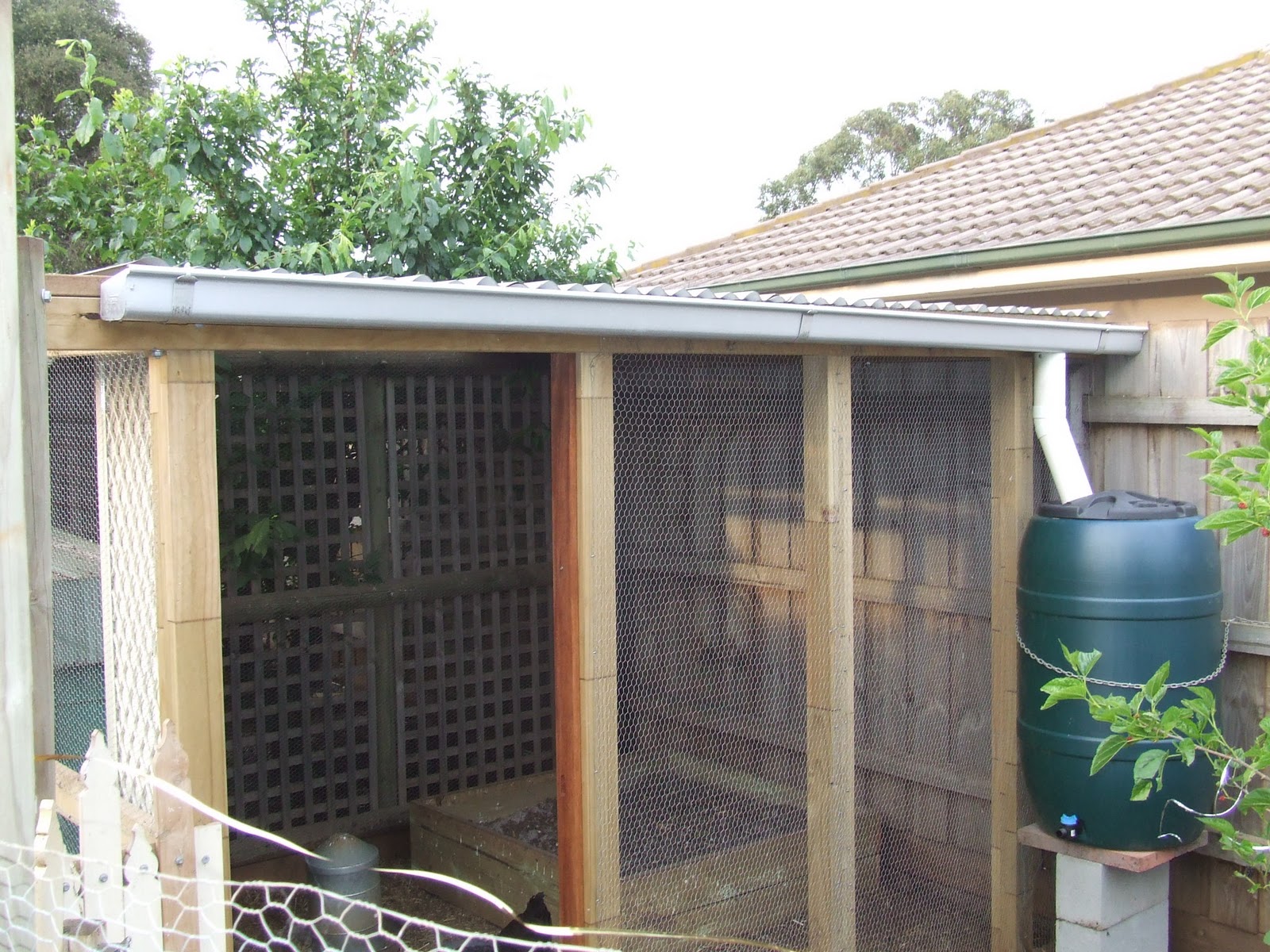
TGOG+podcast+logo+new+1400+v2This week I talk about saving water around your home.  I use the 5R’s method of saving this precious liquid, and many free or cheap methods to considers.  The 5R’s are Reduce, Repair, Retrofit, Rainwater, and Recycle.

[spp-player]

With a growing population and climactic changes already impacting many parts of the world, it is just plain common sense to conserve as much fresh water as we can.
 

Enjoy the Podcast!  Don’t forget that if you want to ask a burning question, then leave me a voicemail, and I will use it in the next podcast!  If you want know anything about sustainable living that I have implemented around here, but were afraid to ask, drop me a voice mail.  It is dead easy!

If you enjoyed the podcast, please pop over to iTunes and rate it and leave a review. You can also do the same within Stitcher Radio if you use that service.  It would help me out so much, and elevate the ratings so that others can find out about the podcast and learn about sustainable living in the ‘burbs.

You can subscribe to the show via RSS or iTunes or Stitcher for your portable device.  Just use the subscription buttons below.

RSS Feed for your podcatcher application
iTunes

Stitcher Radio
Listen to Stitcher
 

Until next time, stay green and keep keen!
Will this article help someone you know? If so help them out by sharing now!

  • Click to share on Facebook (Opens in new window) Facebook
  • Click to share on X (Opens in new window) X
  • Click to share on LinkedIn (Opens in new window) LinkedIn
  • Click to share on Reddit (Opens in new window) Reddit
  • Click to share on Pinterest (Opens in new window) Pinterest
  • Click to share on Tumblr (Opens in new window) Tumblr
  • Click to print (Opens in new window) Print
  • Click to email a link to a friend (Opens in new window) Email
  • More
  • Click to share on Pocket (Opens in new window) Pocket

Filed Under: grey water, Podcast, recycle, reduce, reuse, TGOG Podcast, Water harvesting

Land Efficiency In The Suburbs

September 4, 2012 @ 23:19 By Gavin Webber 12 Comments

I originally posted this on the Simple, Green, Frugal Co-op, but I wanted to repost to ensure its survival.  It is quite topical seeing that Sustainable House Day is only four sleeps away!


You have probably heard of energy efficiency, but what about land efficiency. Are you really using what you have in the most efficient way?  Or do you dream of selling up and moving to the country to settle down on a few acres?  Do you really need a house cow or goat to live a sustainable lifestyle?

Those sorts of questions used to go around and around in my head when I first started this journey.  Sure I may have dreamed about it for an odd minute or two, but never seriously, and I just don’t have the room for livestock.  They would be nice, but not practical.

Early on when I just started my greening, the family and I decided that we would do the best we could with the space we had available. Our space is a 779 sqm or 8385 square feet or 0.19 of an acre.

More than most plots around my area where the houses are getting bigger and the land getting smaller.  McMansions are rife around here because property developers have gotten greedy! To some this may sound like a lot of land. It is all relative I suppose.

Anyway, I have managed to squeeze a lot of things into my normal sized suburban yard. Click to enlarge to picture.

I sourced the image from www.nearmap.com. Near map have detailed aerial photos of most Australian urban centres.  North is at the top of the picture and I have marked our boundary in red, highlighting some of the stand-out features.

 Hopefully it has put all the other outdoor photos of my garden that I have taken for my blog into context for those who are regular readers.

There is not one bit of land that is unused except for behind the shed, and I even let the chooks down there occasionally to clean it up.  Most of the pool area is now covered with an arbour for the grapes, and there are five new citrus trees in large pots at the front of the pool.

There is room for improvement in the front yard, as I am planning some drip irrigation in for the existing fruit trees.  I have 14 fruit trees in the front yard with the tallest being 2 metres (7 ft) and the shortest only 60 cm (2 ft). I have a second rainwater tank now under the garage all hooked up to the original tank and the veggie patch.  I have a small 12 volt water pump for irrigation that is connected to my standalone solar PV system.

We also have no lawn at all. That’s right, not a blade of grass to be seen except for the nature strips which I just mow and don’t water. I ripped up the rest years ago and put in food production. I find that lawns are such a waste of space, resources and water.

However, all in all, I wouldn’t have it any bigger and certainly not much smaller and I find that I can manage it in the spare time that I have available.

I am very happy with what we have and couldn’t want for any more land.  By making do with what I have, we can grow just about anything in the smallest of spaces.

You just have to use your imagination!

Will this article help someone you know? If so help them out by sharing now!

  • Click to share on Facebook (Opens in new window) Facebook
  • Click to share on X (Opens in new window) X
  • Click to share on LinkedIn (Opens in new window) LinkedIn
  • Click to share on Reddit (Opens in new window) Reddit
  • Click to share on Pinterest (Opens in new window) Pinterest
  • Click to share on Tumblr (Opens in new window) Tumblr
  • Click to print (Opens in new window) Print
  • Click to email a link to a friend (Opens in new window) Email
  • More
  • Click to share on Pocket (Opens in new window) Pocket

Filed Under: Permaculture, Suburbs, Sustainable House Day, Sustainable Living, Water harvesting

Visions Of A Sustainable City

May 18, 2012 @ 20:34 By Gavin Webber 3 Comments

Last night I had the pleasure of attending a function held by the Alternative Technology Association.  The ATA is Australia’s leading not-for-profit organisation that promotes sustainable technology and behaviours to ordinary householders. The ATA provides services to members who are actively walking the talk in their own homes by using good building design, conserving water and using renewable energy.  All plugs aside, it was a ‘Thank You’ for their business partners and supporters and was well attended.

Suffice to say it was a great evening, and I met the CEO, Ian Porter, and lots of very interesting people, some of who commented that they regularly read this blog (hello to you all).  Some wanted to know about the inner workings of a blog (the technical aspects), and others just wanted to talk about gardening and what was best to plant in our region at this time of the year.

Besides all of the networking, there was also a guest speaker, Professor Rob Adams, Director City Design at the City of Melbourne.  His presentation was about  “A Vision of Melbourne as a Sustainable City”.   Prof. Adams was quite visionary.  Being the Director of City design, he has been able to influence the fabric of the cityscape.  He talked about walkable neighbourhoods, curbing suburban sprawl, increasing population density near tram lines, increase of proper bicycle lanes that are shielded from traffic, increase of public space, increase of trees, increase of water efficiency, many of which have been implemented.  He did mention that there is always room for improvement, and that there are new projects under way in conjunction with partners like increasing water storage in parks and gardens, so that they become almost self sufficient.

The most impressive part of the presentation was what he thinks we should do with the suburbs.  His recommendation is to curb suburban sprawl by increasing inner city density to about 300 people per hectare, and make them the lungs, distributed energy producers, and food bowl of the city, something that I am totally on board with and which I actively participate.  The plan is to attempt to reverse the Victorian State Governments current thinking around building into the green wedges of the city, and leave the suburbs as they are.  I love this plan.

Increasing urban density up to 8 stories high along the tram corridors is achievable, in fact around the city it is already happening.  It is far cheaper in infrastructure costs to increase density in the inner city than to let sprawl continue.  All of the infrastructure is in place, and can be augmented to cope, without too much effort or cost.  Increasing density alongside well provisioned public transport has been proven to reduce car ownership, which in turn decreases traffic congestion and greenhouse gas emissions.

Also, I found out that the city of Melbourne has a congestion levy.  It places a levy on each privately owned car park space ($910 per space in 2012) which goes into a fund with which the city uses to fund tram super stops and bike lanes, and other sustainability projects.  That was something I didn’t know the city implemented, but I don’t live there so it goes to reason.  They have designed it without the hassle of a park and pay version in places like London.

Prof. Adams presented evidence that people around the urban fringe in the outer suburbs are actually a lot less healthier due to inadequate public transportation.  Reasoning is that if you catch public transport you are more likely to walk to it, exercising an average of 40 minutes a day, however if you drive to your workplace you would be lucky to exercise for just 10 minutes a day.  I know this to be factual because as I found out when I rarely drive the 50km to work, I hardly get any exercise those days, and have to compensate with a long lunch-time walk.  For more information about the drawbacks of living in outer suburbs and working in a city, take the time to read this study titled “Unsettling Suburbia: The New Landscape of Oil and Mortgage Vulnerability in Australian Cities” by Griffith University.  The university created the VAMPIRE (Vulnerability Assessment for Mortgage, Petroleum and Inflation Risks and Expenses) index which identifies the relative degree of socio-economic stress in suburbs in Brisbane, Sydney, Melbourne, Adelaide and Perth.  You can get a copy of the report at this link.

Another factoid I learnt was that 20% of the cities trees have died in the past decade due to climate change and the 11 year drought we just experienced, with another 20% of the trees expected to die by 2020.  They are replanting with native species, as most of the dead trees were non-native European species such as Dutch Elm, and Oak planted many years ago in the early 20th century.  Prof Adams mentioned that they have begun to install water traps near curb side tree plantings that help to water the trees from storm water runoff.  A great idea to water them and to reduce runoff into Port Philip Bay.

These were the only bits I remember, however it has given me a fantastic idea.  Over the weekend, I am going to document my vision of my town of Melton becomes in 2030!  I have a fair idea what needs to be done around here to make it sustainable, adaptable and resilient, and will even include a map or two so those not familiar with the area will have some idea of what I am banging on about.  Like last night, it should be fun.

In closing, a big thank you goes out to those hard working people at the ATA who made the night so special.

What is your city/town doing to become more sustainable?  I would love to know, as would all of the readership.  Leave a comment if you know of great projects happening in your area.

Will this article help someone you know? If so help them out by sharing now!

  • Click to share on Facebook (Opens in new window) Facebook
  • Click to share on X (Opens in new window) X
  • Click to share on LinkedIn (Opens in new window) LinkedIn
  • Click to share on Reddit (Opens in new window) Reddit
  • Click to share on Pinterest (Opens in new window) Pinterest
  • Click to share on Tumblr (Opens in new window) Tumblr
  • Click to print (Opens in new window) Print
  • Click to email a link to a friend (Opens in new window) Email
  • More
  • Click to share on Pocket (Opens in new window) Pocket

Filed Under: climate change, Peak Oil, Suburbs, Sustainable Living, Transport, Water harvesting

« Previous Page
Next Page »

Search This Blog

Follow my work

About Gavin Webber

About Gavin Webber

An Ordinary Australian Man Who Has A Green Epiphany Whilst Watching A Documentary, Gets a Hybrid Car, Plants A Large Organic Vegetable Garden, Goes Totally Solar, Lowers Consumption, Feeds Composts Bins and Worms, Harvests Rainwater, Raises Chickens, Makes Cheese and Soap, and Eats Locally. All In The Effort To Reduce Our Family's Carbon Footprint So We Can Start Making A Difference For Our Children & Future Generations To Come.

Delve Into the Archives

Visit Our Online Simple Living Shop

Little Green Workshops

Top Posts & Pages

How To Remove Scaly Leg Mites
Quince Paste
Curing Black Olives
Tips for Growing Citrus in Pots
The Ant and the Grasshopper
Home Made Bread Rolls
Growing Queensland Blue Pumpkins (Winter Squash)
Black Aphids On Garlic
Repeat After Me. I Will Never Plant Potatoes With Pumpkins Again
Feta Cheese Tutorial

Recent Awards

Recent Awards

Local Green Hero

Categories

Favourite Daily Reads

Debt Free, Cashed Up, and Laughing

The Off-Grid Solar House

Greener Me

The Rogue Ginger

Little Eco Footprints

Down To Earth

Surviving the Suburbs

Little Green Cheese

Eight Acres

The Witches Kitchen

TGOG Readers On-line

Carbon Offset website

Copyright - Gavin Webber © 2026