
Where I live in Victoria, Australia, we harvest potatoes and onions at about the same time in mid December, so I thought it would be a good idea to do a follow up post from the one I wrote titled “Spuds and Onions“.
As you may have read, this year I harvested a bumper crop of both vegetables, so had to think about storage options, so that we could keep eating the fruits of my labour until they run out, and prevent them from rotting. There is nothing quite as stinky as a rotten potato except for maybe a rotten egg. Pooh Wee!
So to store these two vegetables well, you need to do a few things first; keep them ventilated, and keep them away from direct light. Here are my methods of storing these two root vegetables.
Potatoes
When you dig them out of the ground, let them dry out a little, but whatever you do, do not leave them in the sun. This enables the skin to turn green, which is poisonous to eat.
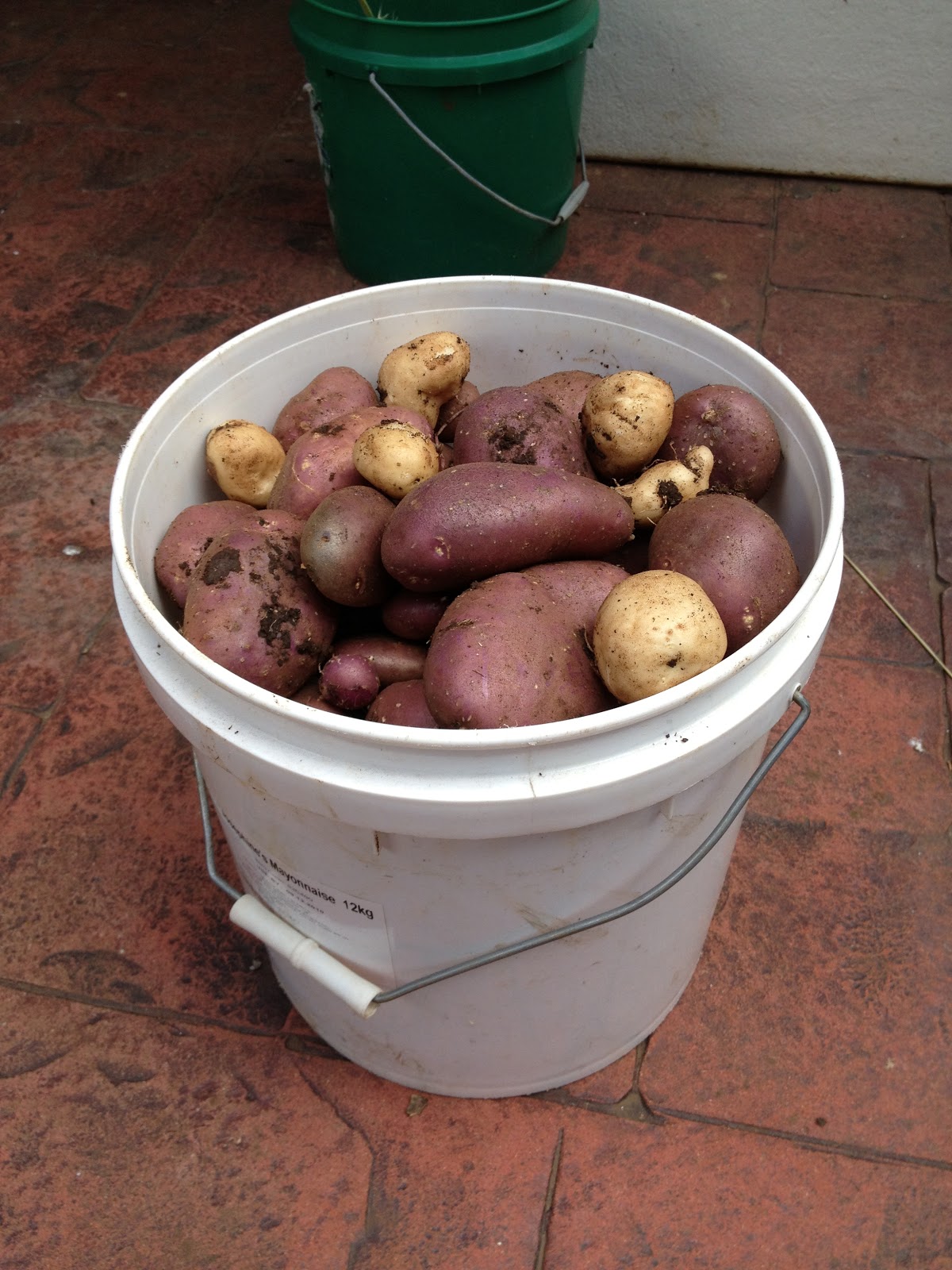 |
| My big bucket of spuds. |
After an hour or two, I then stack them in a big wicker basket, with large spuds at the bottom working up to the small ones on top. I do this gently so as not to bruise or cut any. I lay a branch of dried rosemary on top to inhibit eye growth (don’t ask, it just works).
Then I cover the basket with an old cotton rice bag to exclude light. The combination of the loose weave basket and the cloth bag allows the potatoes to breathe. I store the potatoes in the bottom of the cool pantry which is also dark. This prevents green skins and sprouting.
 |
| This wicker basket was three quarter full before Xmas! |
So far, so good. My potatoes are in good condition after two months, and we even ate some delicious spuds roasted last night for dinner. If they last the distance–which I doubt–they will keep like this for at least six months so I have read.
Onions
After the leaves have gone brown and fallen over, harvest your onions, and if there is no chance of rain, just leave them lay where you harvested them for a few days to form skins. With southern Victoria being known for its “four season in one day” I prefer to dry my freshly picked onions under cover. I use the greenhouse for this purpose and lay them all in a single lay on racks for about a week. This serves the same purpose.
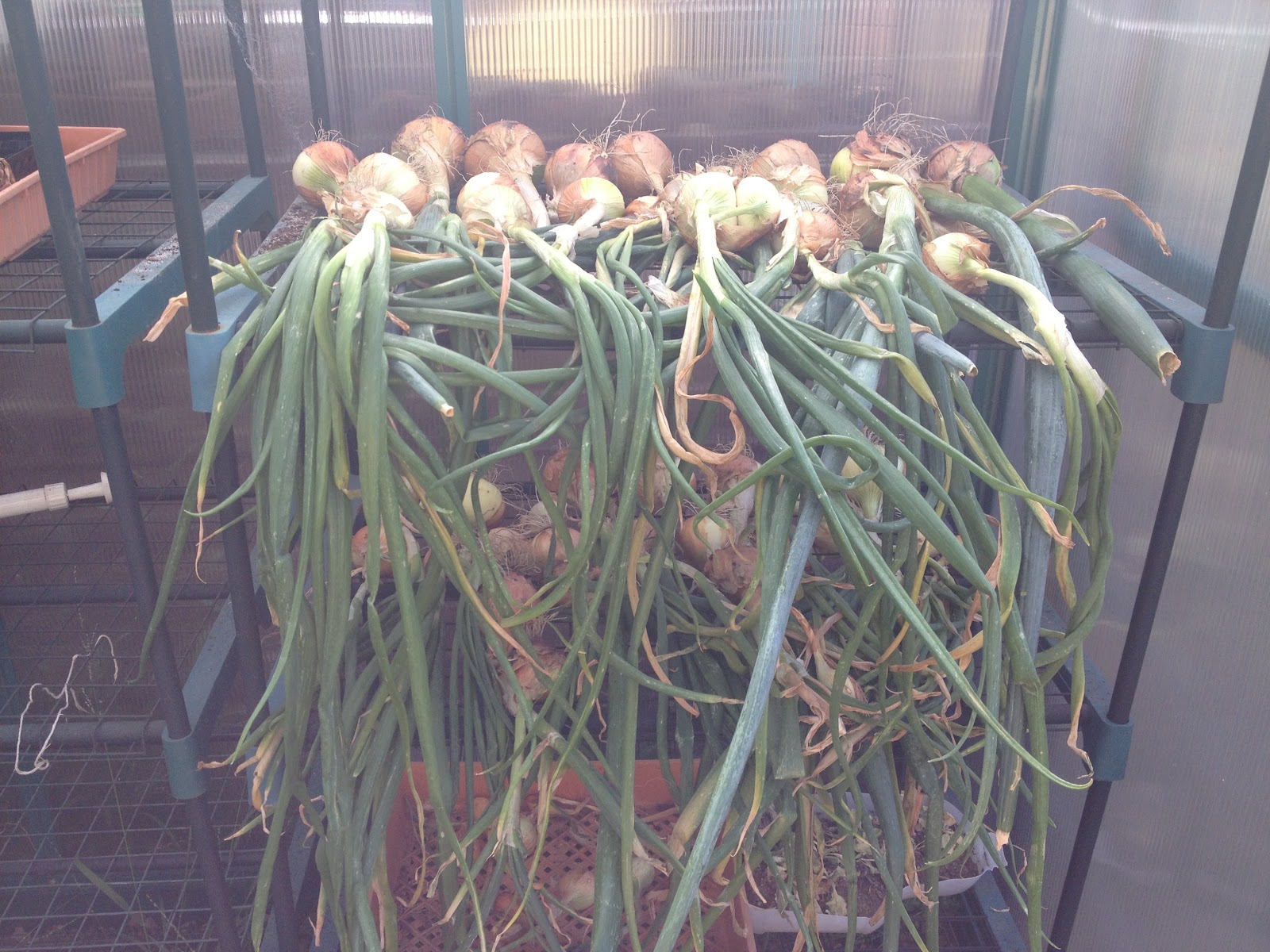 |
| Onions drying in the greenhouse. |
Once dry, they should now have a few dry outer layers. Twist off the leaves and store in a wicker basket, similar to the potatoes. Large onions at the bottom and little ones at the top. Store in a dark cool place and they will keep for about six months. I have my onion basket sitting on top of the potato basket in the same pantry.
 |
| Spud and Onion love |
After a bit of research, I found this great article penned by Linda Cockburn, that describes other methods of storing vegetables for medium to long term storage. You can find the article at this link titled “In Their Own Skins“. It is quite comprehensive and worth a look.
Summary
There you have it. A nice and simple method of storing two of the staple foods grown in the kitchen garden. Also I would like to acknowledge Katrina for asking me about potato storage via an email.
So, how do you store your root vegetables? Do you have another method not covered here?

As I live in England, store my onions and garlic in plaits in the cellar. if I don’t store them this way they seem to rot quickly.
a root clamp in the garden works well also. especially for carrots and heeling all the leeks in one area. they don’t grow in the winter very much so I don’t find they need to be left it rows. I just lift them and dig a round and put them all back in the one small space. Others will probably be horrified by that. My granddad did that, my parents do it. So I do as well. Does anyone else do that?
Good information Gavin, must remember the tip about the rosemary.
In Canada we have our own garden issues. Our winters are -20C, so clamps have to be very deep, or better yet, just store things in the basement. We keep our thermostat at +18C, and the basement is always a few degrees cooler than that.
I have a few tricks to storing potatoes:
1) grow varieties that store well, like German Butterball. Potatoes that store well are usually late season varieties.
2) keep a few apples with the potatoes. Apples release ethylene gas which help the potatoes keep longer.
3) after harvesting, cure the potatoes well and make sure they’re good and dry before storing. Airy places out of the sun work best. (I cure mine for several days)
4) don’t wash the potatoes after harvesting. Brush off any large or wet clumps of dirt, but potatoes always seem to store better if they’re a little earthy.
5) pick over the potatoes on a regular basis throughout the winter. Pull any that are suspicious immediately.
I’ve been able to keep potatoes this way from harvest (October) to planting (April).
please can you tell me is it ok to store potatoes in a wooden bread bin with a lid? thanks jan
Hi Jan. Potatoes need to breathe. If kept in a box with a lid, they release a toxic gas that in large volumes will kill you. Just keep them in a dark, cool place, that is well ventilated and you will be fine.
Thank you for the information as we have about a month ago started our garden. We eat only Spring onions as other onions are too strong for our system.
The Veggie garden was a passion of mine when young.
Going organic is great and eating more veggies fresh tastes so much better.
A plate of veggies is amazing, sauces destroy the true connection with vegetable. A small amount Himilayan Salt and cracked pepper and lemon, garlic and the best olive oil is all that is needed.