
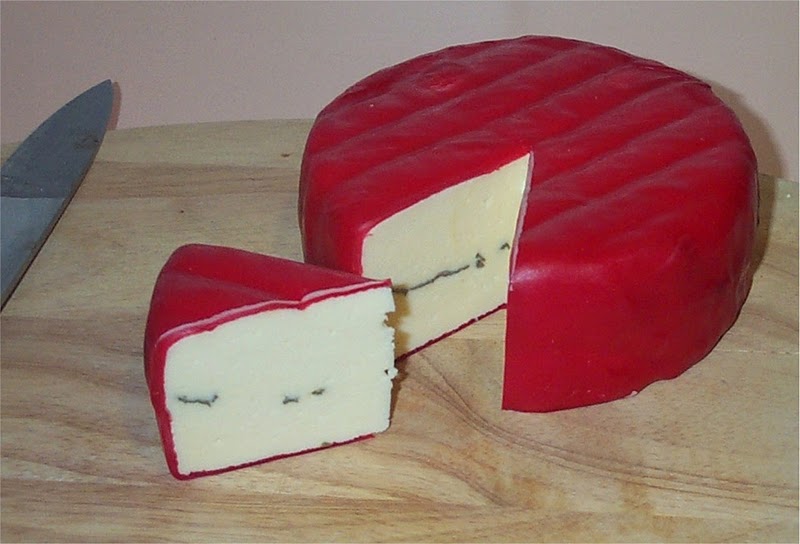
Over the last few weeks I have had four requests for the cheese recipe I use for Wensleydale. So here it is. Just make sure you have at least 9 hours up your sleeve and don’t start making it at 7 pm and end up finishing at 3 am like I did a few weeks ago!
Wensleydale Cheese.
Ingredients
Makes about 850 gm (2 pounds)
- 8 litres (2 gallons) whole milk
- 1 quarter teaspoon Direct set Mesophylic culture
- 2.5 ml Rennet mixed with 25 ml non-chlorinated water
- 3 ml Calcium Chloride if using homogenised milk
- 3 teaspoons non-ionised salt

Method
Sterilise all equipment. I put a litre of water into the pot, put all utensils in it, cover and boil for 15 minutes. Anything that may melt, I wipe down with vinegar and a boiled cloth. If I handle the milk/curds or finished cheese, I spray vinegar on my hands from a spray bottle and rub together until dry. That way the milk will not get infected by any wild yeasts or moulds that maybe on my hands.
Using a double boiler, heat the milk to 30°C (86°F). If using homogenised milk, add calcium chloride to 2 tablespoons water and mix to the milk gently. Add Mesophylic starter, mix well for a minute, cover and allow milk to ripen for 45 minutes.
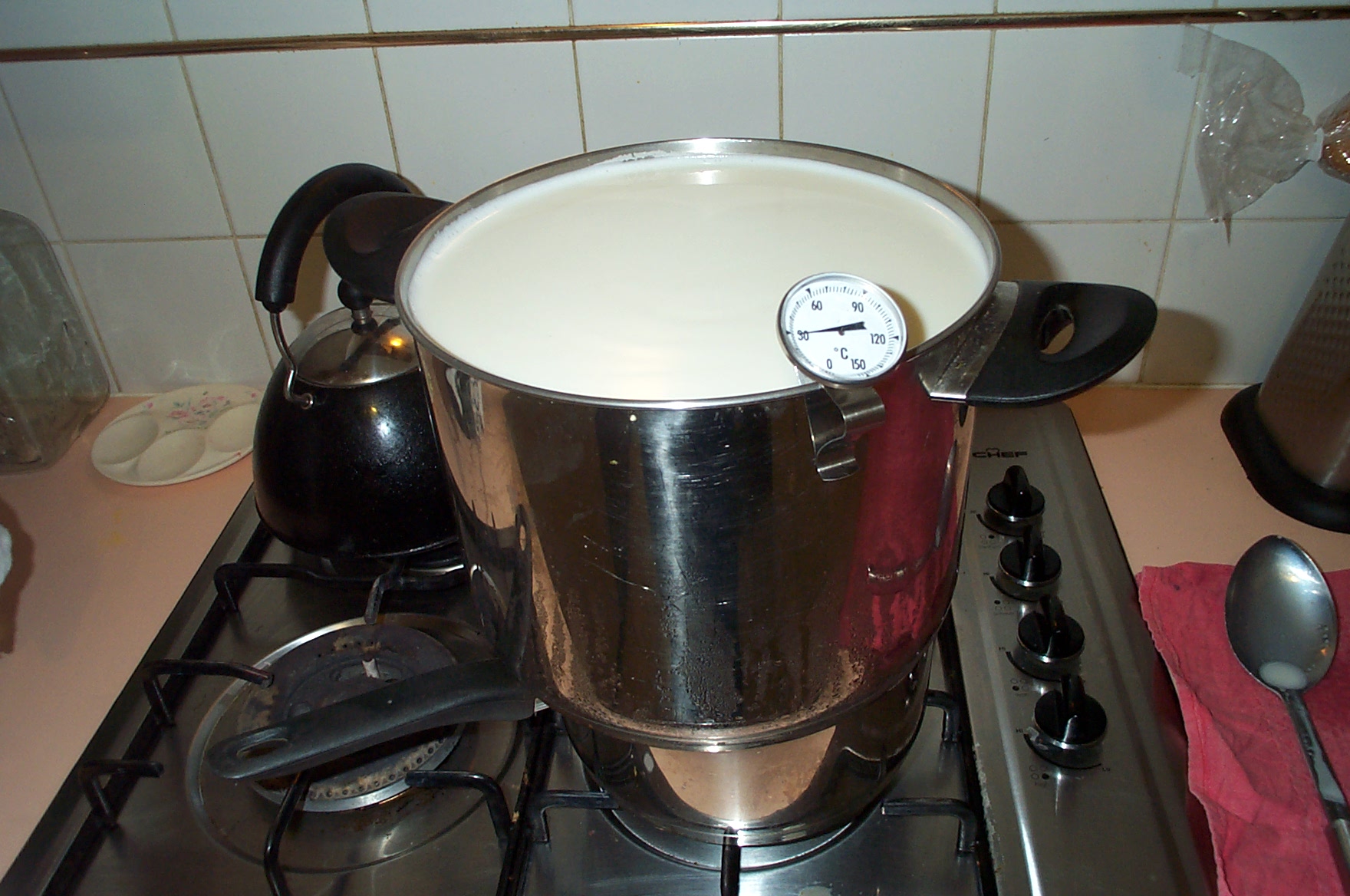
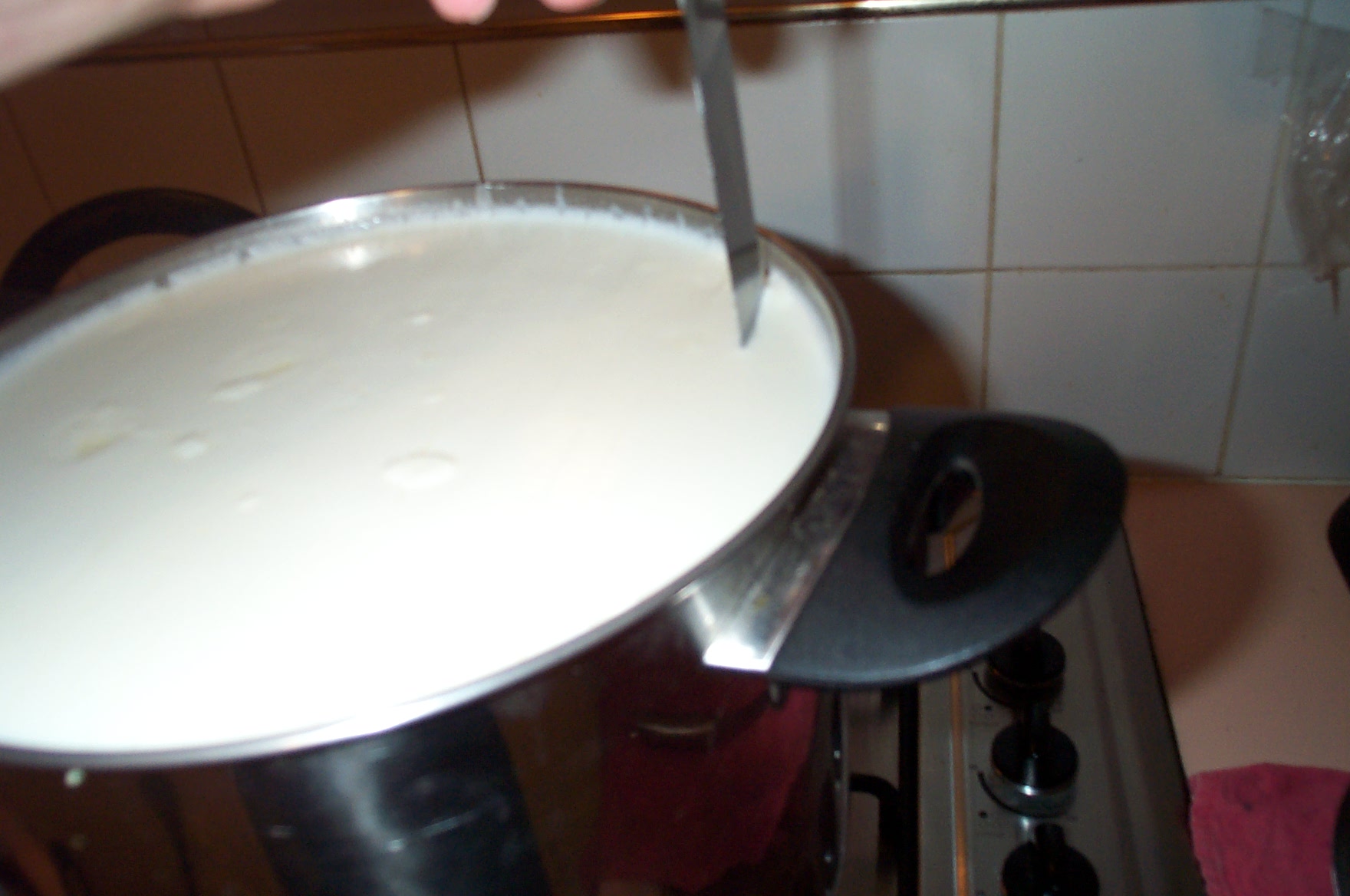
Stir the curds and whey for 10 minutes, then let rest for 15 minutes. Stir the curd again as you raise the temperature to 32°C (90°F). Maintain this temperature, and stir the curd as often as necessary to stop the curd knitting together. Do this for 2 hours.
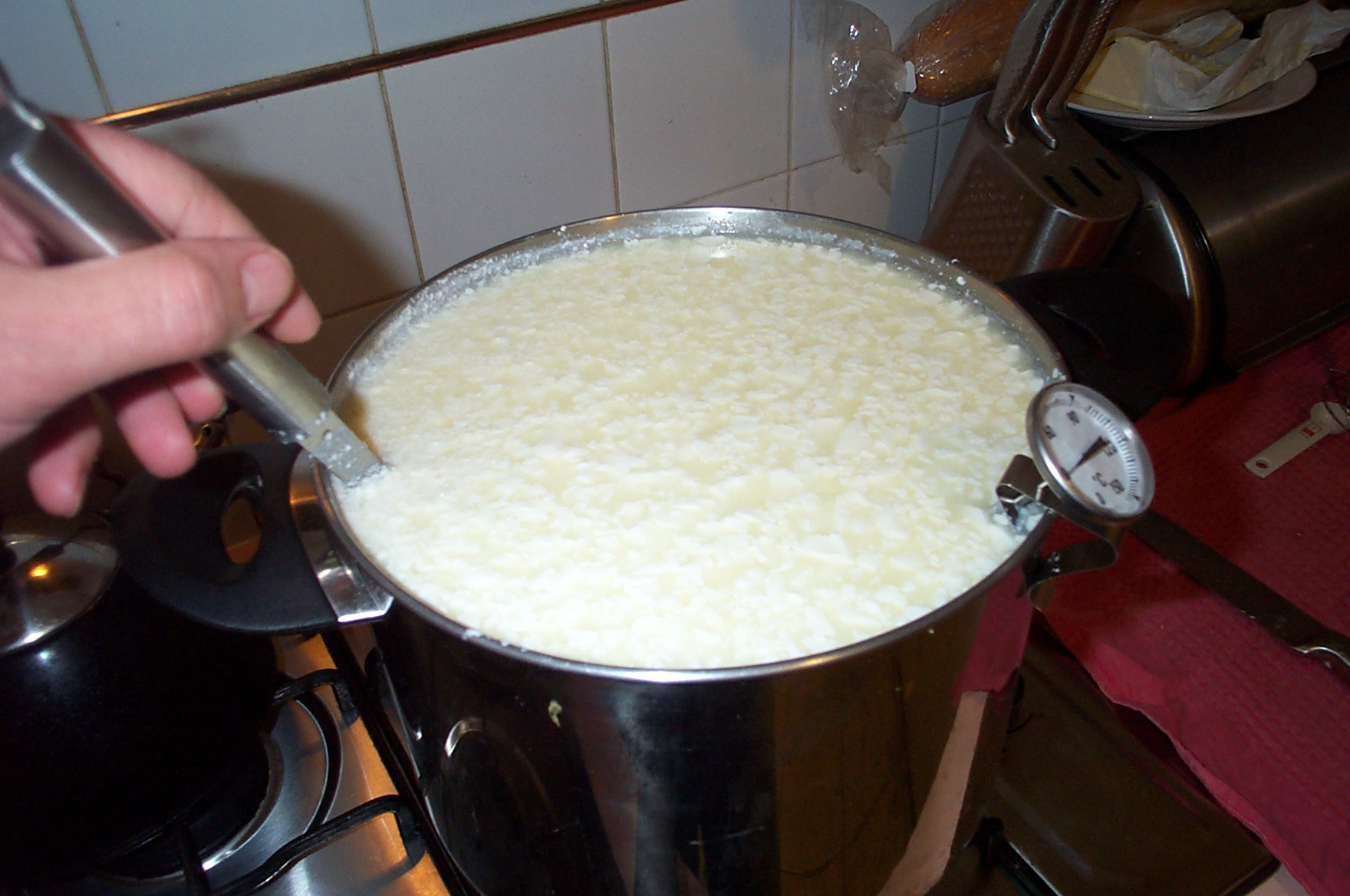
Drain the whey off and ladle the curd into a colander lined with cheesecloth. Tie in a bundle and for 2 hours, open every 15 minutes to break the curd into small pieces.
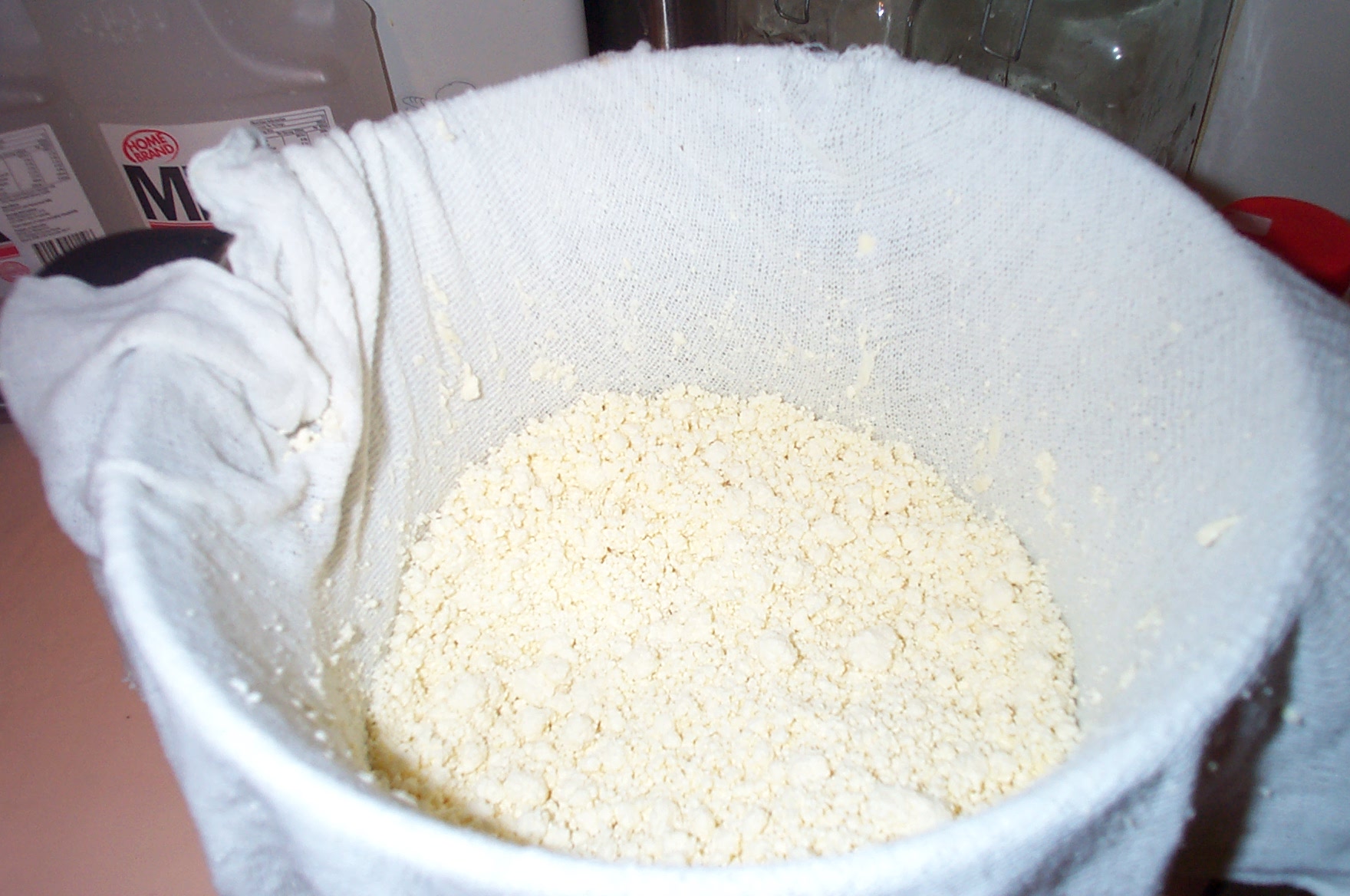
After the two hours break up the curd for one final time and apply the salt. Mix the curds and salt well.
Place half the curd into a cheesecloth lined 1 kg cheese basket and apply a layer of sterilised sage leaves (sterilise on clean oven tray at 120°C (250°F) for 10 minutes), pressing down well.
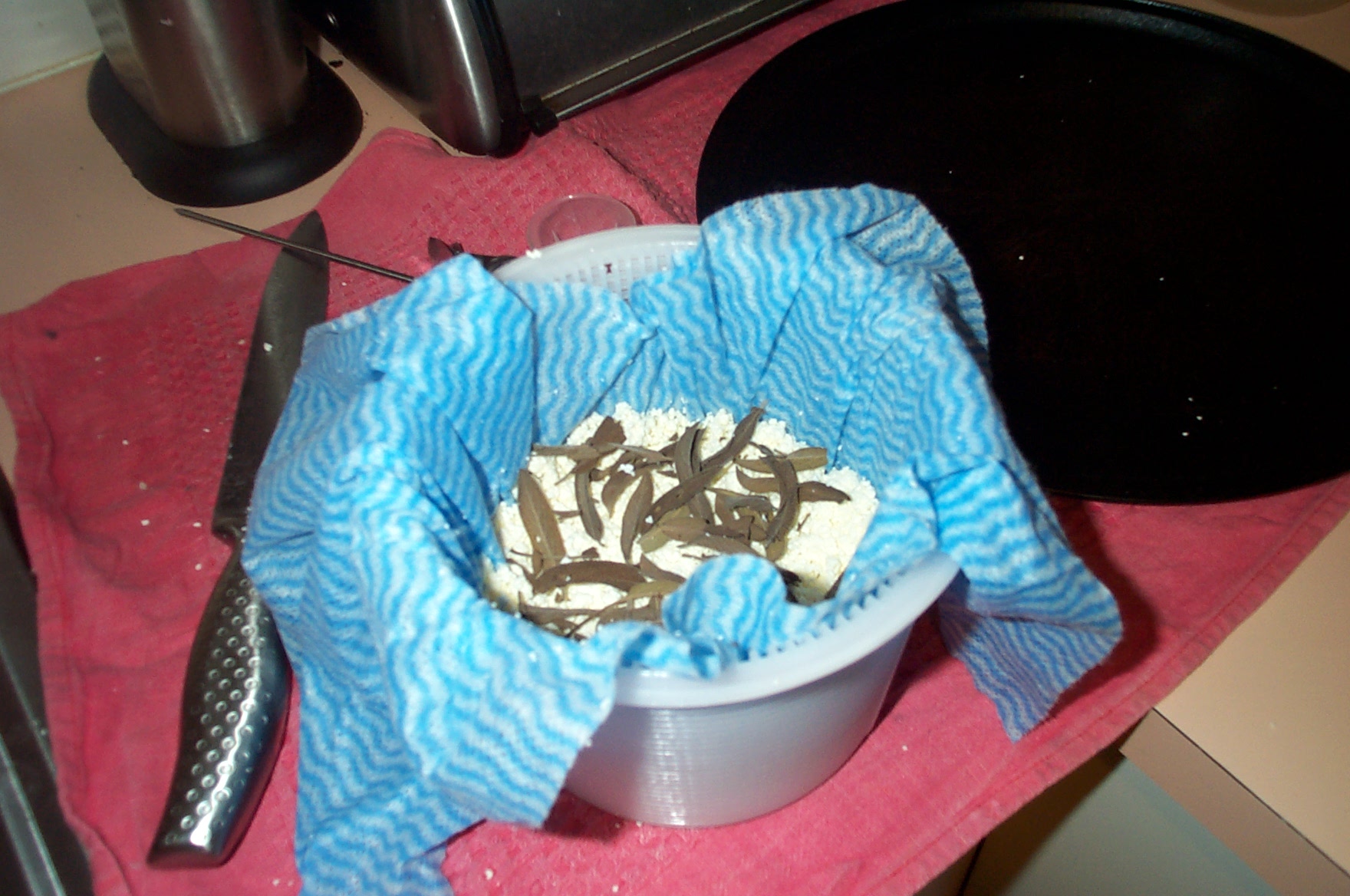
Fill with remainder of curd and press at 5 kg (10 pounds) for 15 minutes. Carefully remove cheese from cloth, turn over and press at 25 kg (50 pounds) for 12 hours.

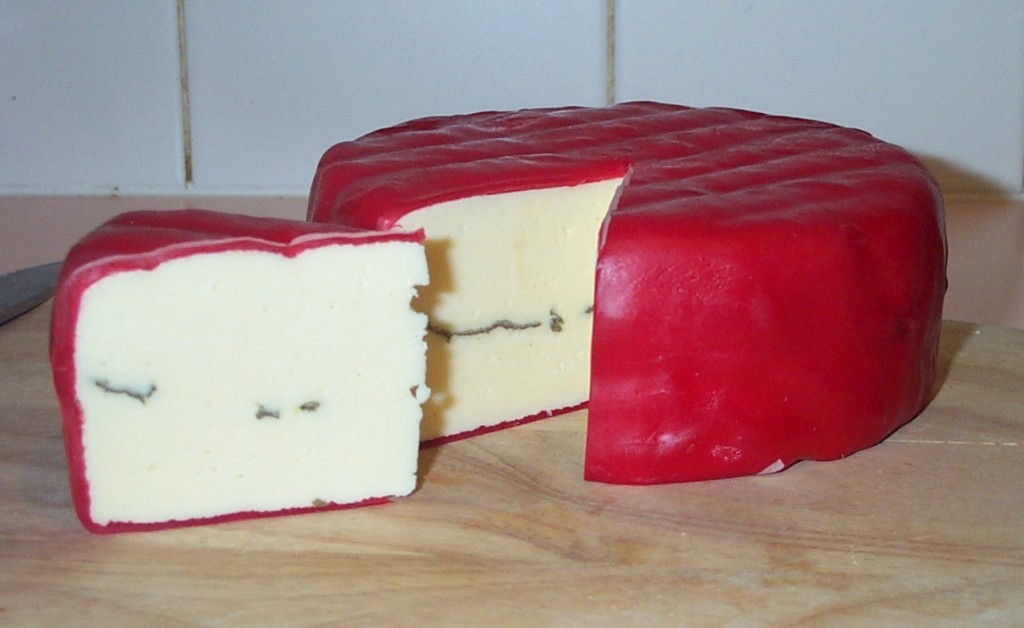
Remove from press and cheesecloth. Place on a board and allow to dry for 2 days. Apply wax and store at 13-15°C (55-59°F) at 80-85% humidity. Can be eaten in 3 weeks or aged for up to 3 months.
Verdict
This is a wonderful cheese, and I have never been able to find Wensleydale in the local grocery store. There is no equal as far as I am concerned and beats the store bought tasty cheddar any day. I age my Wensleydale for three months, and find that its flavour is just right.

If you like this Wensleydale Cheese recipe, and are after more easy-to-make cheese recipes, then pop on over to my cheese making blog and check out the eBook that I have created.
It is titled “Keep Calm & Make Cheese – The Beginners Guide to Cheese Making at Home“
Here is the blurb;
Have you ever wanted to make real cheese at home, but didn’t know where or how to start? Well look no further, as this book makes it easy for the beginner to jump right in and make cheese.
Keep Calm, and Make Cheese steps you through the process of home cheese making with 24 tried and tested recipes for the budding home cheese maker to follow and create.
With over 60 pictures, and links to 12 of the author’s simple to follow cheese making video tutorials, the whole process becomes much easier to achieve success than you would by reading a normal cheese making book.
After reading this book you too will be able to “Keep Calm and Make Cheese”, in your very own home.
Visit Little Green Cheese blog for all my cheese making video tutorials and much, much more.

Very impressive indeed. Cheese-making is one of the tasks that I always admire in people who do it well.
Yum, yum, yum. Thanks 🙂
Congrats. Your cheese looks splendid. Sounds like you had quite an adventure making it. I have been interested in making cheese for a while now, so like you I just need to bite the bullet and do it. I’m glad I found your blog.
Incidentally I had my first drive in our new hybrid car yesterday. They are amazing and I cannot believe the fuel savings.
Very impressive indeed. I’d love to learn how to make my own cheese. Thanks for all this info.
Maybe you should be a teacher Gavin you tell it so well. I am definately going to have a go at this in the next few weeks. Hopefully we might see another of your how to posts next week on ‘Buddy’s Friday’. You would be very welcome.
Margaret
last query thanks Gav on that Wensleydale… I have made a few now and just wondering about the 2 hours breaking up the curds every 15 min….do you mean to break them up quite crumbly or what??? as i am still unsure of this step as by now the curds are quite cool and I am worried that the cheeses will finish up just a large CRUMBLE !!.. next weekend will be my last on the Wensleydale then moving on to Caerphilly. love your site…Marian
Hi Marian. Yes during the breaking up period they should be quite crumbly but moist (not wet). Once the cheese is pressed and because you turn it every week (don’t you) the cheese forms perfectly. Don’t sweat the small stuff, it will turn out perfectly and taste divine!
Gav
Just the recipe I was looking for! I’ll write back with my results! I plan on adding dried cranberries. Thanks for the nice photos!
Hi Gavin,
Thank you for the recipe! I’ve got a question, if you don’t mind. I’ve just wrapped up this recipe and now have my cheese in the mold. During the last 2 hour step of crumbling every 15 minutes, the cheese seemed to start loosing a LOT of fat by the third or fourth crumble. Crumbling it made my hands oily, and now it’s squooshing out from the press. I’ll find out in 3 weeks or so if this was okay, but I’m worried now and I know I’ll forget to ask. Is this normal? If not, any suggestions for what I’m doing wrong?
Thank you!
Hi Robyn,
Yes, I find that this is normal but it shouldn’t be present much when it is being pressed. I find that I have to be really gentle when doing the crumbling.
Anyway, it should still turn out okay. I am yet to have a disaster with this cheese.
Gav x
Just tried the cheese I made using your recipe, and it is yummy. My husband was very impressed that I made cheese and it tastes like cheese!
Thanks Anon. Wish you had have used your name to congratulate you personally
HI Gavin, Sorry just getting use to posting on blogs, as I am normally a lurker. Do you have a good Emmentaler recipe on your blog? Deborah 🙂
Hi Deborah, nice to meet you. Unfortunately, I haven’t posted an Emmentaler recipe but there is a good one in Tim Smith’s Artisan Cheese Book.
Gav
Morning Gavin,
I made another Wensleydale with raw milk and the dutch cheese press my husband made me and it is better than the first one I made. The press made it so much easier. I was thinking about making another one using sterilised oregano instead. Would’t be a wensleydale, but thought it would taste good, any thoughts?
Loving your blog Deborah
Hi Deborah, yes I think that oregano is a subtle enough flavour to add to the middle layer. It certainly would be a Wensleydale because that is just the process. You can add any herb you want to it.
Thanks for you support. Gav x
Hi Gavin, update on wensleydale with oregano….imparted no flavour. Will diffinately stick to sage on the herb front. Am thinking about trying it with cumin or fennel seeds. I cut into my blue that has been aging for 3 months to find there was no blue inside! The needle holes had closed and no air could circulate, but it tastes beautiful and creamy, so it will get eaten.
Deborah 🙂
Your website pop ups suggested this article- I think it may have psychic powers!
Only this week I was watching Rastamouse on ABC 4 kids (channel 22) and the president is called President Wensleydale and now I get the correlation with him being a mouse!!
It looks delish!
Kellie
It is delicious. I will have to make one for our next lunch time meeting!
Just started cheese making a few months ago after coming across your site Gavin.
All turning out lovely, thanks to your recipes.
thanks Gavin
from John in West Yorkshire- UK
Your welcome John, and thanks for your email!